Weingut Birgit Braunstein
The Free Bacchus Story
In 1995 Birgit Braunstein met biodynamic farming for the first time, at Château Canon-la-Gaffelière in Bordeaux, and knew at once that it was what she wanted. It also looked almost out of reach, she wrote later, very complex and in places rather strange, and she had far too much respect for it to begin. It was her children who moved her on. Homeopathic and anthroposophic medicine had helped them to the point where they needed no more antibiotics, and she took that as encouragement to leave conventional farming behind. By her account the family estate in Purbach began converting to organic in 2006, and in 2007 she and three other couples founded the first Waldorf school in Burgenland. In 2011, in her words, she finally made the switch to biodynamics.
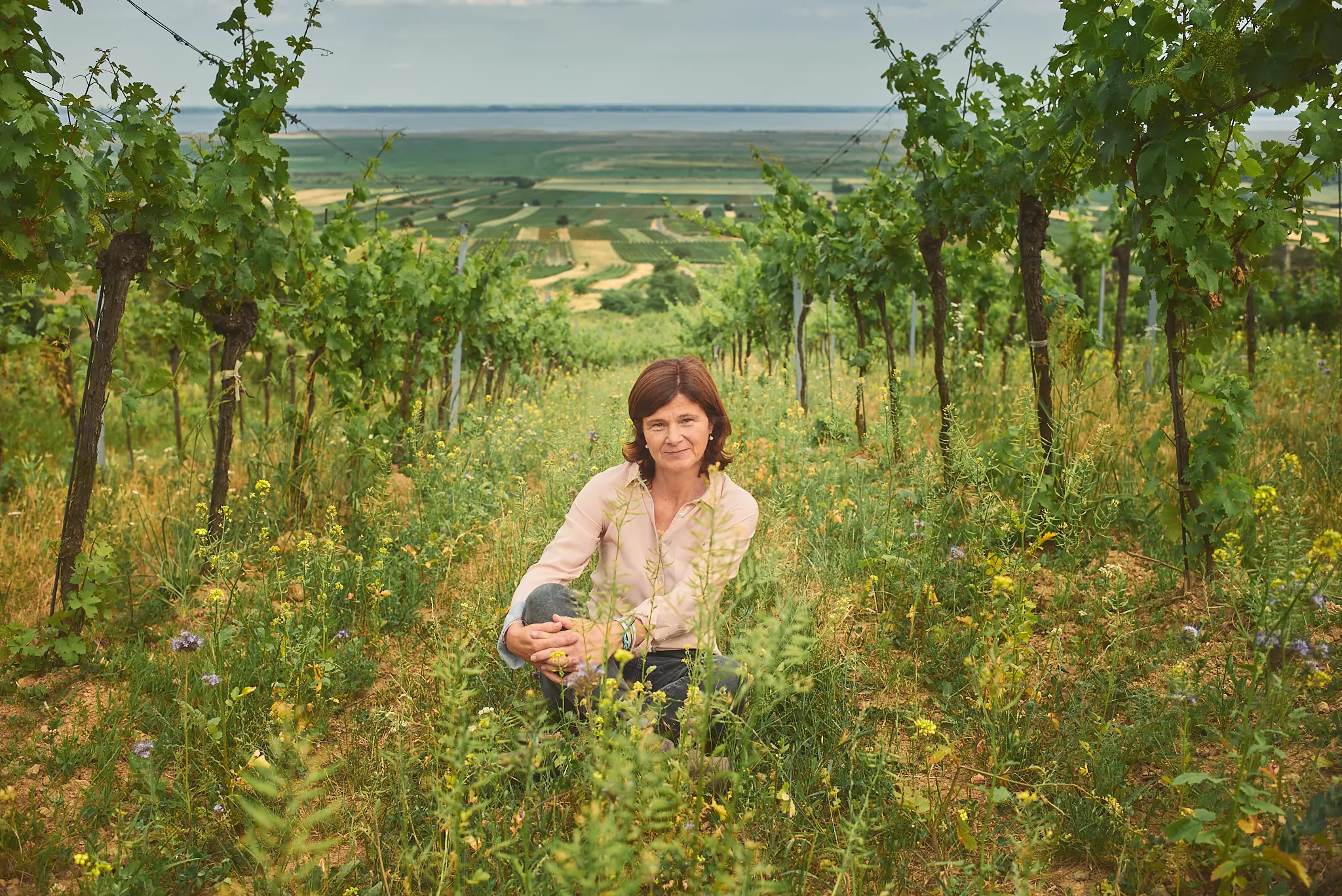
Burgenland, a long strip down the Hungarian border, is Austria’s red-wine country, and Purbach lies on the Leithaberg, between the Neusiedlersee and the Leithaberg forest, on soils the estate describes as limestone and crystalline schist. The grape that matters most is Blaufränkisch. If you have never had it, it sits somewhere near Syrah for pepper and near Pinot Noir for weight, with acidity that keeps it upright, and on the cool limestone of the Leithaberg it comes out tighter and stonier. Zweigelt is softer and quicker to like. Both go into the estate’s flagship, the Oxhoft, with Cabernet Sauvignon, from its oldest vines and best Leithaberg sites. The wine shares its name with the small oak cask it spends two years in, and the estate has called it the house flagship for 35 years.
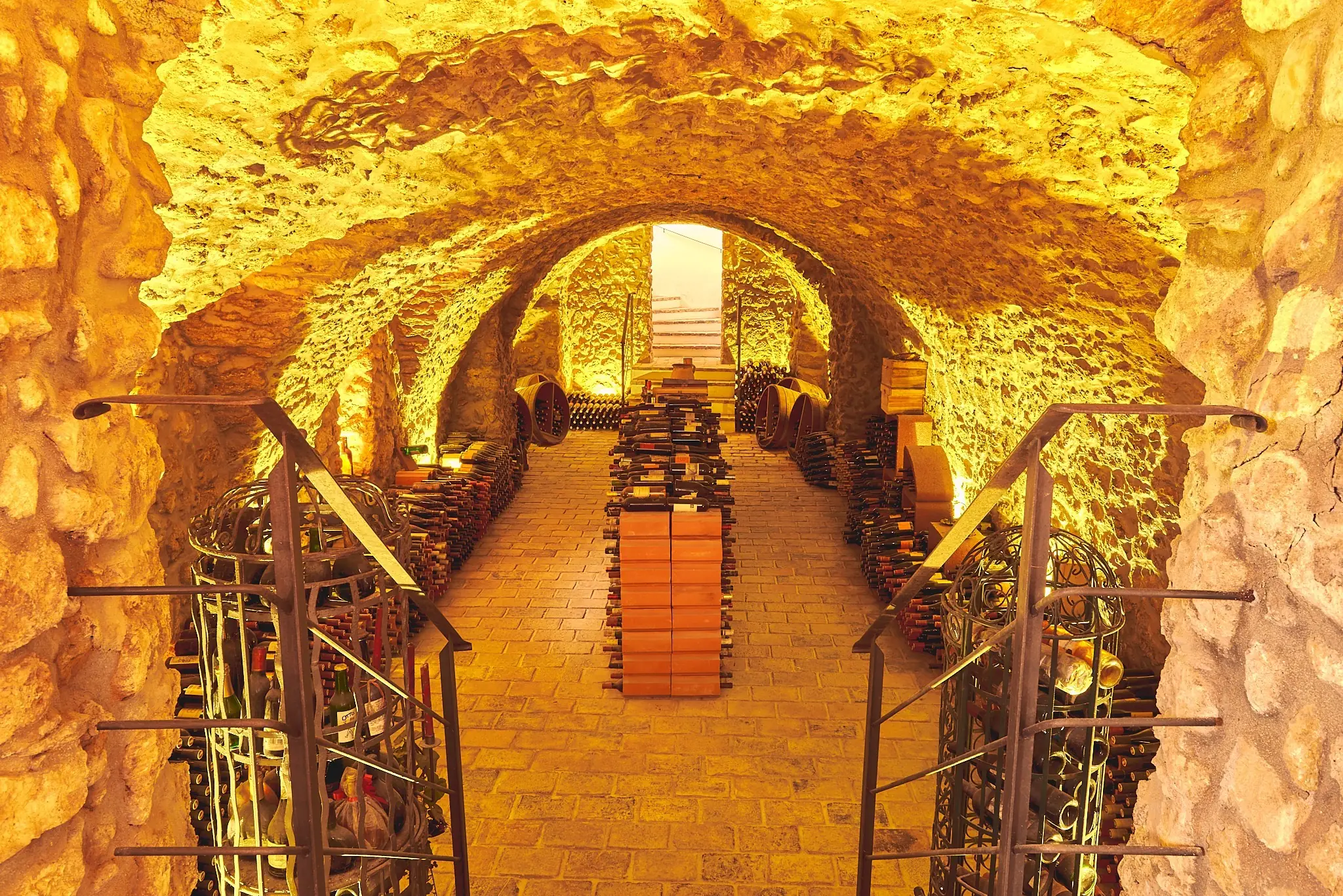
The farm runs to 25 hectares today, 20 of them vines and five extensive grassland, and the compost comes from its own Boer goats and Cameroon sheep. Braunstein, a trained garden educator and Qi-Gong teacher, has planted cherry trees and a herb meadow, and put up nest boxes for hoopoes and a nesting aid for storks. People asked her often enough whether she was mad, she told Demeter Österreich in 2025, and said it would never work. It did. Her sons Max and Felix trained as winemakers and make wine of their own as the Braunstein Brothers; their first two, a white and a red from 2020, were bottled unfiltered with no added sulphur, and their page compares vineyard work to boxing, their other passion. The family has made wine on the farm since 1632, at the Langstreckhof in the old centre of Purbach, where three generations live under one roof.
From 2014 to 2017 the estate’s website named which of its wines were certified organic, one by one: nine at first, thirteen by 2016, among them the Oxhoft and the Blaufränkisch Leithaberg of 2011. The Blaufränkisch Felsenstein was never on the list. Falstaff gave the 2011 Oxhoft 93 points in 2014, and Wine Enthusiast’s Anne Krebiehl MW gave the 2011 Blaufränkisch Leithaberg 92 the same year and called it a versatile food wine.
Austria Bio Garantie, the control body, certifies the company, Familienweingut Braunstein KG, to the EU organic standard until 31 January 2027, and its grapes are organic. For wine, the certificate records the production of in-conversion products alongside organic ones, so some of the wine is still in conversion, and it does not say which. Demeter Austria certifies the estate as biodynamic and names it on its grower list of June 2026. The EU register shows no certificate for the estate before 2025, so the dates 2006 and 2011 rest on her own account.
“Ein bisschen schwanger sein, geht ja auch nicht.”
Why it’s remarkable
Free Bacchus Verification
Demeter Austria · Austria Bio Garantie EU organic · some wine in conversion
Certified2
- EU organic, Austria Bio Garantie – Landwirtschaft GmbH (AT-BIO-302): Familienweingut Braunstein KG, Purbach (AT-BIO-302.040-0022665.2025.002), valid 27 November 2025 to 31 January 2027
- Demeter biodynamic, Demeter Austria: Braunstein Birgit Familienweingut Braunstein KG, processor and producer (BFDI AT-23728), on Demeter Austria’s grower list of 1 June 2026
This page covers
The grapes, as organic, and the wine, which the certificate records as both organic and in-conversion production
Not covered1
- Wine the certificate records as in-conversion production; it does not say which
Also on record2
- BFDI shows the Demeter record’s certification status as ‘Other’, with no validity date, as for every Austrian record
- Organic conversion from 2006 and biodynamics from 2011 are the estate’s own account; TRACES shows no certificate for it before 2025
If you’re buying
Cheat sheet
Save it to your phone. Everything you need to recognise this producer, and three things worth saying about it, at a glance in a shop or across a table.
From the Journal
More Verified Houses · Austria
Photograph at the top of this page: The vineyard above the Neusiedlersee, Purbach by Paul Szimak, © Mag. Paul Szimak, via Familienweingut Birgit Braunstein. Resized for this page.
Photograph across the middle of this page: The vaulted cellar, Purbach by Familienweingut Birgit Braunstein, © Birgit Braunstein KG, via Familienweingut Birgit Braunstein. Resized for this page.

