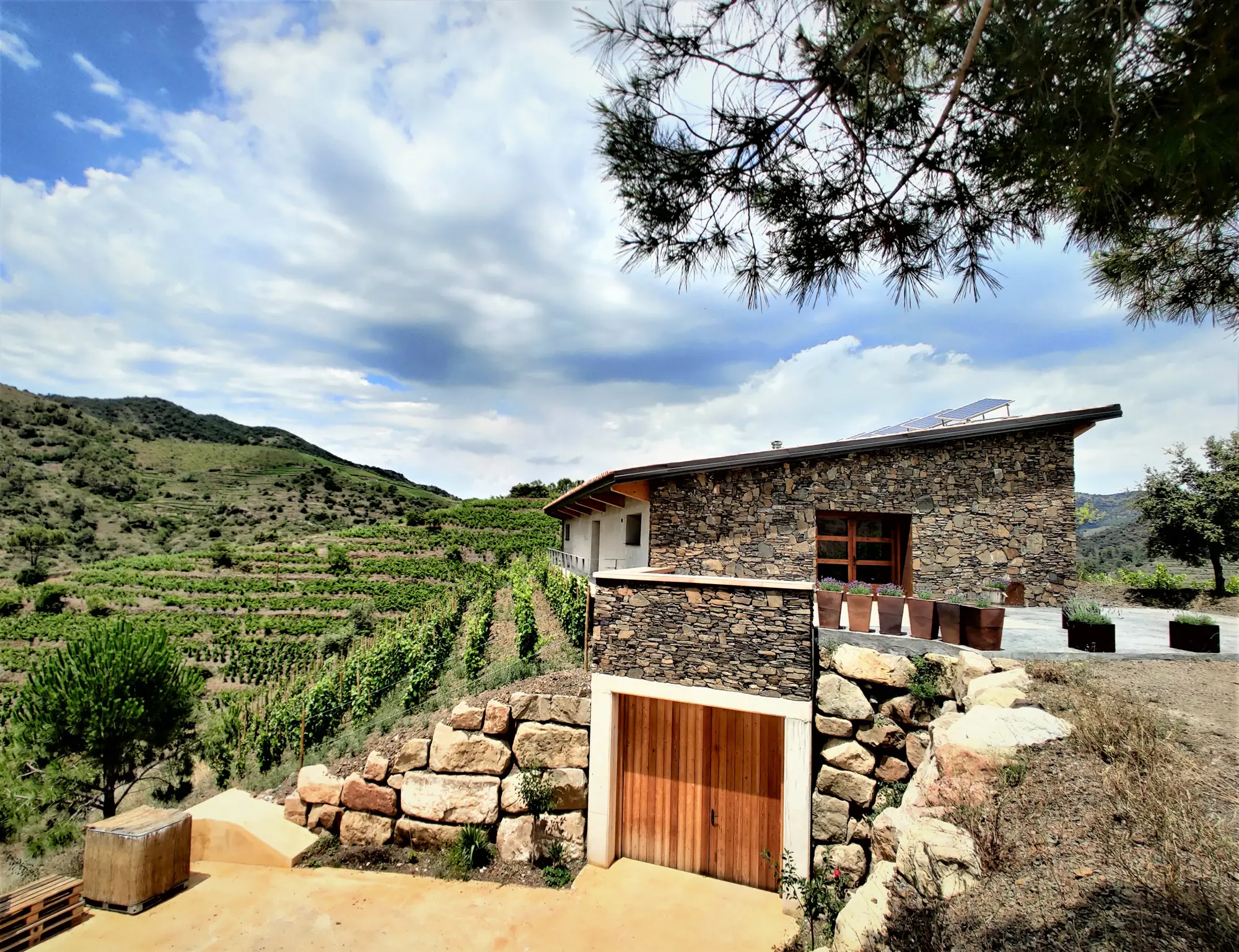
Familia Nin-Ortiz
The Free Bacchus Story
Ester Nin grew up in a Penedès winegrowing family and studied biology partly to escape it. It did not last. Since 2003, the year of her first Nit de Nin, she has worked with Daphné Glorian at Clos i Terrasses, the estate behind Clos Erasmus. Carles Ortiz had left Barcelona to grow grapes at Finca Les Planetes. In 2007 they joined their vineyards, and their son Andreu now works with them.
Priorat is a bowl of steep hillsides inland from Tarragona, on llicorella, a black slate that shatters into blades and holds almost no water. Its grapes are Garnatxa and Carinyena, the Catalan names for Garnacha and Cariñena, and the reds have a weight that surprises people who expect Mediterranean warmth to mean softness. The family adds Garnatxa peluda, hairy Garnacha, named for the down under its leaves, which Ester Nin places between them: Garnacha brings the alcohol, Carinyena the acidity. They also plant the old way, in costers, with vines set close together straight into the slope rather than on terraces.
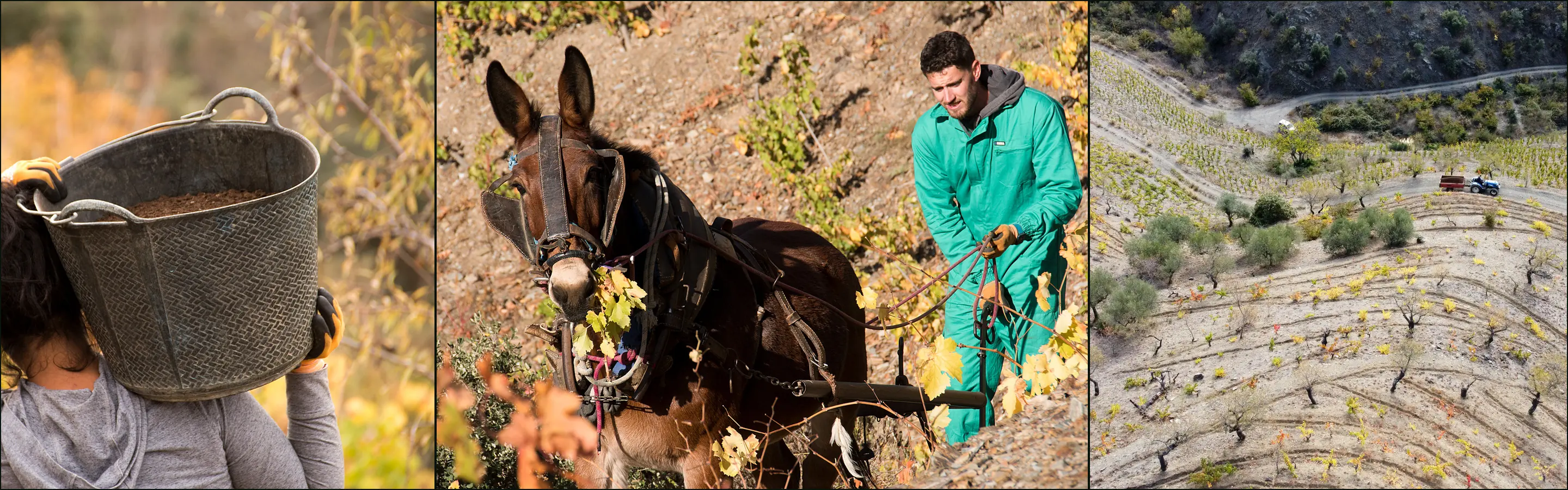
When Carles brought a mule to Porrera in 2007, none had worked there since the 1960s, and the whole village came out to watch. Manure for the compost comes from organic cattle in the Pyrenees, because Priorat has none suitable. At harvest the grapes spend a night at four degrees below zero, then are sorted berry by berry, which takes twice as many people as the picking. The reds ferment with their stems, which lend the grip that would otherwise come from new oak.
The EU organic register lists the company under CCPAE, the Catalan organic authority, for its grapes but not its winemaking, so the grapes are certified organic and the wine is not. The family farms biodynamically and belongs to Biodyvin, the growers’ union that certifies biodynamic wine, but by the family’s own account the label is still to come, so we claim none.
“Everyone said to me, you are crazy.”
Why it’s remarkable
Free Bacchus Verification
CCPAE EU organic · the grapes, not the winemaking
Certified1
- EU organic, CCPAE: ES-ECO-019-CT.724-0018972.2026.001, for the grapes only
Not covered1
- The winemaking: the certificate does not cover it, so the wine is not certified organic
Also on record1
- Farmed biodynamically, no biodynamic certification confirmed
If you’re buying
Cheat sheet
Save it to your phone. Everything you need to recognise this producer, and three things worth saying about it, at a glance in a shop or across a table.