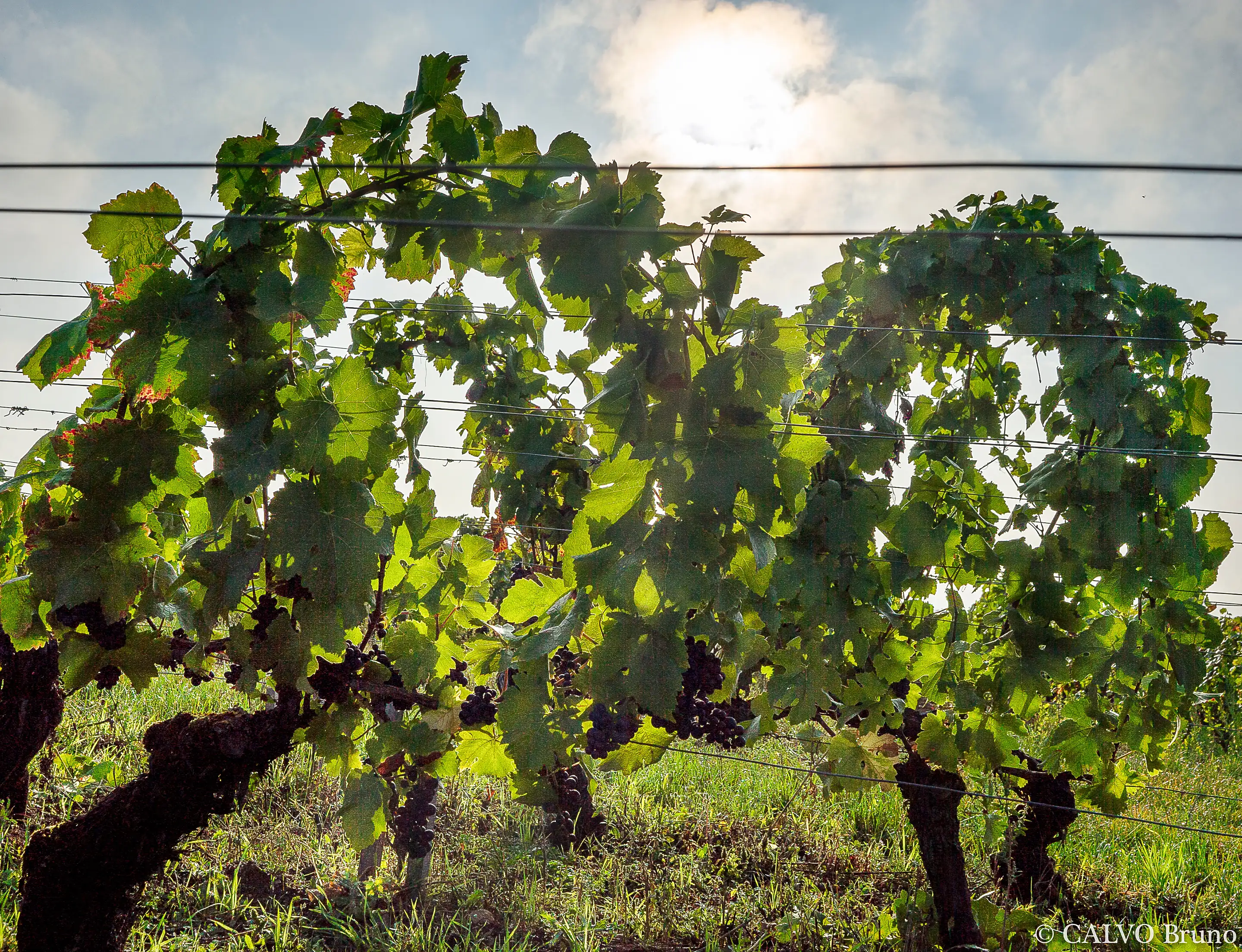
Domaine Pierrick Bouley
The Free Bacchus Story
In 2020, a year of drought, Pierrick Bouley started picking on 19 August, and in some of his premiers crus the crop came in 20 to 30 per cent short. The bunches were on the vines, but there was little juice in them. In a normal year he needs 320 to 350 kilos of grapes to fill a barrel of red wine; that year he needed 380. He had been running the family domaine in Volnay since the 2014 vintage, and four months before that harvest he had signed it on with Ecocert, the organic certifier.
Volnay is a village in the Côte de Beaune, the southern stretch of Burgundy’s Côte d’Or, and it makes red wine only, from Pinot Noir. Go on south-west and the slope turns over to Chardonnay in Meursault, Puligny-Montrachet and Chassagne-Montrachet, which makes Volnay the last big run of red before the white-wine villages. The Burgundy wine board singles Volnay out for its delicacy. In the glass it runs from bright ruby to light garnet and smells of violets and cherries, though some of its vineyards give firmer, more muscular wine. Pommard, the next village north, is known for denser, more tannic reds. As everywhere in Burgundy, the land is ranked plot by plot. A village Volnay can be blended from vines across the commune, and the domaine’s draws on seven named plots, while a premier cru comes from one of 29 higher-ranked vineyards, called climats. Decanter puts Clos des Chênes, on thin white soil over limestone at the south end of the village, in the group that may be Volnay’s best. It is the domaine’s flagship, 1,500 bottles a year from 0.35 hectares, and the domaine calls it its great wine for ageing, good for twenty years. The family also has, to itself, the only part of Les Grands Champs ranked premier cru. Many growers own a piece of that vineyard, but theirs is village land.
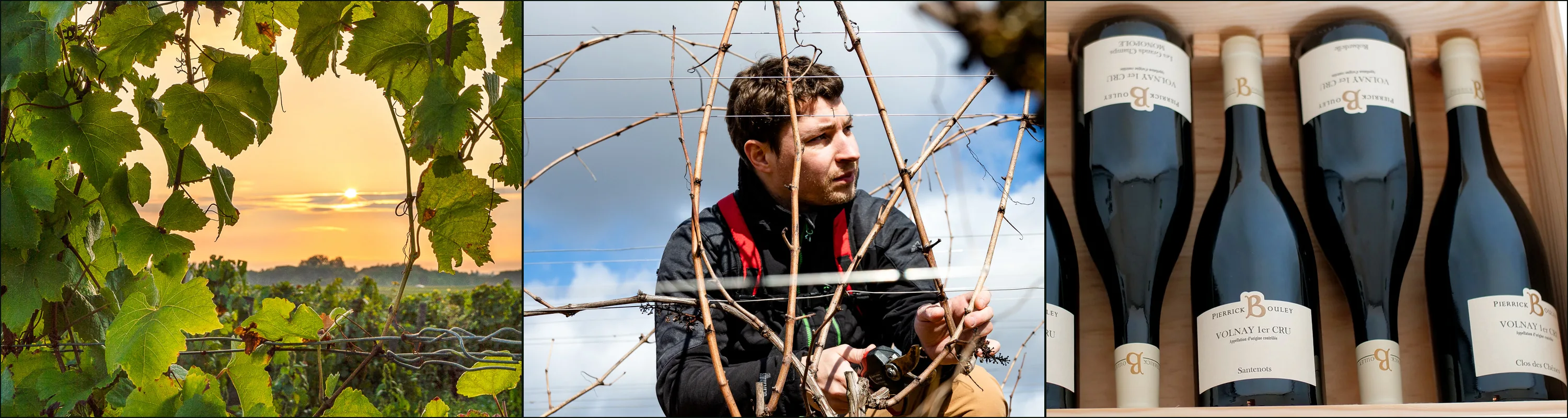
Pierrick is the sixth generation of his family to run the domaine, which was called R & P Bouley until he took it on. He came to work there full time in 2009 and took over from his parents, carrying on from his father, Pascal, with the 2014 vintage. It runs to 9 hectares in 41 parcels, with vines about 50 years old on average, and little by little he has changed how they are farmed, inspired by biodynamic practice though the domaine holds no biodynamic certificate. The tractor goes down the rows as seldom as possible, so as not to pack the soil. The vines are pruned by an old method, Guyot Poussard, that keeps sap flowing up both sides of the trunk. No weedkiller, insecticide or anti-rot spray is used. And rather than hedge the vines, cutting back the new shoots, he has their tips woven together at the top of the vine, which Decanter called a huge investment in labour.
In the cellar the grapes are destemmed and left to ferment naturally, with no yeast, enzymes or bacteria added. Since 2017 no sulphur, the usual preservative in wine, has gone in while the wine is made; a little is added only after its twelve months in French oak, to steady it before it is bottled at the domaine.
The organic certificate has come at the pace the rules set. A vineyard serves three years of conversion before its wine may be called organic, so the domaine’s first certified harvest was 2023, and Ecocert’s certificate today names the white and red wines of 2023 and 2024 and nothing earlier. It does not cover everything the domaine makes. The same certificate lists some Pinot Noir, Gamay and Aligoté grapes still in conversion, and records non-organic wine being made alongside the organic. Wines from bought-in grapes, such as the Chassagne-Montrachet 1er Cru Abbaye de Morgeot, are outside it. The domaine is not certified biodynamic.
“we had plenty of grapes but not much juice”
Why it’s remarkable
Free Bacchus Verification
Ecocert EU organic · 2023 and 2024 wines only
Certified1
- EU organic, Ecocert France (FR-BIO-01.250-0027658, to March 2028): EARL Domaine Pierrick Bouley, engaged April 2020
This page covers
The white and red wines of 2023 and 2024, the only ones the certificate names, 2023 being the first certified harvest.
Not covered1
- Wines from bought-in grapes, such as the Chassagne-Montrachet 1er Cru Abbaye de Morgeot
Also on record3
- The certificate also lists Pinot Noir, Gamay and Aligoté grapes still in conversion
- The certificate records non-organic wine production alongside the organic
- Not biodynamic
If you’re buying
Cheat sheet
Save it to your phone. Everything you need to recognise this producer, and three things worth saying about it, at a glance in a shop or across a table.