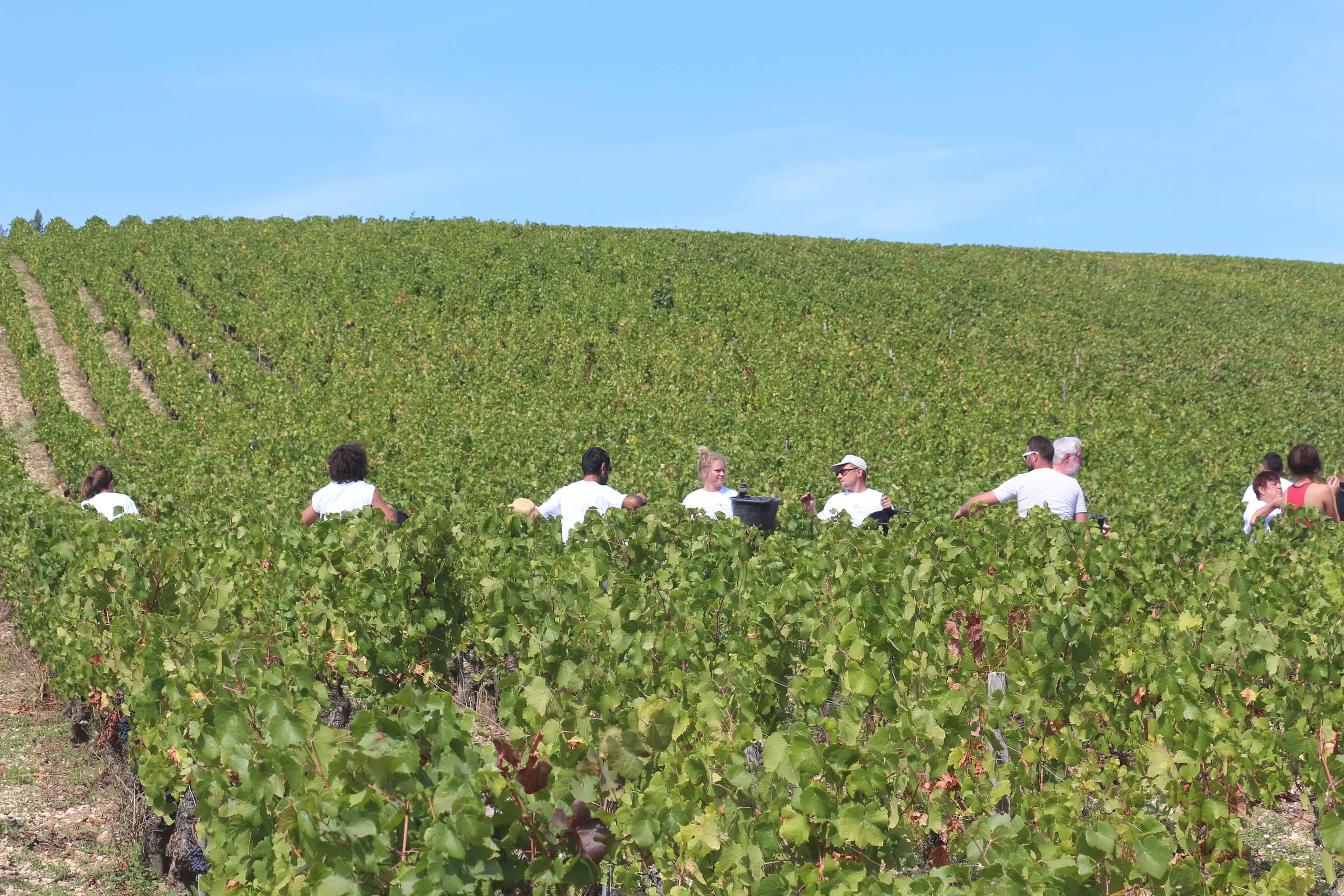
Domaine Jean-Louis & Jean-Christophe Bersan
The Free Bacchus Story
In Saint-Bris, Jean-Christophe Bersan found that going organic was not much of a change for the oldest vines and a whole different matter for the young ones. Vines of fifty years and more had gone in before chemicals and fertilisers came into use, and their roots already ran deep. The young vines reached only 50 to 100 centimetres down. Fertiliser makes a vine lazy, he told the Burgundy writer Ola Bergman in 2012, and you end up making wine from the fruit rather than from the soil. The work began with a few experiments in 2002, the domaine signed on with the certifier Ecocert in July 2009, and it says its whole vineyard was certified organic in 2012.
The Bersans have grown vines in Saint-Bris-le-Vineux since the fifteenth century, by the family’s own account. In 2009 Jean-Louis Bersan and his brother split the family estate in two, and both halves still trade as Domaine Bersan, so look on the label for Jean-Louis & Jean-Christophe beneath the name. Jean-Christophe, an oenologist, runs the vineyards and the cellar; his father, Jean-Louis, takes care of the selling. It was Jean-Louis who began planting in Chablis, which his own father had not wanted to do.
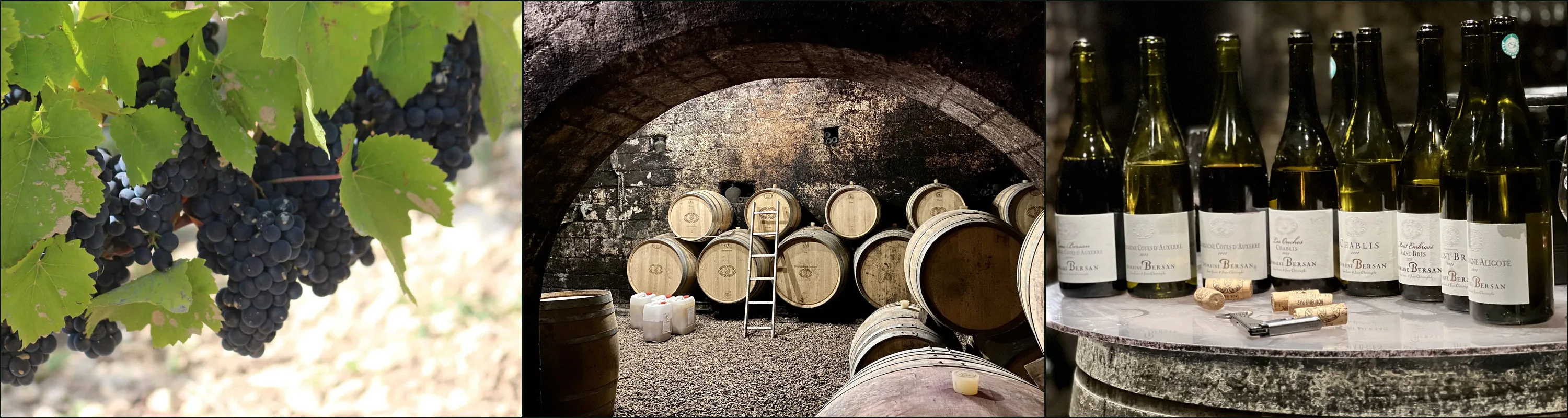
Saint-Bris-le-Vineux sits in the Yonne, a 20-minute drive south-west of Chablis, and it is one of Burgundy’s oddities. The rest of the region is built on Chardonnay for white wine and Pinot Noir for red, with some Aligoté and Gamay. Saint-Bris is Burgundy’s only appellation for Sauvignon Blanc, the grape of Sancerre and Bordeaux, and a tiny one, 133 hectares when Bergman wrote, against close to 5,000 in Chablis. The Sauvignon arrived before phylloxera, in the nineteenth century. Most of it grows high on slopes that face east or west, because on the south-facing ones, Jean-Christophe explains, it would ripen too far, and slower ripening keeps the fruit. Chardonnay and Pinot Noir, as he sees it, carry the soil into the wine, while Sauvignon brings aromas of its own; a San Francisco merchant calls Saint-Bris Sauvignon steely and saline rather than tropical. Lower down, where the soil holds more clay, the two Burgundy grapes make Bourgogne Côtes d’Auxerre, a regional appellation created in 1992 that comes in all three colours. The Bersans’ Irancy is red, from Pinot Noir and, in one bottling, César, a grape allowed in Irancy wines.
At the top of the range is a very small amount of Chablis Premier Cru Montmains. Chablis makes dry white wine from Chardonnay, and a premier cru stands on the second rung from the top of its four-step ladder. The Bersans’ Montmains spends eight months in barrel and four in steel before bottling. Their oldest vines, planted more than 75 years ago by Jean-Christophe’s grandfather, Louis, go into cuvées aged in oak in vaulted cellars from the eleventh and twelfth centuries beneath the village, and the Irancy and Côtes d’Auxerre Cuvée Louis Bersan carry his name.
Ecocert’s certificate, valid to March 2027, belongs to the company behind the domaine, SCEA Jean-Louis et Jean-Christophe Bersan, and it does not cover everything. Some of the grapes, Pinot Noir among them, are still in conversion; the domaine’s own sheet for the Irancy Vau Falleau, half a hectare of 90-year-old Pinot Noir, says the parcel has been converting since 2023. The certificate also records non-organic wine made alongside the organic, without saying which. It names the Montmains for the 2023 vintage only, and among its wines it lists no plain Irancy, only the Irancy Cuvée Louis Bersan. The domaine is not certified biodynamic.
“We want the wine to reflect the soil. The soil gives minerality.”
Why it’s remarkable
Free Bacchus Verification
Ecocert EU organic
Certified1
- EU organic, Ecocert France (FR-BIO-01.250-0013844, to March 2027): operator SCEA Jean-Louis et Jean-Christophe Bersan, under control since July 2009
Not covered2
- Vintages of the Chablis Premier Cru Montmains other than 2023: it is certified for the 2023 vintage only
- Plain Irancy, which is not on the certificate
Also on record3
- Some grapes, Pinot Noir among them, are still in conversion (the domaine dates its Irancy Vau Falleau’s conversion to 2023)
- The certificate records non-organic wine made alongside the organic
- Not biodynamic
If you’re buying
Cheat sheet
Save it to your phone. Everything you need to recognise this producer, and three things worth saying about it, at a glance in a shop or across a table.