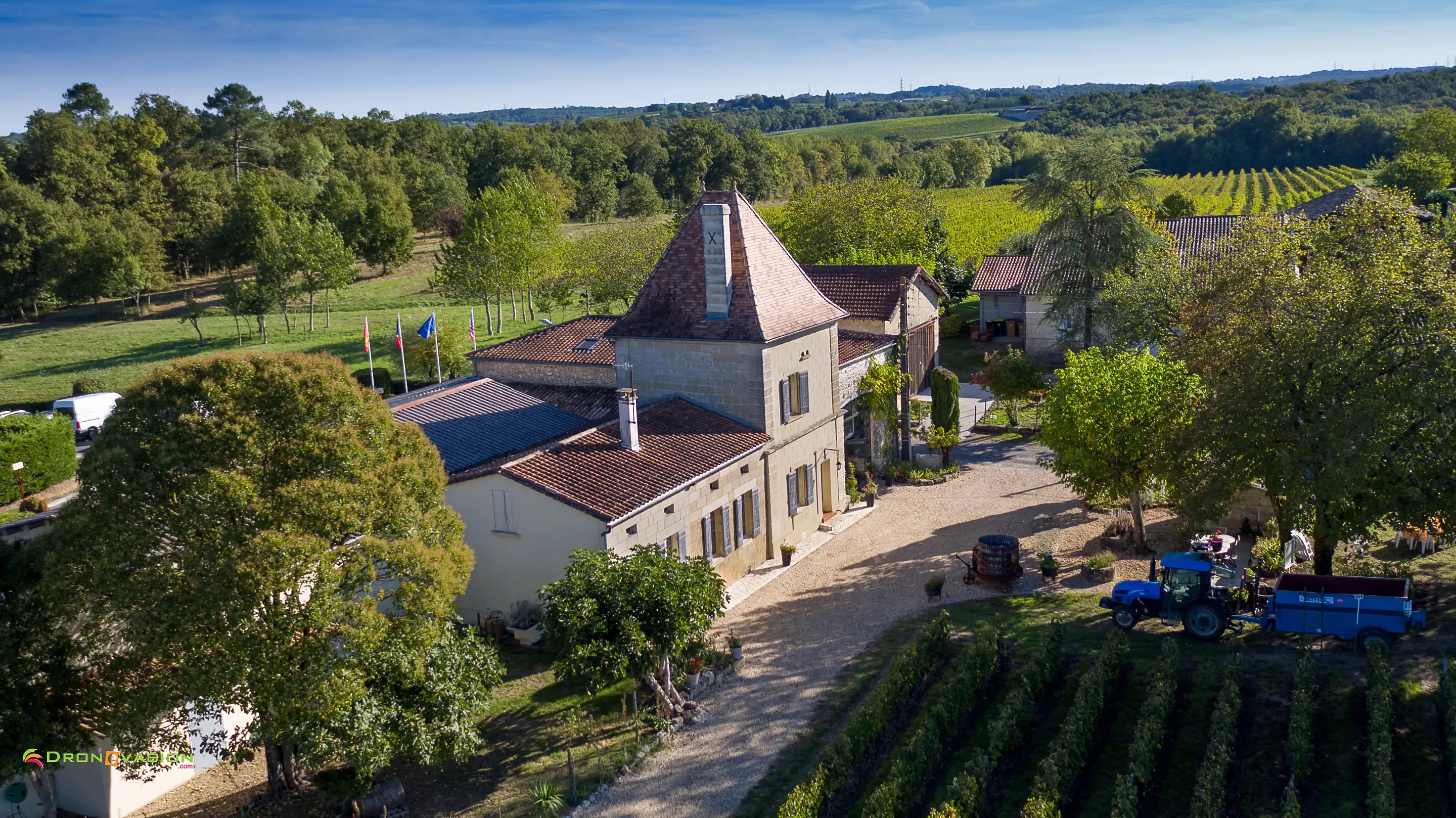
Château Vieux Mougnac
The Free Bacchus Story
When Yves Milhard took over the family vines at Château Vieux Mougnac in 1960, he refused chemical treatments because of the skull printed on the packaging. He did not want to poison himself or his customers, as the family tells it. His daughter Sylvie thought his way old-fashioned and poor business when she was young, she told the Paris merchant Avenue des Vins, until she saw that it would disappear unless she carried it on. People took her for a hippie back then, she said, and now they roll out the red carpet.
By the family’s own account the vines go back to 1870, when Félix and Élisabeth Milhard planted their first Merlot at Petit-Palais-et-Cornemps and turned their barn into a cellar. Maxime Milhard, the next generation, came home in 1945 from five years as a prisoner in Germany and planted Sémillon. Yves and Maria took over in 1960, and the company register lists a business in Yves’s own name at Château Vieux Mougnac from 1958 to 1999. Maria sold the wine by the bottle, at the estate and at small markets in the Dordogne. Sylvie took over from her parents in 1991, after working as an accountant in the Libourne area, and in 2010 her husband, Michel Bessard, a retired teacher, joined her. He manages the family company today.
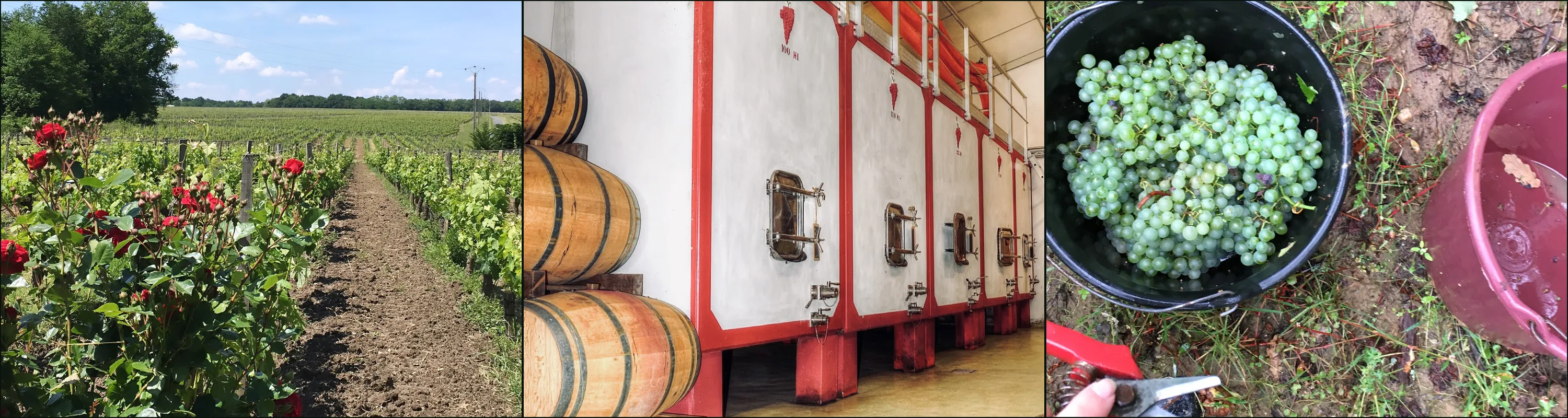
Petit-Palais-et-Cornemps is about ten kilometres from Saint-Émilion, close enough for the family to place itself at the town’s gates, but the estate’s reds carry a broader name. Bordeaux Supérieur can be made anywhere in the Bordeaux region, and it asks more of a red than plain Bordeaux does: riper grapes, lower yields and at least nine months of ageing. The Bordeaux wine council, which calls it different rather than better, traces it to 1943 and the idea of a Sunday wine for local families, something apart from the everyday bottle. The family puts its reds at 80 per cent Merlot and 20 per cent Cabernet Franc, grown on clay and sand. Merlot gives a wine colour, suppleness and a round feel, with red fruit while it is young, and Cabernet Franc adds freshness, a little spice and a firmer grip of tannin. What sets the house apart is patience. Since the mid-18th century Bordeaux châteaux have sold wine en primeur, while it is still ageing in barrel, and Mougnac sells none that way. Its reds spend two winters in concrete vats and then wait in bottle in the château’s cellar, six to ten years in all by the family’s account, until the family judges them ready to drink. In September 2026 the youngest red in its shop was the 2018.
Farming organically is getting harder here, the family wrote in 2019. In 2017 a late frost destroyed the entire harvest, and in 2018 a warm, rainy summer brought mildew, a parasitic fungus, which devastated 80 per cent of the vines. In 2021 frost, mildew and too little sun kept the Merlot from giving a proper crop for the red, so the family picked its Cabernet and made rosé instead. It makes red only in the years that suit it, it says. The organic certificate names the estate’s reds vintage by vintage, and there is no 2017 and no 2021.
The best years go into a cuvée named for one of the family. Maria 2009, Michel 2010 and Yves 2011 came before the organic certificate. Cuvée Jérémie 2012, from old vines and aged in oak barrels, is inside it, and it is signed by Sylvie’s son, Jérémie Bessard, the fifth generation; his sister Laetitia started LO Wine, a wine-tourism business, at the estate in 2016. Agence Bio, the French organic register, dates the estate’s sign-up with the certifier Ecocert to 19 March 2009. A vineyard has to serve three years of conversion, so the certificate’s first red is the 2012, and the family dates its certification to that year, when new European rules for organic wine came in. The certificate names each wine it covers, the reds from 2012, the dry Sémillon white from 2022 and the 2023 rosé, which leaves out the 2006 and 2011 reds the estate still sells. It also lists non-organic alongside organic production of crops without saying what that is, though Agence Bio does not flag a mixed operation. The family says it follows biodynamic principles, but neither Demeter nor Biodyvin certifies it.
“je ne veux pas m’empoisonner, ni empoisonner mes clients”
Why it’s remarkable
Free Bacchus Verification
Ecocert France EU organic · wines named by vintage, from 2012
Certified1
- EU organic, Ecocert France (FR-BIO-01.250-0040760, to March 2028): EARL Château Vieux Mougnac, engaged March 2009, organic from the 2012 vintage
This page covers
The wines the certificate names by vintage: the reds from 2012 (no 2013, 2017 or 2021), the dry white from 2022 and the 2023 rosé.
Not covered2
- The 2006 and 2011 reds still on sale, which predate the certificate
- The Maria 2009, Michel 2010 and Yves 2011 cuvées, which predate the certificate
Also on record2
- The certificate also lists non-organic alongside organic production of crops without saying what that is, and Agence Bio does not flag a mixed operation
- Not biodynamic
If you’re buying
Cheat sheet
Save it to your phone. Everything you need to recognise this producer, and three things worth saying about it, at a glance in a shop or across a table.