Champagne Telmont
The Free Bacchus Story
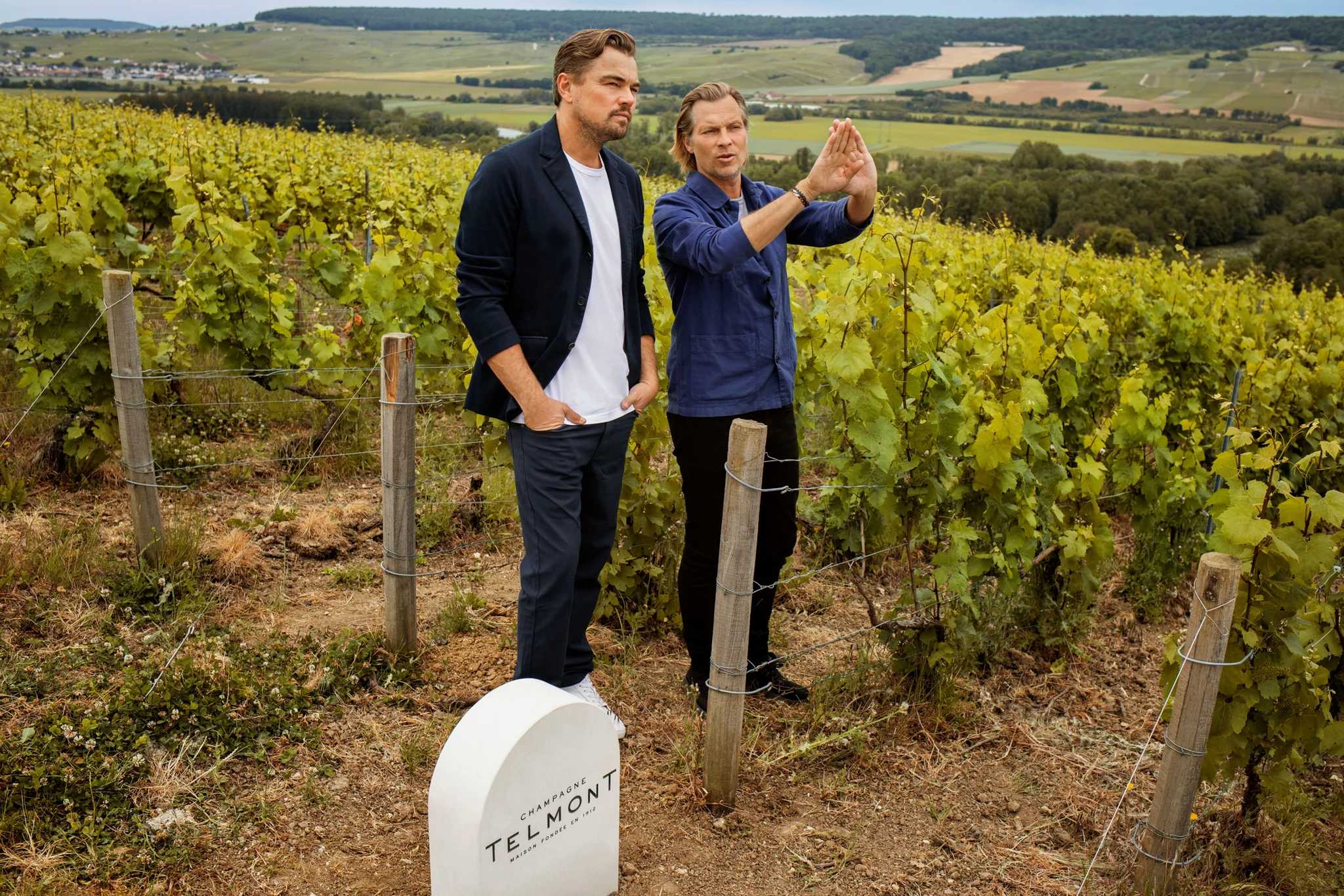
During the Champagne riots of 1911, Henri Lhôpital, a winegrower in Damery, wrote a song, ‘Gloire au Champagne’, urging winemakers to keep their standards high. The riots drove him to found a Champagne house under his own name the next year. His son André, cellar master from 1937, renamed it Champagne J. de Telmont in 1947, after one of his best plots, and in 1968 the house moved to 1 Avenue de Champagne, at the foot of the vineyard, where it still is.
Champagne is made twice, once as a thin, sharp base wine and again in the bottle, which is where the bubble comes from. Telmont is a house, not a grower. A grower bottles its own harvest; a house also buys grapes and blends them towards a style, and Telmont’s own 25 hectares, the house says, do not supply all the grapes it needs, so it buys from partner growers who farm more than 55 more. Réserve de la Terre, the bottle to know, blends all three Champagne grapes. The edition New York merchants were selling in September 2026 is 44 per cent Meunier, the grape that gives Champagne its fruit and roundness, with Chardonnay for liveliness and Pinot Noir for body. It is built on the 2020 harvest, with 15 per cent each of 2019 and 2018 wine kept back as reserves, and it spent three years in the cellar. At the very end, most Champagne gets a little sugar to round it off, and nine bottles in ten are Brut, which means less than 12 grams a litre. This one gets 2.5 grams, which makes it an Extra Brut, the drier style that allows no more than six.
Henri’s great-grandson Bertrand, the fourth generation, took the house on with his sister Pascale, and in 1998 he stopped using weedkillers in his vineyard. The house signed up with the certifier Ecocert in August 2011, and by its own account the first part of its vineyard was certified organic in 2017, after a decade’s work. In 2020 the French spirits group Rémy Cointreau became the majority shareholder, after Ludovic du Plessis, now the house’s president, brought the two together, and Bertrand stayed on as cellar master. In 2021 Telmont released Réserve de la Terre, its first certified organic wine. Growers supply most of the house’s grapes, and to bring them over to organic farming it gives them help and advice and, The Drinks Business reported in 2024, pays them 20 to 25 per cent more for their grapes. In 2025 Bertrand handed the cellar to Brice Bezin, his deputy since 2024, who began his career in California’s Napa Valley.
The house has changed more than its farming, by its own account. It gave up gift boxes and clear bottles, which contain no recycled glass, and has sent nothing by air since July 2021, even to the United States and Asia. It co-developed an 800-gram bottle that it calls the lightest Champagne bottle in the world, and it says that from October 2025 its bottles bound for the United States are shipped on Neoline’s wind-powered ships. In 2025 its organic vineyards were certified Regenerative Organic at Bronze level, the first in Champagne by the house’s account; the scheme builds on organic certification and adds soil health, biodiversity and fair working conditions.
Not every Telmont bottle is organic, and the certificate says which are. Ecocert certifies Réserve de la Terre and Réserve de la Terre Rosé, and this page covers only those two. The rest of the range, Réserve Brut, Réserve Rosé, the Blanc de Blancs and Blanc de Noirs vintages of 2012 to 2015, the Vinothèque wines and Sans Soufre, is not certified organic. Partner growers supply most of the house’s grapes, and Réserve de la Terre is blended from villages across Champagne; the 2021 edition drew 60 per cent of its grapes from Taissy, a premier cru village, and 8 per cent from Damery. The house says about 70 per cent of its own and its partners’ vines are certified organic or in conversion, and it aims for all of them by 2031. The regenerative certificate covers the vineyards, not the wine, and no Telmont bottle is licensed to carry its label. The house is not certified biodynamic.
“This organic cuvée is one of my greatest victories.”
Why it’s remarkable
Free Bacchus Verification
Ecocert EU organic · Réserve de la Terre and Réserve de la Terre Rosé only
Certified2
- EU organic, Ecocert France (FR-BIO-01.250-0012638, to March 2027), operator SAS Champagne de Telmont at Damery, engaged August 2011
- Regenerative Organic Certified at Bronze level for the vineyards (wine grapes), with no ROC licence for any wine
This page covers
The Réserve de la Terre and Réserve de la Terre Rosé, which the certificate names.
Not covered1
- The house’s other wines: Réserve Brut, Réserve Rosé, the Blanc de Blancs and Blanc de Noirs vintages of 2012–2015, Vinothèque and Sans Soufre
Also on record3
- Partner growers supply most of the house’s grapes, and Réserve de la Terre is blended from villages across Champagne (the 2021 edition is 60% Taissy, 8% Damery)
- The house says about 70% of its own and its partners’ vines are certified organic or in conversion, and aims for 100% by 2031
- Not biodynamic
If you’re buying
Cheat sheet
Save it to your phone. Everything you need to recognise this producer, and three things worth saying about it, at a glance in a shop or across a table.