Free Bacchus Journal
The Hardest thirty percent
Telmont became the first Champagne house to earn Regenerative Organic Certification, and it has promised to bring every vine it depends on into organic farming by 2031. We list it at Silver. That isn’t a criticism. It’s the most interesting thing about the house.
When Telmont’s regenerative certification was announced in January, most of the coverage repeated the same line: seventy percent of the house’s vines are already certified organic. It’s a good number, and it travelled well.
Telmont’s own website says something slightly different. On the page setting out its commitments, the house describes that seventy percent as “certified or in conversion.”
Those three extra words matter, and the house deserves credit for printing them, even if it didn’t always. Its own press kit in January used the shorter line, so the coverage wasn’t inventing it. The commitments page kept the longer one, and so did the harvest report Telmont put out in September. A vineyard in conversion is doing the work: farming organically, absorbing the cost, carrying the lower yields. It just hasn’t finished the three-year wait before it can call the result organic. Some of Telmont’s seventy percent is certified. Some of it is still crossing the valley.
That distinction is the whole story of this house, and it’s why we think Telmont is worth writing about now, halfway through, rather than later when the job is done.
Three extra words on the house’s own website: “or in conversion.” Most of the coverage left them out, and so did the house’s press kit. The website kept them.
A sleeping beauty in Damery
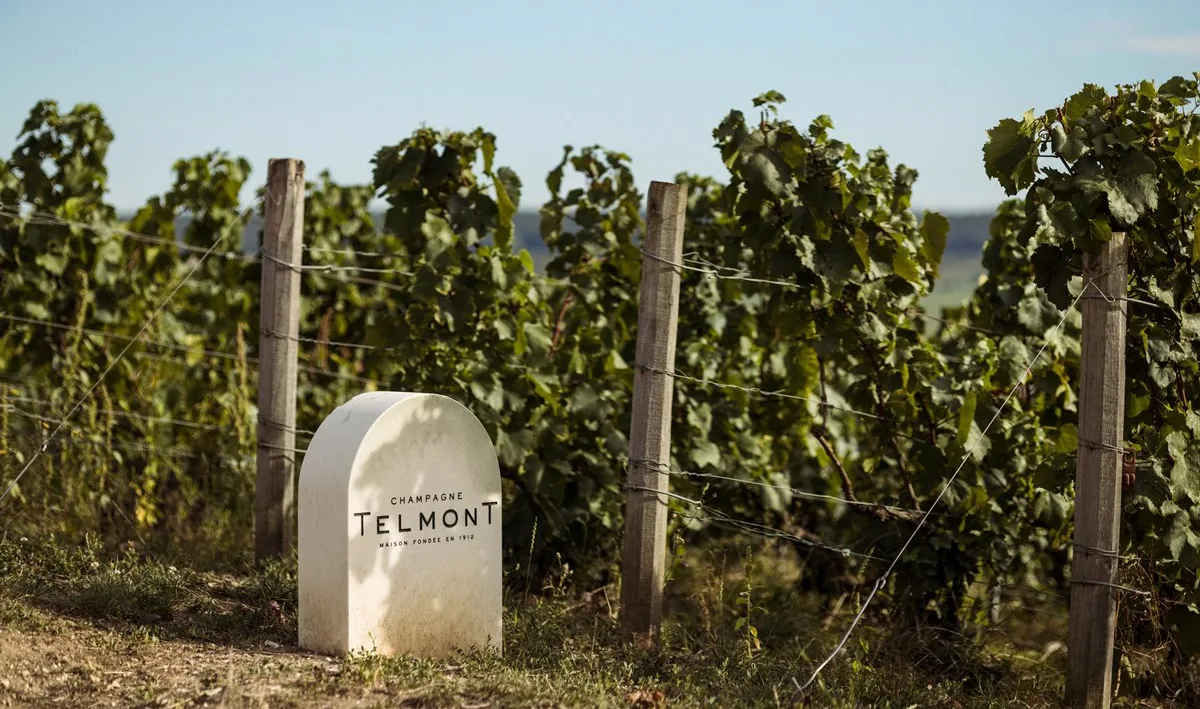
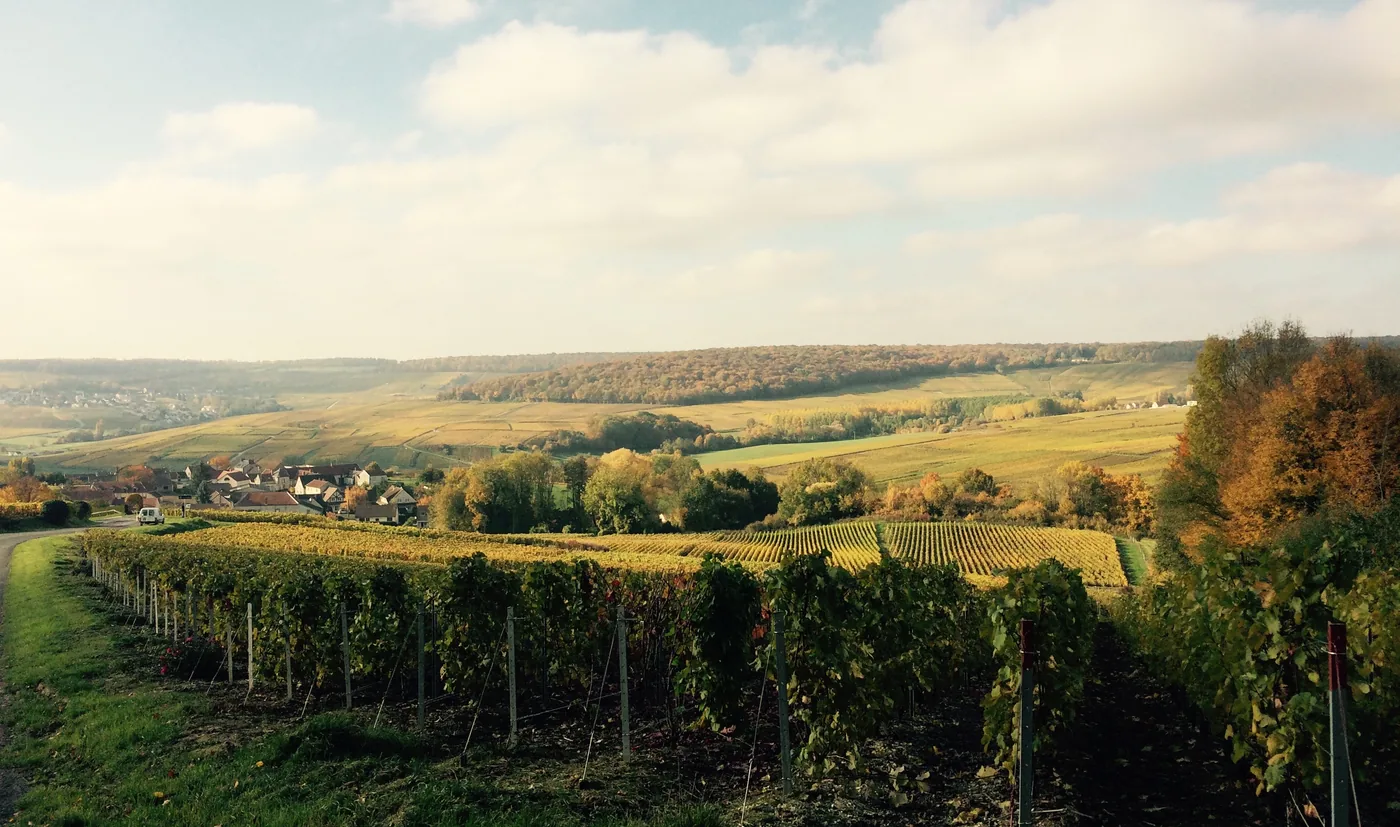
Telmont’s story begins in 1912 with Henri Lhôpital. The house took the name Champagne de Telmont in 1947, after one of the family’s best plots, and has stood at the foot of its vineyard in Damery, in the Vallée de la Marne, since 1968. For most of that time it was a house almost nobody had heard of, even in Champagne. When Ludovic du Plessis went looking for a house to run, he wanted four things: a real history, family ownership, exceptional wines, and vineyards that had already begun moving toward organic farming. Telmont had all four. His description of it was a sleeping beauty.
Rémy Cointreau is now the majority shareholder, and Leonardo DiCaprio became an investor in 2022, which accounts for a good share of the attention the house now gets. The substance started a year earlier. In 2021 Telmont launched a programme it calls In the Name of Mother Nature, and du Plessis still sums it up in one line: “the wine is great because the earth is beautiful.”
The targets were specific enough to be checked. The house’s own estate would be converted to organic farming by 2025. The vineyards of its partner growers would follow by 2031. And the business would reach Net Zero by 2050.
The first of those dates has now passed, and it is worth saying how it went. On the same commitments page, the house now reports 81 percent of the estate’s vines and 72 percent of its partners’ farmed organically, and gives 2031 as the date for both.
What they’ve actually done
Start with the farming, because that’s what we assess.
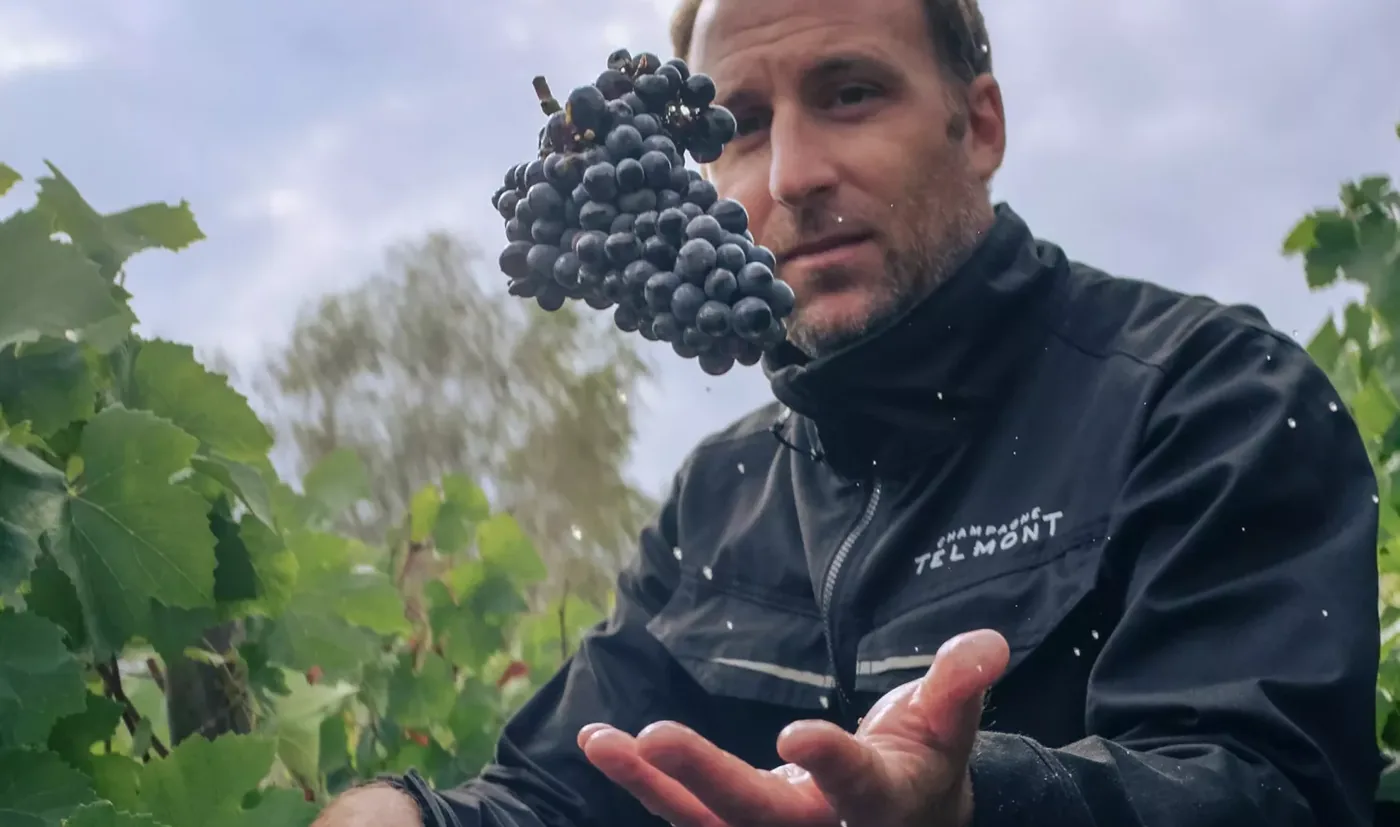
Regenerative Organic Certification is built on a single precondition: you have to be certified organic first. It then asks more on top, about soil health, animal welfare and fairness for farmworkers. Telmont’s certification, audited on site by Ecocert Environnement over several months, was granted at Bronze, the first of the standard’s three levels, and it covers the house’s organic certified vineyards specifically. The practices behind it are the unglamorous ones: 2,500 hornbeam trees planted in and around the vines, rainwater collected and reused, cover crops keeping soil protected and alive between the rows.
Then the rest of the operation, where Telmont has gone further than almost anyone in the region. It stopped producing gift boxes entirely, a first in Champagne. It stopped using clear bottles, which it notes were made from no recycled glass at all, and moved every cuvée into green bottles made from 85 percent recycled glass. It co-developed a lighter 800-gram bottle with the glassmaker Verallia, and it uses bottles made from the glass produced while a furnace changes from one tint to another. It banned air freight for all distribution in July 2021. Its electricity comes entirely from renewable sources.
None of that makes the wine organic. All of it describes a house that took its own claims seriously enough to change things customers can see.
It stopped making gift boxes and clear bottles. Neither changes what’s in the glass. Both tell you how seriously a house means it.
Why the last thirty percent is the hard part
Here’s the structural fact that most people never learn about Champagne, and it explains everything about Telmont’s timeline.
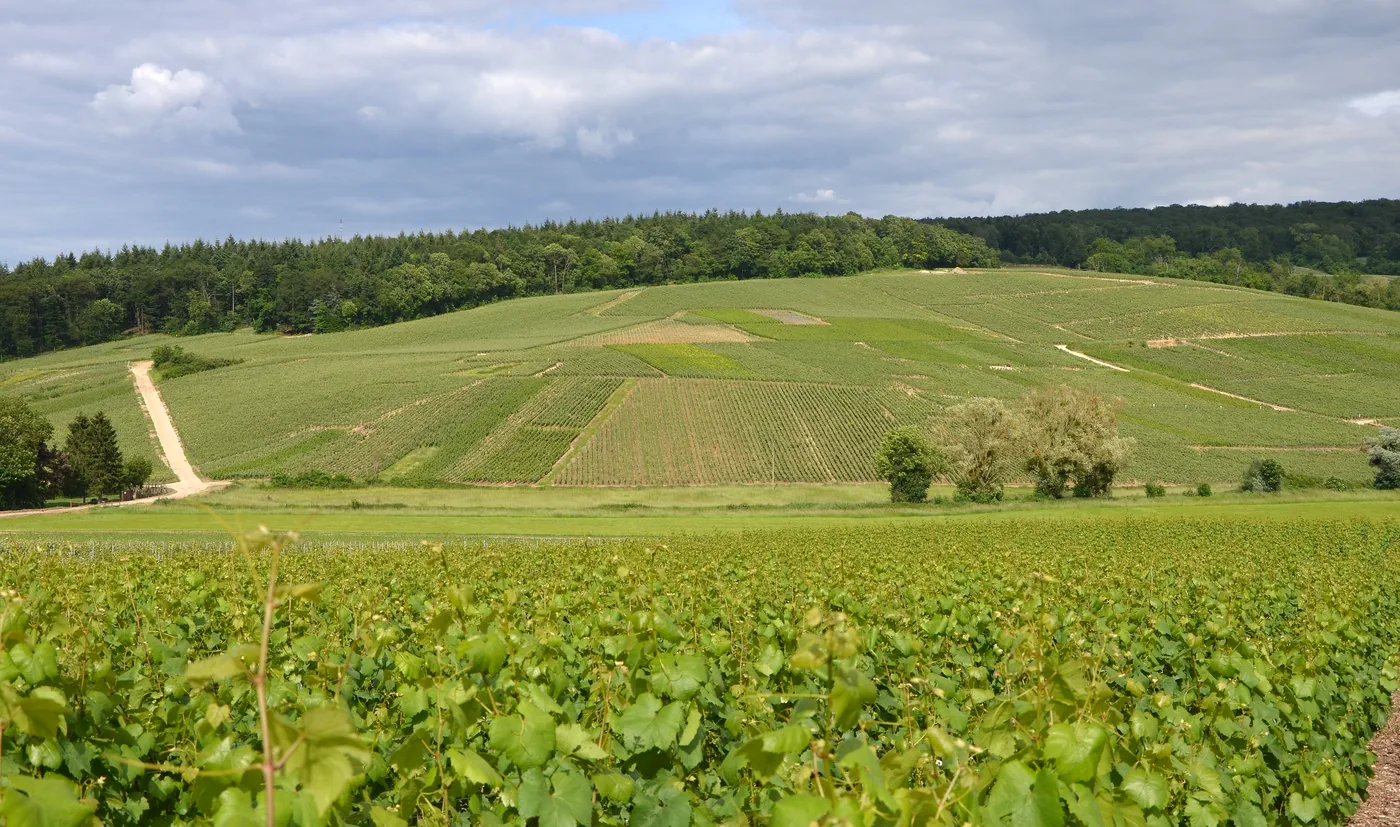
Champagne houses mostly don’t own their vineyards. Collectively they hold slightly more than ten percent of the region’s vineyard area, yet they’re responsible for over two-thirds of all Champagne sold. The rest of the land, close to ninety percent, belongs to more than sixteen thousand growers, most of whom sell their grapes to the houses. A Champagne house, in other words, looks less like a wine estate and more like the distilleries we wrote about recently, Waterford and Bruichladdich: a buyer of other people’s farming.
That’s why Telmont set two deadlines rather than one. Converting its own estate looked like a decision the house could simply make, and even that has run past its date. Converting its partner growers is a different kind of problem. Each of those vineyards belongs to somebody else, who has to be persuaded to take on three years of organic costs while being paid as though nothing had changed, lower yields, more labour and more risk in a wet summer. In a year when spring frost destroyed 43 percent of the region’s production potential, by the estimate of the houses’ own union, asking a grower to give up synthetic fungicides is not a small request.
So the remaining thirty percent isn’t the same as the first seventy. It’s mostly other people’s land, other people’s risk, and a promise that depends on relationships rather than on an internal instruction. It’s the hardest thirty percent in the building.
A house can decide to convert its own estate. It can only convert its growers by persuading them.
Why we list it at Silver
We list Telmont at Silver, and we’d rather explain that than leave it as a badge.
The certification isn’t in question. It’s Track A under our standard, confirmed against the issuing bodies: Ecocert for organic, and Regenerative Organic Certified for the organic vineyards. What the tier reflects is scope. Our standard scores the farming behind the bottles a house actually sells, and when only part of that fruit is certified, the score follows the part that is. That’s the same rule we apply to every producer whose certification covers some bottles and not others. On the quality side, the independent evidence we hold for the house is thinner than our upper tiers require, which is a statement about our file rather than about the wine.
You’ll find Telmont in the Cellar at Silver, with its certificate and what it covers set out on its page. The tier isn’t a verdict on its intentions, which look about as serious as any in the region. It’s a measurement of where the conversion stands today. We re-verify every year, and a house that finishes what Telmont has started should expect its record to move with it.
There’s a certain symmetry to it. Two independent bodies have now assessed this house: the Regenerative Organic Alliance gave it Bronze, and we give it Silver. Neither of us has awarded it gold yet, and both assessments describe the same thing, which is a house partway through doing something difficult properly.
How to drink it with your eyes open
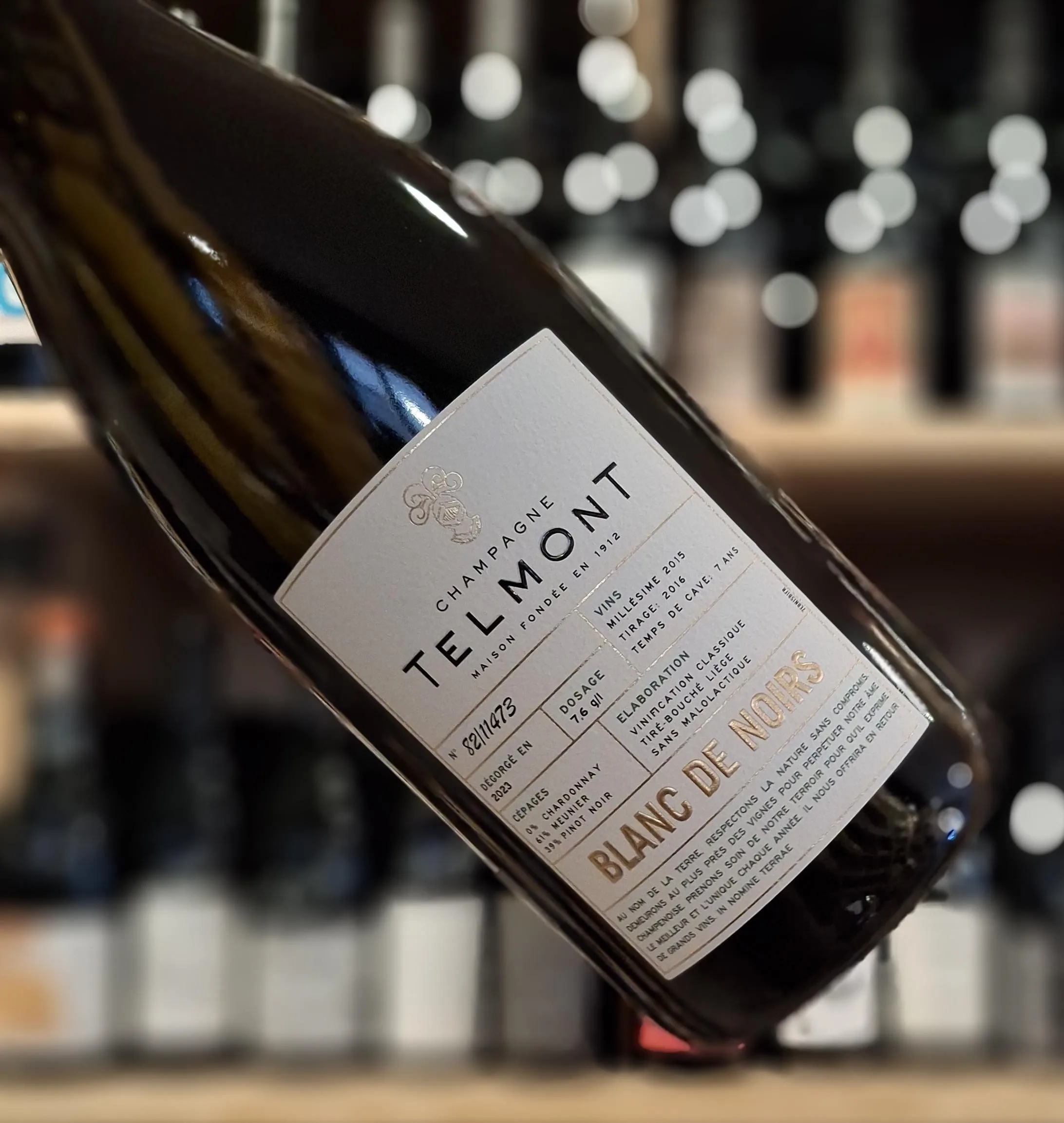
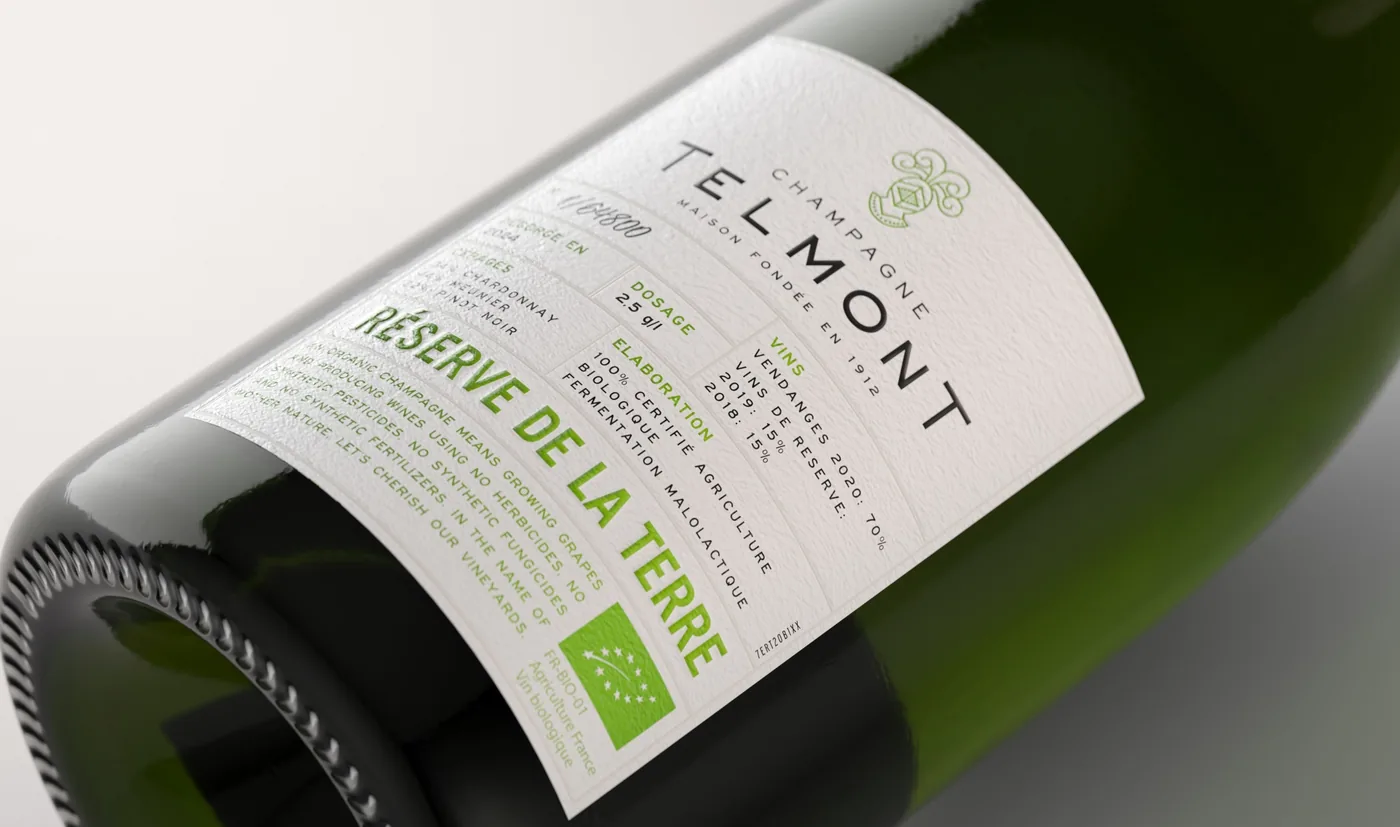
If you want the part of Telmont where the claim is already complete, the answer is Réserve de la Terre. The house introduced it in 2024 as its manifesto cuvée, made from 100 percent organic grapes. That’s the bottle where the farming promise and the liquid line up exactly.
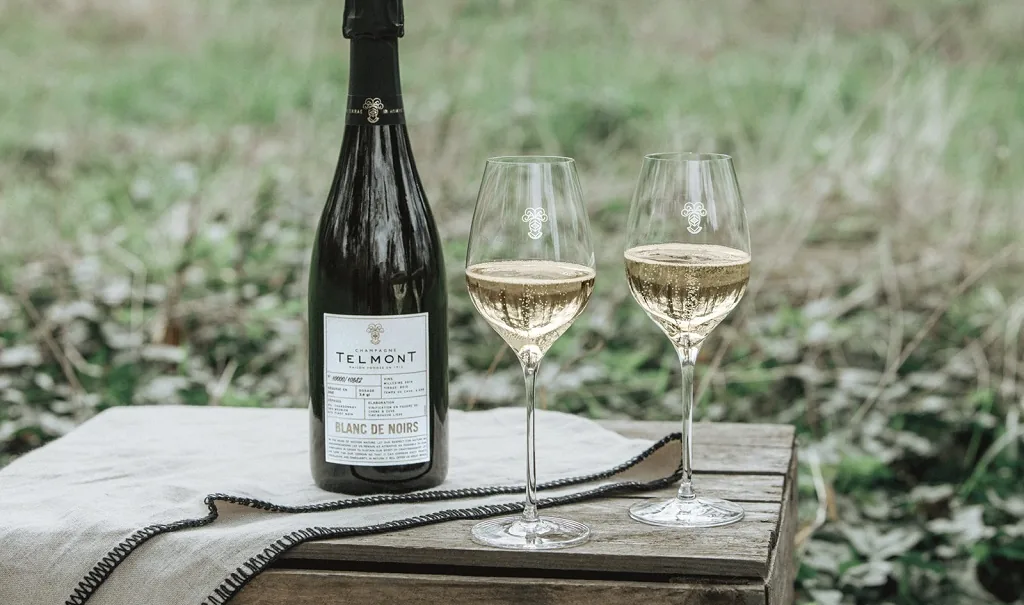
For the rest of the range, read the label rather than the house’s reputation. That’s not a rule about Telmont. It’s the rule for every producer mid-conversion, and for plenty that aren’t: certification attaches to particular bottles, and a famous commitment at house level tells you where the business is heading rather than what’s in the one in front of you.
Telmont also points to cellar choices it’s proud of: little or no sugar added at disgorgement, and on Réserve de la Terre a sulphite level the house puts at a third of the average for conventional Champagne. Those are real, and worth knowing about. They’re decisions made in the cellar, though, and our assessment is about decisions made in the field. The two get conflated constantly in wine, and keeping them apart is most of what we do.
Why a house like this matters
Under a tenth of Champagne’s vineyards are certified organic, depending on who’s counting and when. The reason isn’t that Champagne houses don’t care. It’s the structure: the houses that sell most of the wine own very little of the land, and the growers who own the land carry all of the risk of converting it.
Which means the question for the whole region isn’t whether a house can farm well. Several already do. It’s whether a house can bring its growers with it, at scale, without the growers bearing the cost alone. That’s precisely the experiment Telmont is running, with a public deadline, and backed by Rémy Cointreau. If it works, it’s a template for the ninety percent problem. If it stalls, we’ll learn something about why, and we’ll say so.
Either way, 2031 is a date worth watching.
The habit
When a producer quotes a percentage, ask two small questions. How much of that is certified, and how much is in conversion? And whose vines are they?
The first separates finished work from work in progress, both of which deserve credit, but not the same credit. The second tells you whether the promise depends on the producer alone or on dozens of other farmers it has to bring along. A house that answers both without being asked, as Telmont does on its own website, is usually one worth following.
Ask how much is certified and how much is in conversion, and whose vines they are. Telmont’s website answers both before you ask.
The receipt
What to take from this
- If you remember one thing: Telmont is a serious Champagne house halfway through a hard promise, and the half that’s left is the hardest because it’s other people’s vineyards.
- Read the small print, and give credit for it. Telmont’s website says 70% of its vines are certified or in conversion. Most coverage, and the house’s own January press kit, dropped “or in conversion.” The website kept it.
- First in Champagne. It’s the first Champagne house with Regenerative Organic Certification, at the Bronze level, covering its organic vineyards. Audited on site by Ecocert.
- Real changes you can see. No more gift boxes or clear bottles, a lighter 800g bottle, no air freight since 2021, and 100% renewable electricity.
- Champagne houses mostly don’t own their vines. Houses hold just over 10% of the vineyard area but sell over two-thirds of the wine. Growers own most of the land.
- Two deadlines, two different problems. Its own estate by 2025 was meant to be the easy part, and it ran late. Its partner growers by 2031 is a persuasion job, and those growers carry the risk.
- Why Silver. The certification checks out. The tier reflects that not all the fruit behind the range is organic yet. We re-verify every year.
- The bottle where it’s complete. Réserve de la Terre is made from 100% organic grapes. For the rest of the range, read the label.
- So what: the ninety percent of Champagne owned by growers is where the region’s organic future gets decided. Telmont is testing whether a house can bring its growers along, with a public deadline. 2031 is worth watching.
Where the claims come from15
-
Champagne Telmont — In the Name of Mother Nature: our commitments
champagne-telmont.com ↗ -
Champagne Telmont — Our story (1912, the Telmont name in 1947, Damery since 1968)
us.champagne-telmont.com ↗ -
Telmont — Telmont reveals its environmental ambitions ‘In Nomine Terrae’, in the name of Mother Nature (June 2021 launch release: the estate by 2025, partner growers by 2031)
kyodonewsprwire.jp ↗ -
Rémy Cointreau — Telmont becomes the first Champagne house to obtain Regenerative Organic Certified (7 January 2026), and its press kit
news.remy-cointreau.com ↗ -
Rémy Cointreau — 2026 Vintage: the earliest harvest in Maison Telmont history (September 2026)
news.remy-cointreau.com ↗ -
The Drinks Business — Maison Telmont becomes the first Champagne house to be Regenerative Organic Certified (January 2026)
thedrinksbusiness.com ↗ -
The Ethos — Champagne Telmont earns a major regenerative farming first
the-ethos.co ↗ -
Monaco Life — Interview: Ludovic du Plessis on Telmont
monacolife.net ↗ -
Champagne Telmont — Réserve de la Terre (sugar and sulphites, the house’s own figures)
champagne-telmont.com ↗ -
Regenerative Organic Alliance — Regenerative Organic Certified: soil health, animal welfare and farmworker fairness; Bronze, Silver and Gold
regenorganic.org ↗ -
Union des Maisons de Champagne — Management of the supply of grapes
maisons-champagne.com ↗ -
Comité Champagne — The Champagne winegrowers
champagne.fr ↗ -
Vinetur — Earliest harvest on record after frost destroyed 43% of potential production (David Chatillon, Union des Maisons de Champagne; 20 August 2026)
vinetur.com ↗ -
Vitisphere — Nearly 10% of Champagne vineyards are organic (2,700 hectares in 2023)
vitisphere.com ↗ -
Free Bacchus — The Verification Standard
freebacchus.com ↗