Free Bacchus Journal
The Shelf was never neutral
Most of us assume the bottles at eye level are there because people buy them. A federal settlement this month showed how some of them got there instead. Jason Wilson wants pitchforks. We think the more useful response is a list nobody can pay to be on.
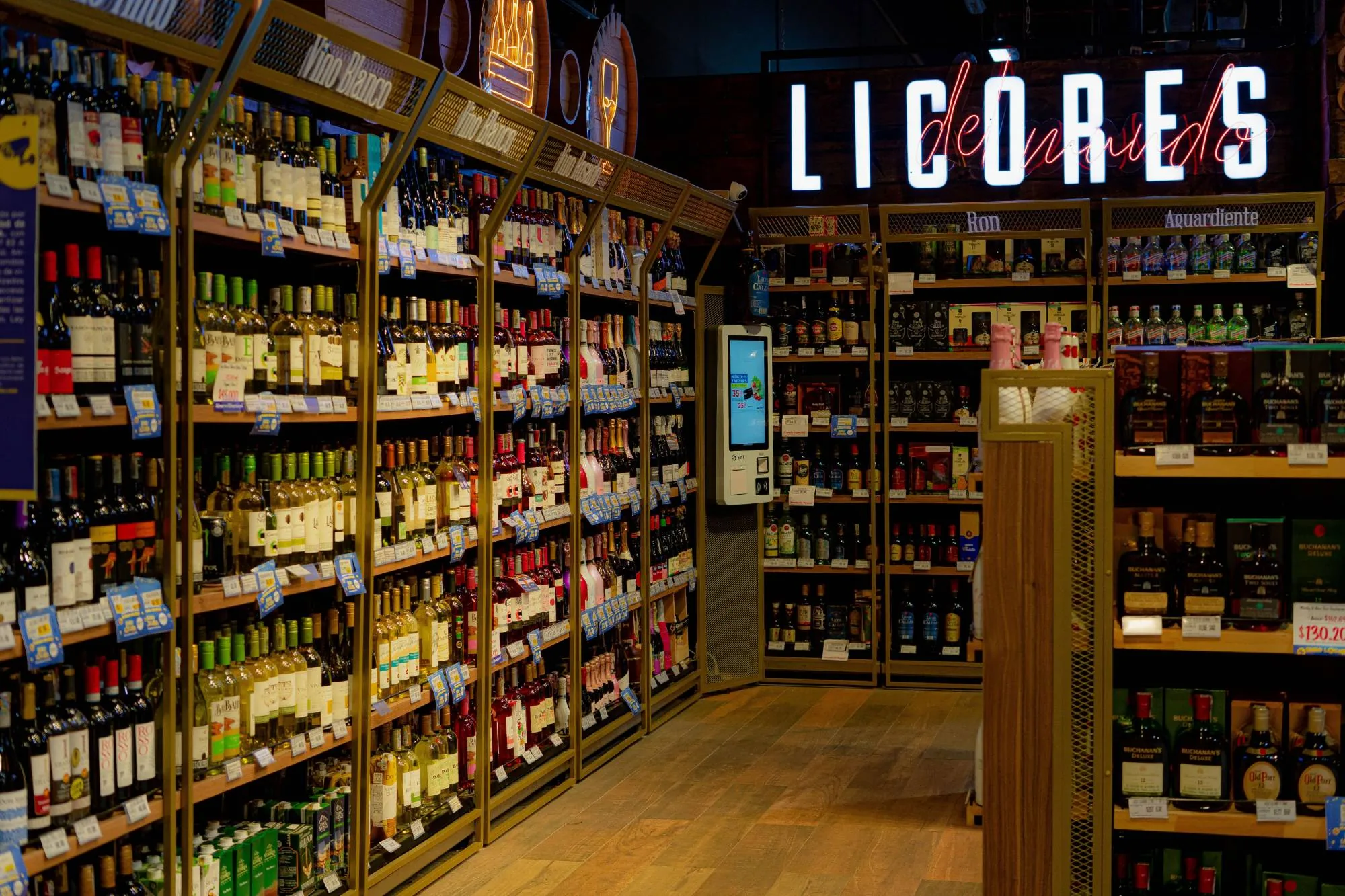
Walk into a large supermarket and look at the wine aisle. The bottles at eye level, the ones on the end of the aisle, the ones stacked in a display by the door: most people read that arrangement as information. These are the popular ones. The store put them where people reach because that’s what people reach for.
It’s a reasonable assumption, and it’s the one the whole aisle is built to encourage. It is also, as a federal settlement made plain on 10 September, not always how the arrangement came about.
Southern Glazer’s Wine & Spirits, the largest alcohol distributor in the United States, entered a non-prosecution agreement with the US Attorney’s Office for the Northern District of California and agreed to pay $12.5 million. In the statement of facts accompanying the agreement, the company admitted responsibility for conduct by its employees, who provided improper payments and benefits to employees of alcohol retailers, including chain grocery stores, in connection with the purchase and placement of the products it distributes. The benefits listed include cash, prepaid gift cards, flights, golf trips, resort stays and luxury goods. The payments were concealed through third-party vendors and false invoices.
So some of the arrangement on some of those shelves reflected not what shoppers wanted but what was paid for, quietly, by people with an interest in the answer.
You read the shelf as a record of what people choose. Part of it was a record of what somebody paid for.
What was actually decided, stated carefully
Because precision matters here, a few distinctions.
The company itself was not criminally charged. Under a non-prosecution agreement, prosecutors agree not to charge a company for the covered conduct provided it meets its obligations, which in this case include strengthening compliance and continuing to cooperate with the government for two years. The Alcohol and Tobacco Tax and Trade Bureau agreed to take no further action over the conduct investigated.
That agreement does not cover individuals. Several former Southern Glazer’s employees were indicted in March and still face charges, and the presumption of innocence applies to every one of them until a court says otherwise. Separately, two executives from Deutsch Family Wine & Spirits, the supplier behind Josh Cellars and the American launch of Yellow Tail, have pleaded guilty to bribing Southern Glazer’s staff, and a retail buyer, to favour their wines.
Jason Wilson, writing at Everyday Drinking, argues the fine is far too small to deter anything, and quotes Tom Wark of Fermentation putting it at roughly one-tenth of one-half of one percent of the company’s estimated annual revenue. Both point out it isn’t the first time: in 2017 the company paid $5 million over a pay-to-play case in Pennsylvania involving staff of the state liquor control board. Their proposed remedy is that regulators revoke the company’s wholesale permits.
That’s a question for regulators, and we’ll leave it to them. What we want to look at is why the scheme was worth running in the first place, because the answer says a great deal about why the careful producers we spend our time finding are so hard to see.

The rule designed to stop exactly this
After Prohibition ended in 1933, the United States built its alcohol trade around three separate tiers: producers and importers, wholesale distributors, and retailers. Each was meant to stay legally independent of the others. So-called tied-house laws went further, generally prohibiting any member of one tier from giving anything of value to a member of another.
The purpose was specific. Before Prohibition, large producers had owned or controlled the saloons that sold their product, and used that control to push volume. The three-tier system was designed so that no single interest could buy its way to the customer.
Nearly a century on, the middle tier has consolidated to a degree its designers never pictured. Wilson and Wark put Southern Glazer’s alone at roughly a third of all American wine and spirits distribution. When a single tier concentrates that far, it stops being a neutral pipe and becomes a gate, and a gate with limited capacity is exactly the thing somebody will eventually try to pay their way through.
None of this means the people working in distribution are the problem. Most of them are doing honest work, and small specialist importers and distributors are frequently the only reason a careful grower in the Jura or the Swartland reaches an American glass at all. The problem is structural: concentrated access to a finite shelf, in a system where the thing being concentrated was never supposed to be for sale.
A rule written to stop anyone buying their way to the customer, and a century later the gate in the middle had become the thing worth buying.
Why this lands hardest on the growers we look for
Shelf space is finite. When access to it can be influenced by what one party is prepared to give another, it flows toward whoever has the largest budget to influence it with. That is almost never the family estate farming organically on twelve hectares, whose entire marketing operation is often the person who also drives the tractor.
Wilson makes a pointed argument about a group of wine professionals who defended big-brand wines on the grounds that consumers demand them. We’d put the difficulty more gently but the logic is the same. Demand measured on a shelf can only reflect what was on the shelf. If some of what occupies the best positions got there through undisclosed payments, then the sales those positions generate are partly a record of the payments, and treating them as a pure expression of what people want is circular.
You cannot meaningfully be said to have rejected a grower you were never shown.
Everyday Drinking has written separately that the so-called wine crisis is really a crisis of discovery, and we agree entirely. The shoppers who would choose a carefully farmed bottle if they encountered it mostly never do, and a structure where prominence can be bought is one of the reasons why.
The opposite rule
This is the part that goes to why Free Bacchus exists, and it’s narrower than a manifesto.
At its core Free Bacchus is a guide, and we’re still early in working out what else it should become. We don’t replace the three-tier system and wouldn’t pretend to: any bottle sold in America reaches its buyer through licensed parties. What a guide can do is sit upstream of the shelf, and decide what’s worth finding before anybody has been paid anything.
So the rule we built the whole thing around is the mirror image of the one this settlement describes being broken. No producer pays to be listed. No producer can pay to move up a tier. Placement on our list is determined by certification checked against the body that issued it, and by quality corroborated independently, and by nothing else.
That constraint isn’t a courtesy. It is the entire asset. A list is worth consulting precisely to the degree that nobody could have bought their way onto it, and the moment that stops being true we become one more shelf, with the same problem, and a considerably thinner excuse.
There’s a harder problem we expect to take on as well. Some of the growers we verify have no route into a given market at all: no importer, no distributor, nobody to carry the bottle across the border. Helping with that, whether by introducing them to an importer or in some cases taking on part of that role ourselves, is something we’re actively exploring, and we’d rather say so now than have it read later as a change of heart.
If we do, the role matters less than the order of operations. A producer is verified before any commercial conversation begins, and no commercial relationship, however it’s structured, buys a place on the list or a better one. That’s the same separation this settlement shows breaking down elsewhere, and it’s the one thing about our future we’re not leaving open.
No producer pays to be listed, and none can pay to move up. It isn’t a courtesy. It’s the only reason the list is worth reading.

What a guide can’t do
We should be honest about the limits, because an article like this invites overclaiming.
A verification standard doesn’t change distribution law or revoke permits, and on its own it can’t put a bottle on a shelf where no licensed party carries it. Wilson ends by asking whether anyone will finally break out the pitchforks. Pitchforks aren’t our tool, and we’d be sceptical of anyone selling them.
The tool we do have is slower and smaller. It changes what people ask for. A drinker who arrives at a shop already knowing the name of a grower they want is much harder to steer by whatever happens to be at eye level. A restaurant that sources from a list nobody paid to be on has one fewer channel through which its choices can be quietly bought. Neither of those is a revolution. Both are ways of routing around a gate rather than trying to storm it.
The habit
Next time you’re in a large shop, look at what’s at eye level and ask a simple question: why is this here? Sometimes the honest answer is that people genuinely love it. Sometimes nobody in the building could tell you.
Then look at the edges — the bottom shelf, the corner, the small section a buyer clearly chose by hand. In a specialist shop, ask who picked the range and why. The growers worth finding are rarely the ones with the budget to be found, and the most reliable way to reach them is to already know what you’re looking for when you walk in.
Ask why a bottle is at eye level. The growers worth finding are rarely the ones with a budget to be found.
The receipt
What to take from this
- If you remember one thing: the best spot on a shelf isn’t always a sign of what people like. Sometimes someone paid for it, and the people farming most carefully are the least able to.
- What happened. America’s largest alcohol distributor agreed to pay $12.5 million and admitted its employees gave retail buyers cash, gift cards, trips and luxury goods for placement, hidden behind false invoices.
- What didn’t happen. The company wasn’t criminally charged. Several former employees were indicted and are presumed innocent until a court decides. Two executives from one supplier have pleaded guilty.
- The rule it broke was built for this. After Prohibition, US law split producers, distributors and retailers apart so nobody could buy their way to the customer. Consolidation in the middle turned that tier into a gate.
- Why careful growers lose. Shelf space is limited. When access can be influenced by payment, it goes to whoever has the biggest budget — rarely a family estate farming organically.
- “Consumers demand it” is circular. Shelf sales only reflect what was on the shelf. You can’t be said to have turned down a grower you were never shown.
- Our rule is the opposite. No producer pays to be listed or to move up a tier. Placement depends on checked certification and independent quality evidence, nothing else.
- So what: a guide can’t change distribution law. It can change what you walk in asking for, and a shopper who already knows what they want is very hard to steer with a bought shelf.
Where the claims come from11
-
US Attorney’s Office, Northern District of California — Nationwide alcohol distributor agrees to pay over $12 million to resolve federal investigation into bribery and false invoicing practices
justice.gov ↗ -
TTB — Press release FY 26-2: Southern Glazer’s non-prosecution agreement
ttb.gov ↗ -
Everyday Drinking (Jason Wilson) — America’s Largest Distributor Fined For Bribery. It’s Not Enough.
everydaydrinking.substack.com ↗ -
Fermentation (Tom Wark) — Southern-Glazer’s and Bribery at the Wine Wholesale Tier
tomwark.substack.com ↗ -
Everyday Drinking (Jason Wilson) — The “Wine Crisis” is a Crisis of Discovery: A White Paper
everydaydrinking.substack.com ↗ -
Distribution Strategy Group — Southern Glazer’s to pay $12.5 million to resolve federal bribery investigation
distributionstrategy.com ↗ -
Hoodline — Southern Glazer’s pays $12.5M in California wine bribery case; former executives still face charges
hoodline.com ↗ -
San Francisco Chronicle — California wine executives plead guilty to $360,000 bribery scheme (the Deutsch Family pleas)
sfchronicle.com ↗ -
The Spirits Business — Southern Glazer’s pays $12.5m over alleged bribery
thespiritsbusiness.com ↗ -
Pleasanton Weekly / Bay City News — Major wine distributor to pay $12.5M under deal to end bribery probe
pleasantonweekly.com ↗ -
Free Bacchus — The Verification Standard
freebacchus.com ↗