Free Bacchus Journal
The Ten Most
Sustainable Bars
in the world
Not our opinion. Every bar here was audited by the same body against the same framework, which is the only reason the ten can be read as a sequence rather than a list.
Eight winners in eight years.
The list
Himkok in Oslo is one of the best cocktail bars in the world, ranked fourteenth globally last year. It serves no citrus. None at all. No lemon, no lime, no grapefruit — the acidic backbone of virtually every cocktail ever written, simply absent from the building. The reason is that citrus doesn’t grow in Norway, and getting it there means flying it several thousand kilometres so somebody can squeeze half an ounce into a sour.
Himkok decided that wasn’t defensible and rebuilt its entire drinks programme around what the country actually produces. They found other routes to acidity. The bar didn’t suffer; it won.
That’s the kind of decision this list is made of, and it’s worth being clear about how the list was assembled. We didn’t rank these bars, and we couldn’t credibly. Nobody at Free Bacchus has audited a bar’s waste stream or checked its payroll.
What exists instead is the Ketel One Sustainable Bar Award, which has run since 2018 and is not voted on by the industry. It’s adjudicated by the Sustainable Restaurant Association, an independent body that assesses venues against a ten-point framework covering Sourcing, Society and Environment. Same auditor, same standard, eight consecutive years. It is, as far as we can find, the only sustainability ranking in drinks that anyone actually checks.
A world-class cocktail bar with no lemons. Not a gimmick — an answer to a question most bars never think to ask.
The Sustainable Restaurant Association, an independent body, against a ten-point framework covering Sourcing, Society and Environment. Same auditor, same standard, eight consecutive years.
Rank them. Nobody at Free Bacchus has audited a bar’s waste stream or checked its payroll, and a ranking would imply we had.
What the list tells you when you read it in order
Here’s the thing we didn’t expect. Line the winners up chronologically and you can watch the meaning of the word change underneath them.
The early winners answered an environmental question. Himkok in 2018 was about production and food miles: make it yourself, don’t ship it in. By 2020 and 2022 the question had become agricultural: where does the produce come from, who grew it, and does buying it well change anything for them. By 2023 and 2024 it had narrowed into technique: hyper-local sourcing, zero waste, using the whole ingredient.
And then the 2025 winner won on something else entirely. The Cambridge Public House in Paris was recognised for four-day working weeks, full health insurance for staff, and donating one percent of annual income to local charities. The environmental work is there too, but the thing the judges led with was how the bar treats the people who work in it.
In eight years, a sustainability award in hospitality has travelled from food miles to labour conditions. That is a considerable distance, and it happened without anyone announcing it.
It started as a question about carbon and became a question about whether the people pouring your drink have health insurance.
The ten, in the order they won — pick one, or read on
01
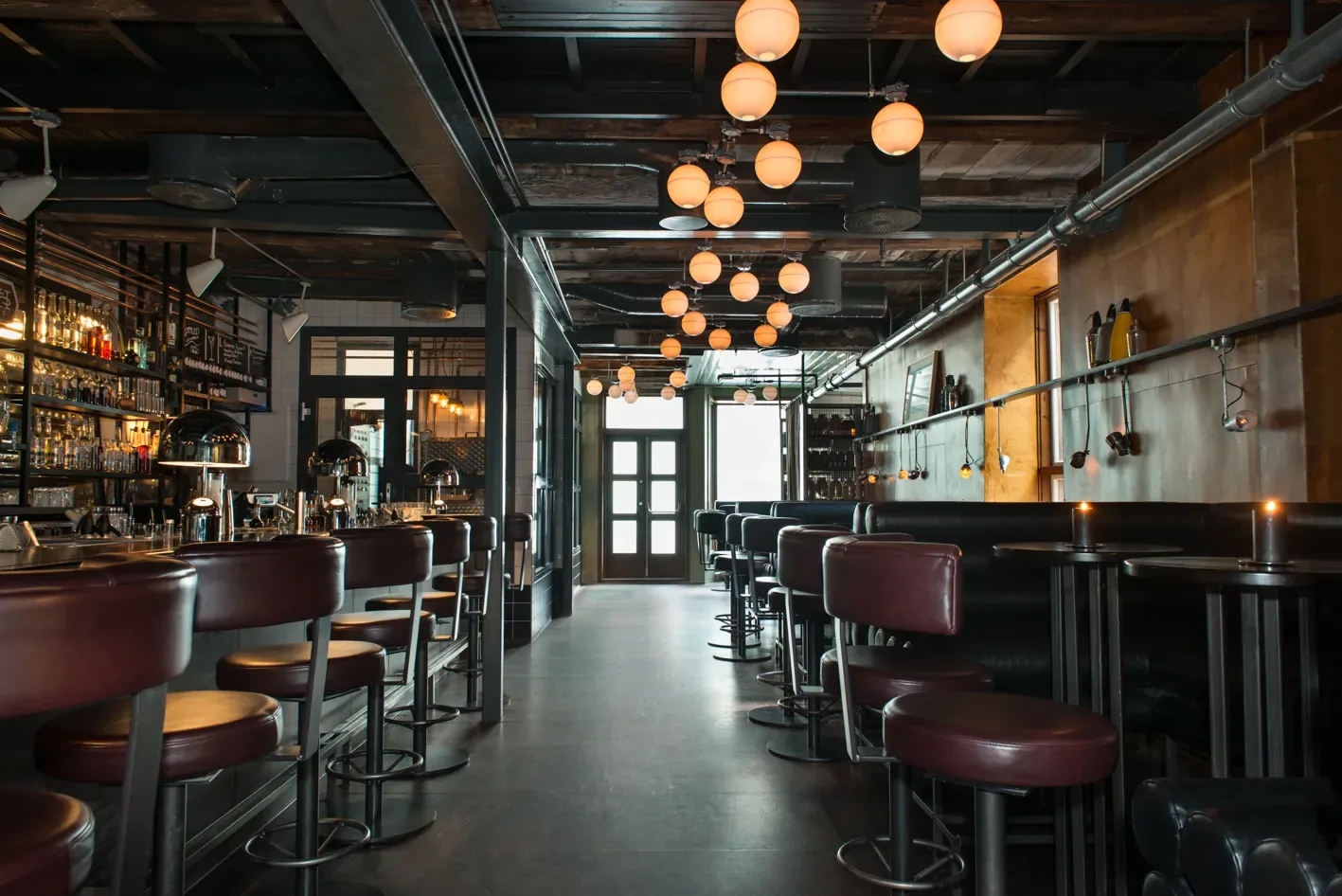
Himkok Oslo, Norway
Global winner 2018
02
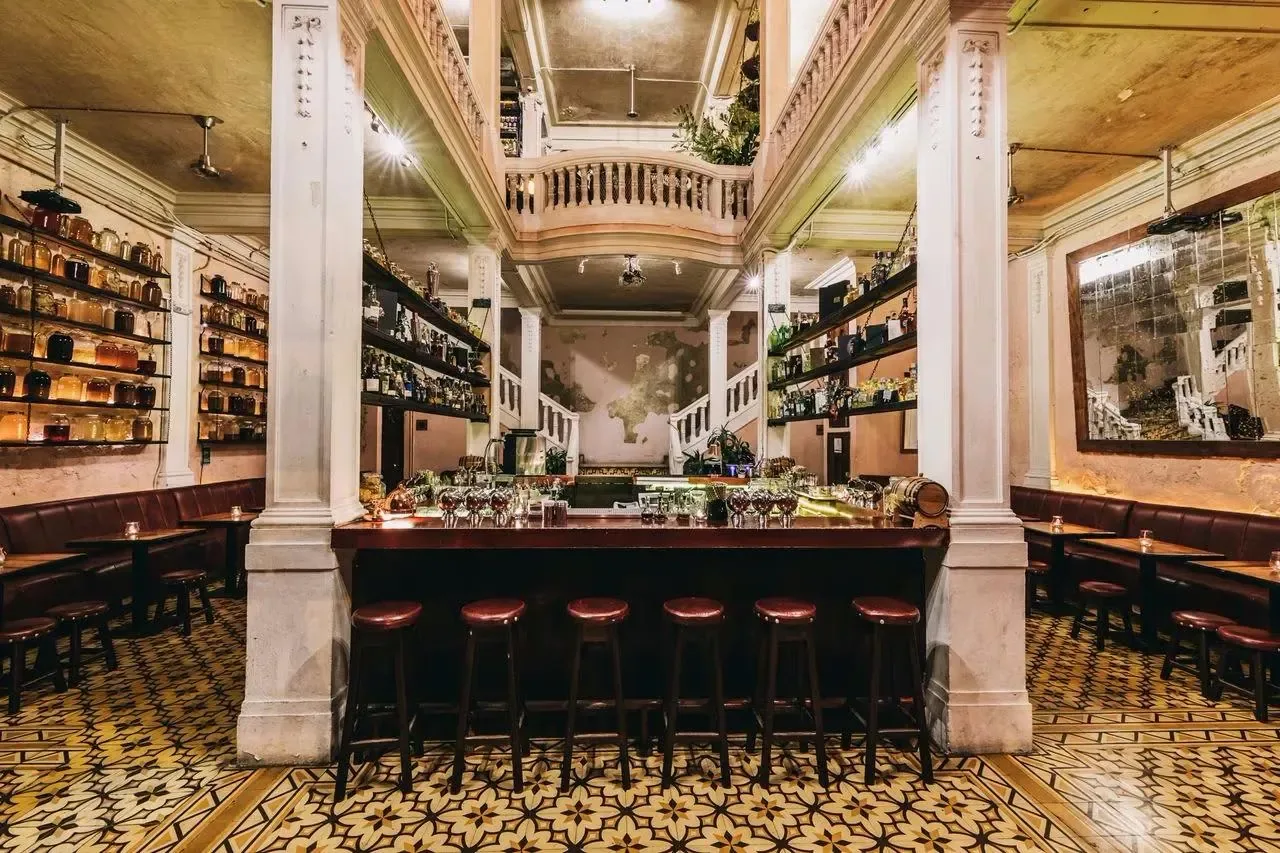
Alquímico Cartagena, Colombia
Global winner 2020
03
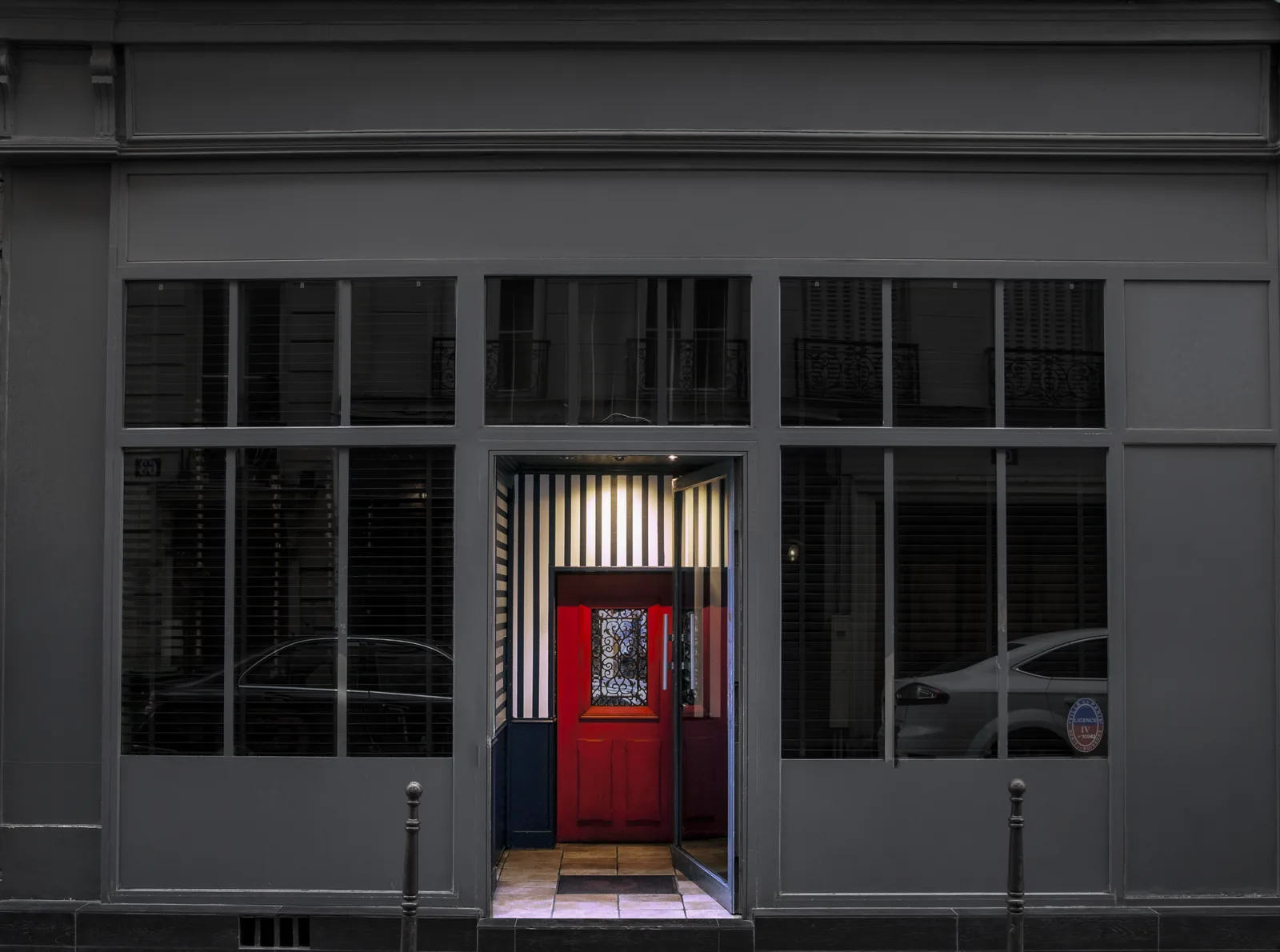
Little Red Door Paris, France
Global winner 2022
04
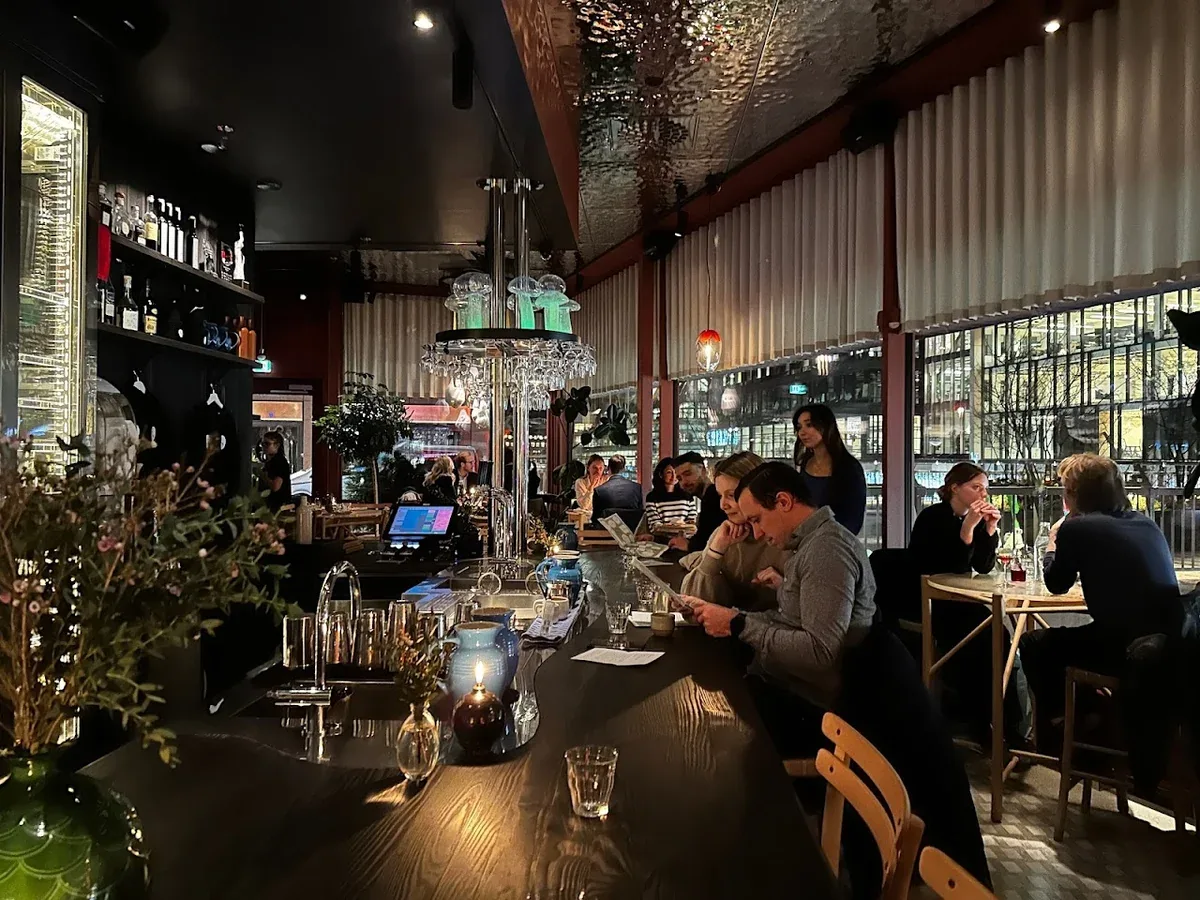
Röda Huset Stockholm, Sweden
Global winner 2023
05
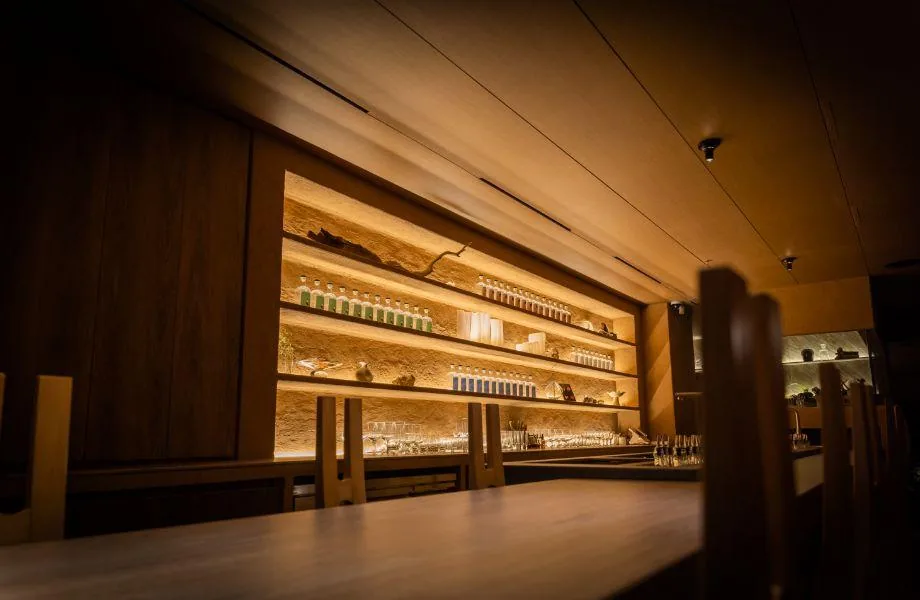
Zest Seoul, South Korea
Global winner 2024
06
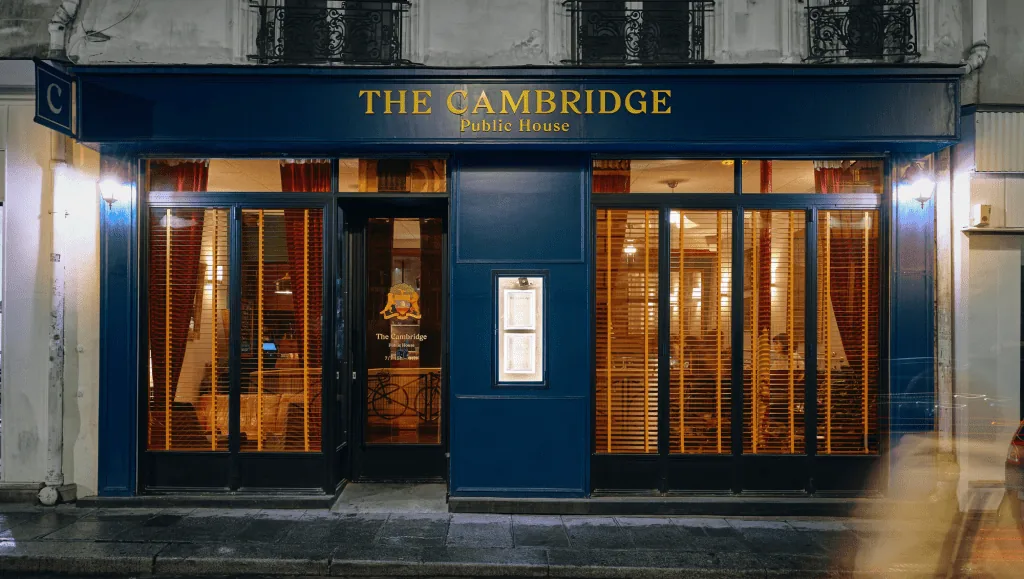
The Cambridge Public House Paris, France
Global winner 2025
07
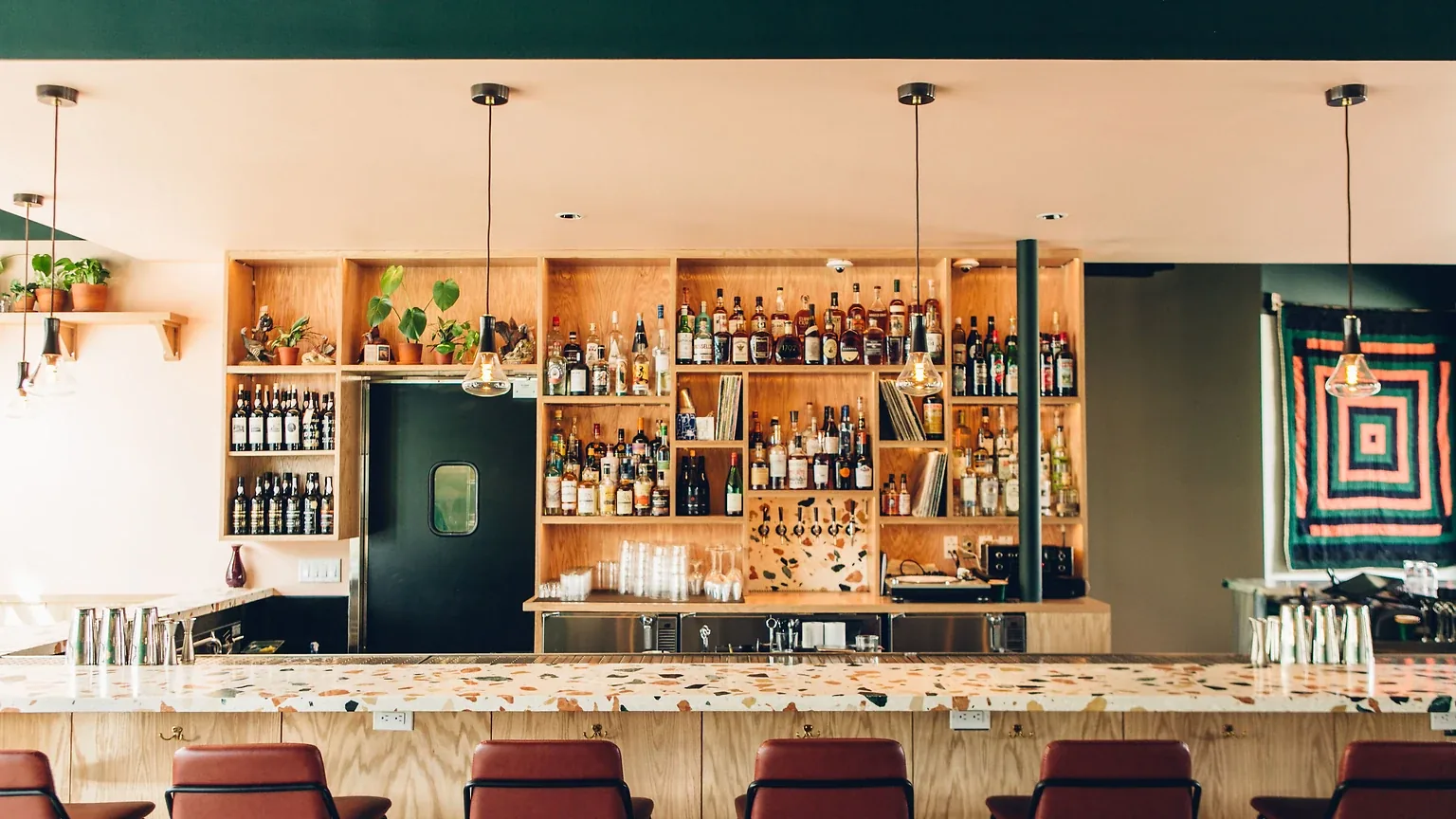
Thunderbolt Los Angeles, United States
North America winner 2025
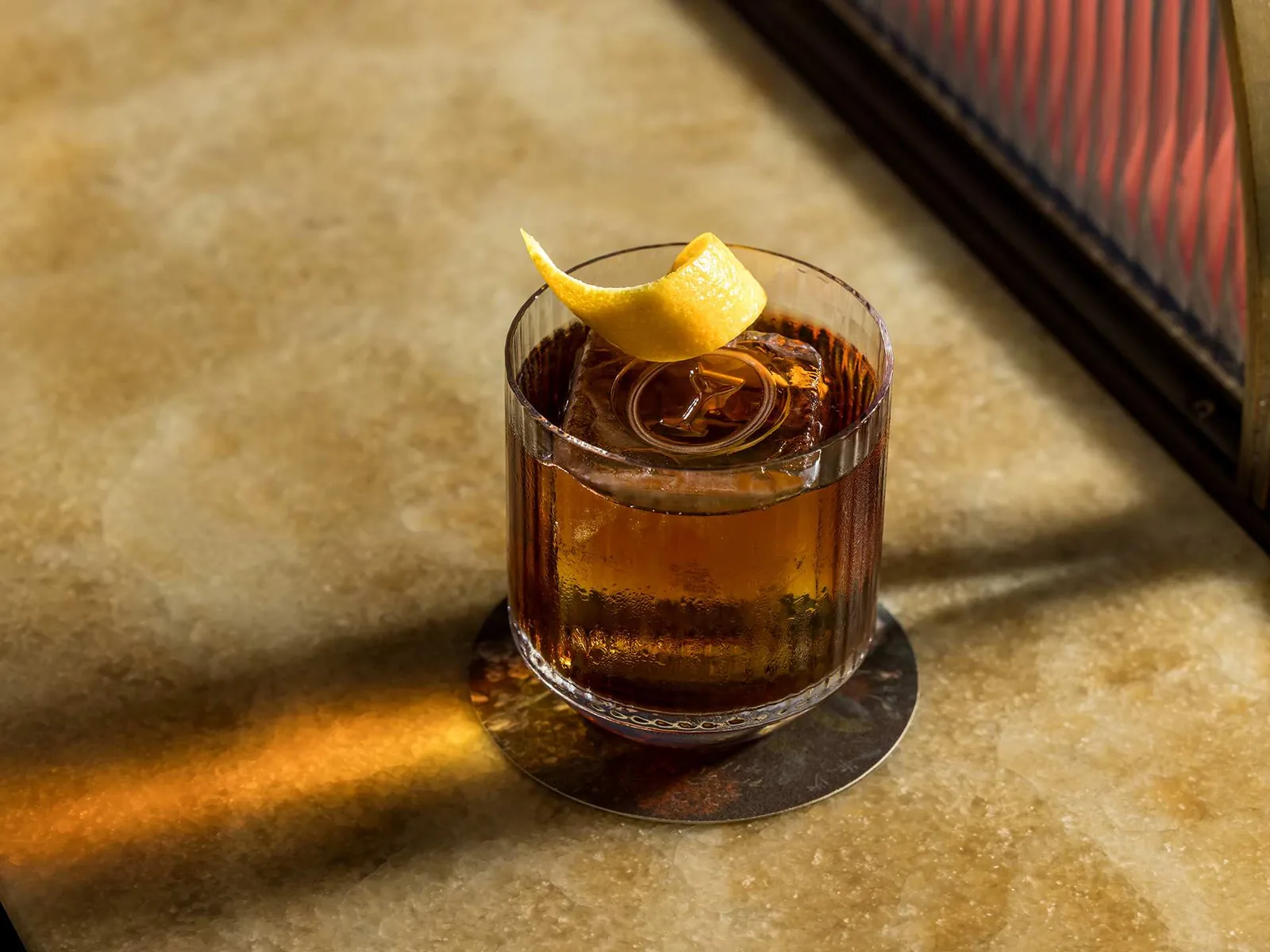
08
Library Bar Toronto, Canada
North America winner 2026
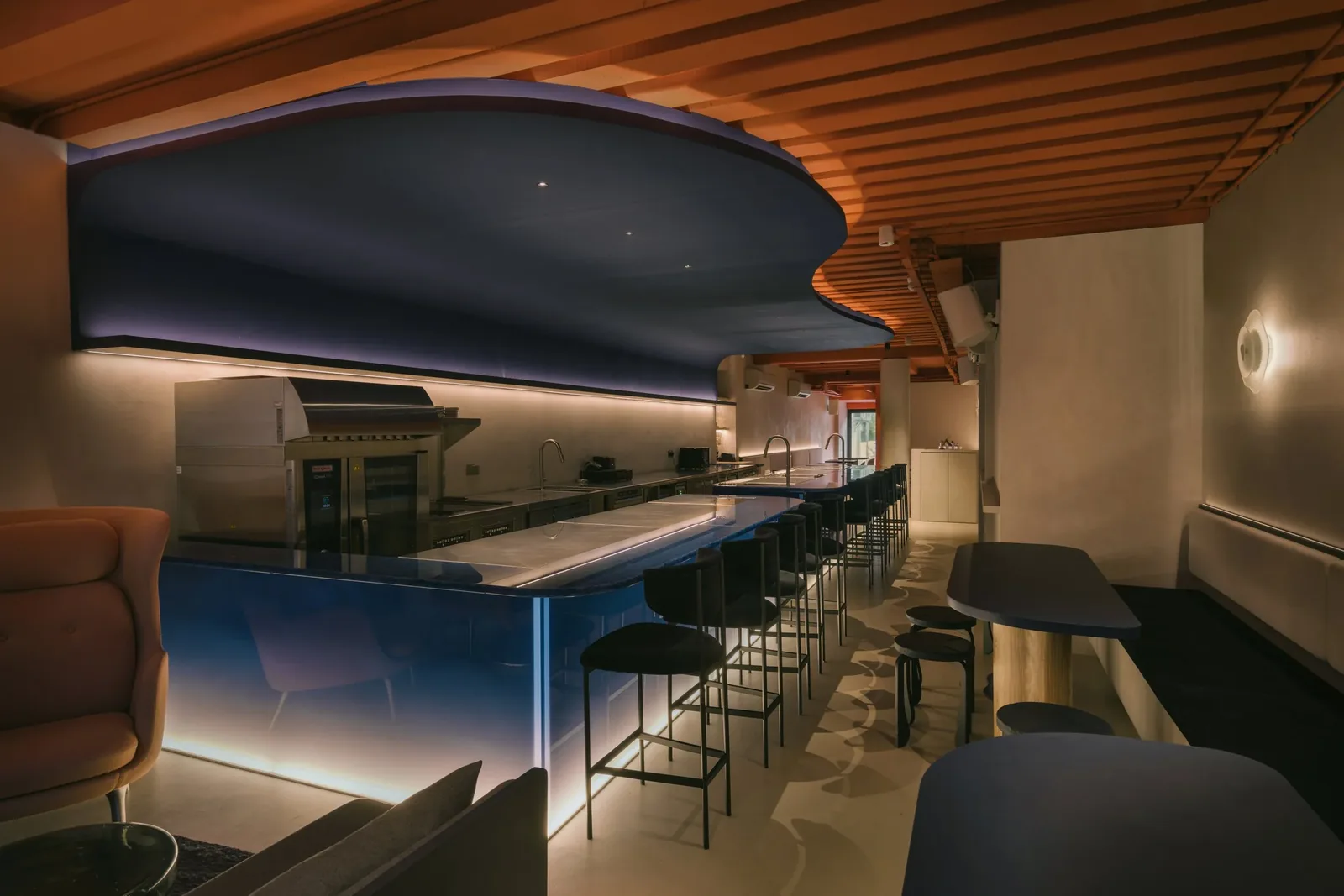
09
FURA Singapore
Asia winner 2024
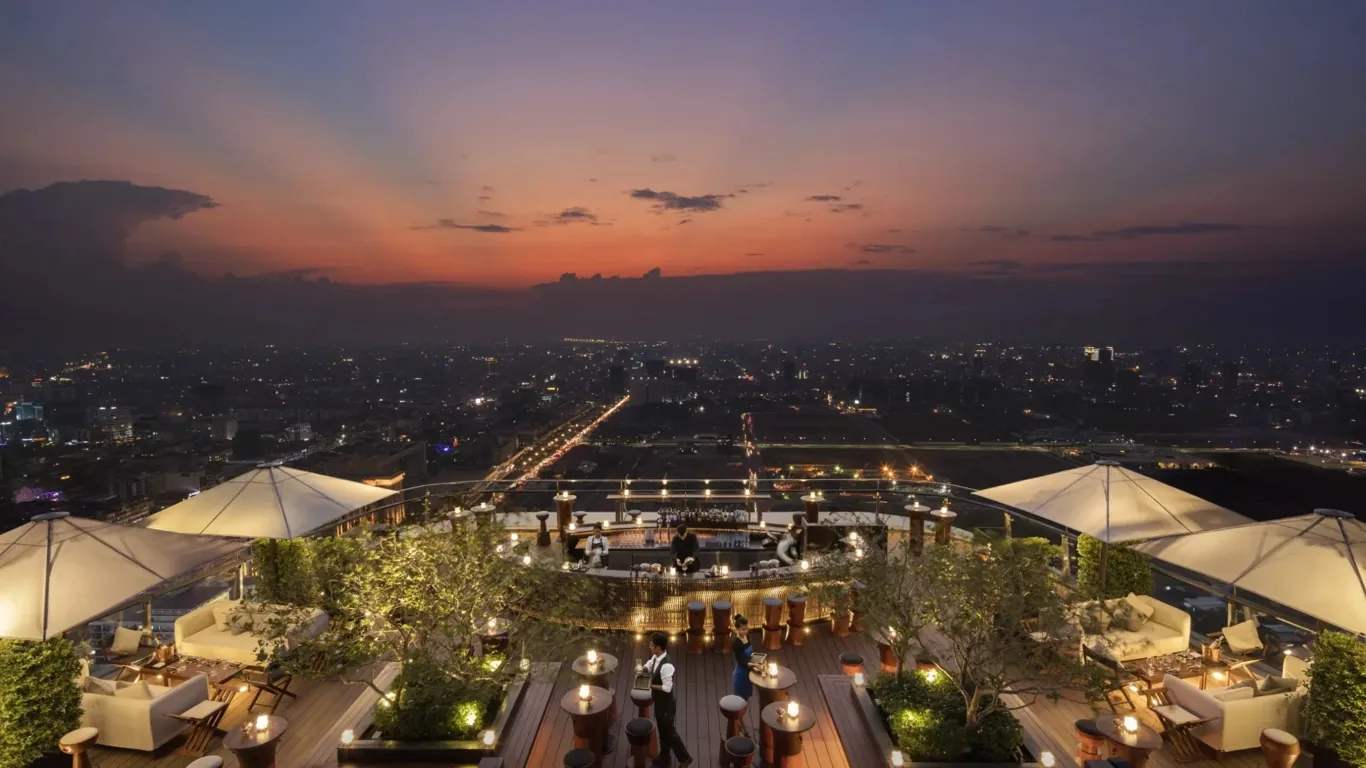
10
Sora Phnom Penh, Cambodia
Asia winner 2025
01Oslo, Norway · Global winner 2018
Himkok
Opened in 2015 as the world’s first distillery bar, himkok being the Norwegian for moonshine, it produces roughly 80 to 85 percent of the spirit it serves on the premises, powered by renewable hydro. The ethanol is distilled from leftover potatoes a local farmer couldn’t sell. The honey comes from rooftop hives. Straws are organic material, herbs and spices are Norwegian, and the cider garden out back exists to make Norwegian apples into something that isn’t sugar water.
The motivation was carbon, specifically the carbon in shipping. Founder Erik Lorentzen’s route to it was oblique: he was running a brewery pub, flew to Denver for a beer festival, saw the American craft distilling scene and came home with a different idea. Head barman Sebastian Sandvik is candid that going sustainable was expensive and slow to set up, and that using ingredients intelligently saved money afterwards. They serve over 200,000 cocktails a year.
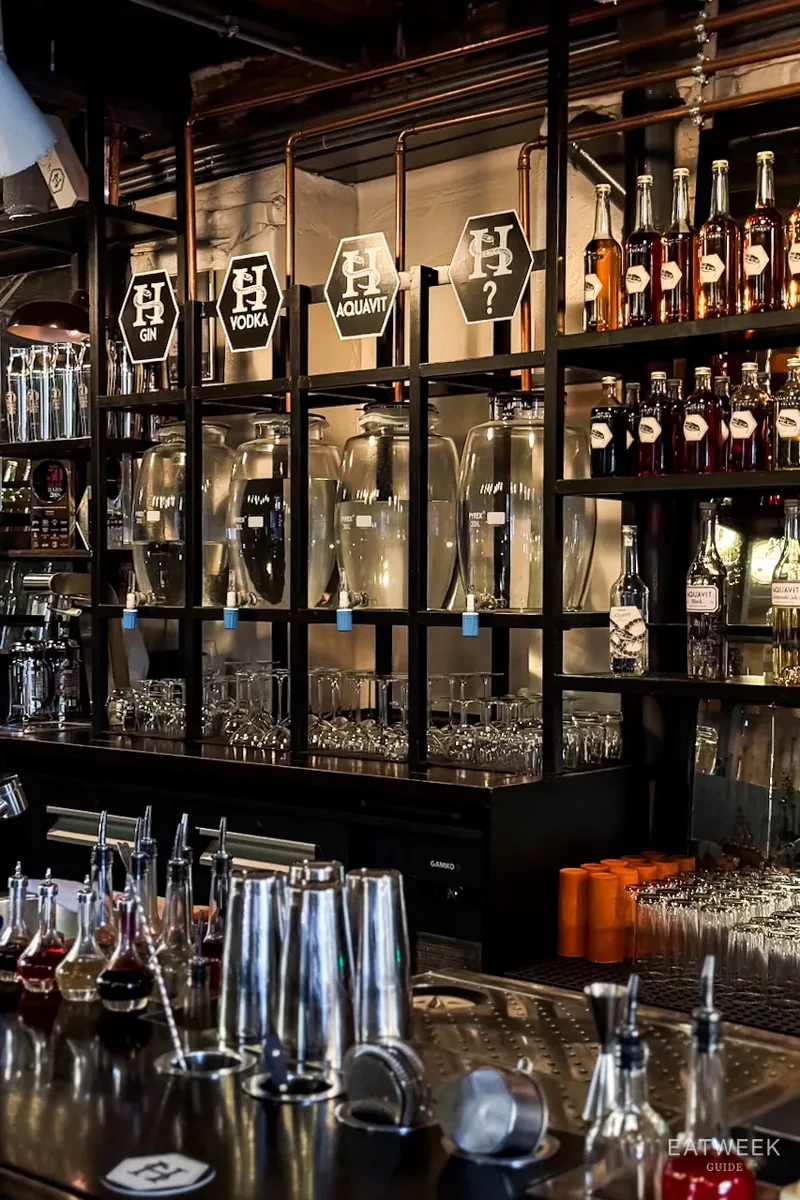
02Cartagena, Colombia · Global winner 2020
Alquímico
Jean Trinh is French with Vietnamese heritage and arrived in Colombia in 2014. What struck him was the absence of something he’d taken for granted at home: labelling. In France, he has said, you always ask where food came from, and the packaging tells you. In Colombia he found no such practice, and the questions that followed, what am I eating and what am I drinking, became the reason the bar exists.
In 2018 Alquímico bought a 25-acre farm. When the pandemic closed the bar, Trinh moved half his team to it, housed bartenders and their families, and they learned to farm. They built an apiary to cut the bar’s sugar purchasing, replanted native trees, donated food baskets, and created a teaching space for local growers. The team went from six people to over seventy. Staff eat a family meal together before every shift. The Comunidad cocktail menu funds clean water storage for a farmers’ association, and there are partnerships supplying instruments to local music schools.
03Paris, France · Global winner 2022
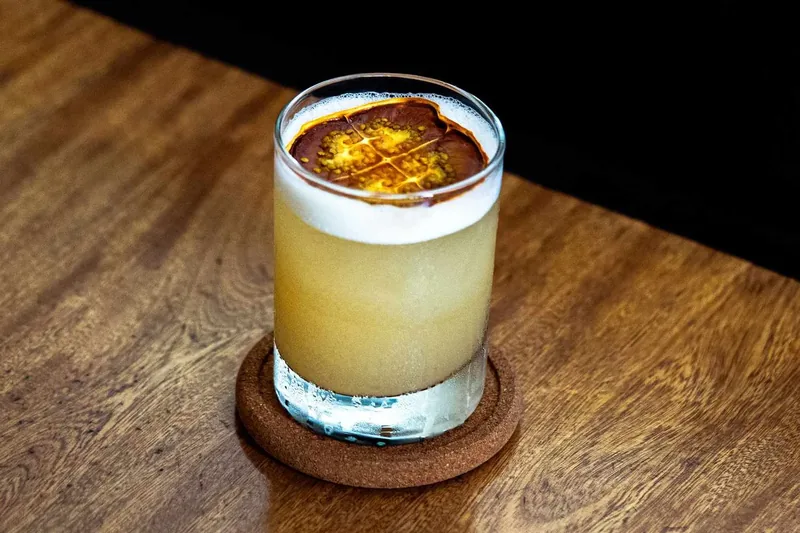
Little Red Door
A farm-to-glass model built on direct relationships with small French producers, with menus conceptually organised around art and social science rather than spirit categories. It has appeared on the World’s 50 Best list nine times since 2012.
What makes their reasoning worth quoting is that it isn’t primarily environmental. Alex Francis, who directs the bars, frames seasonal local buying as an economic argument first: money spent locally circulates locally, and the effect lands on the small farms as much as on the carbon ledger. His honest complication is that importing out-of-season produce is currently so cheap and easy that virtue alone won’t shift anyone. The answer, in his view, is building a system that benefits several industries simultaneously, because a system like that is hard to unpick once it exists.
04Stockholm, Sweden · Global winner 2023
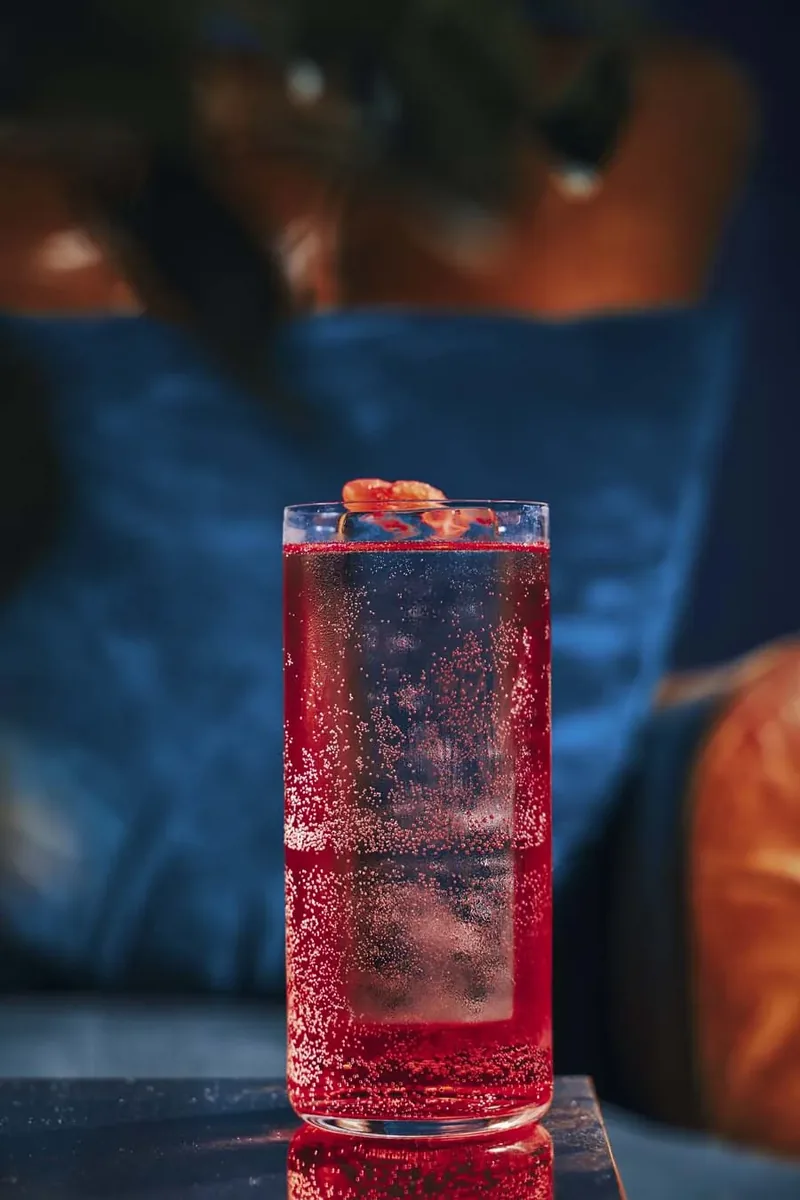
Röda Huset
Hyper-local Scandinavian sourcing, seasonal foraging, and a drinks list built from Swedish ingredients reimagined by season. Cocktails are presented on a map, so the provenance of what’s in the glass is the first thing a guest sees rather than a footnote.
The origin is a kitchen rather than a bar. Hampus Thunholm worked with chef Magnus Nilsson at Fäviken, the remote Swedish restaurant built entirely on what its own latitude could produce, and describes the experience as unlearning what he thought he knew about ingredients and technique. Röda Huset is that education applied to drinks: plums from a named orchard in Höör, raspberries and whey, elderberries, cold-pressed carrot.
05Seoul, South Korea · Global winner 2024
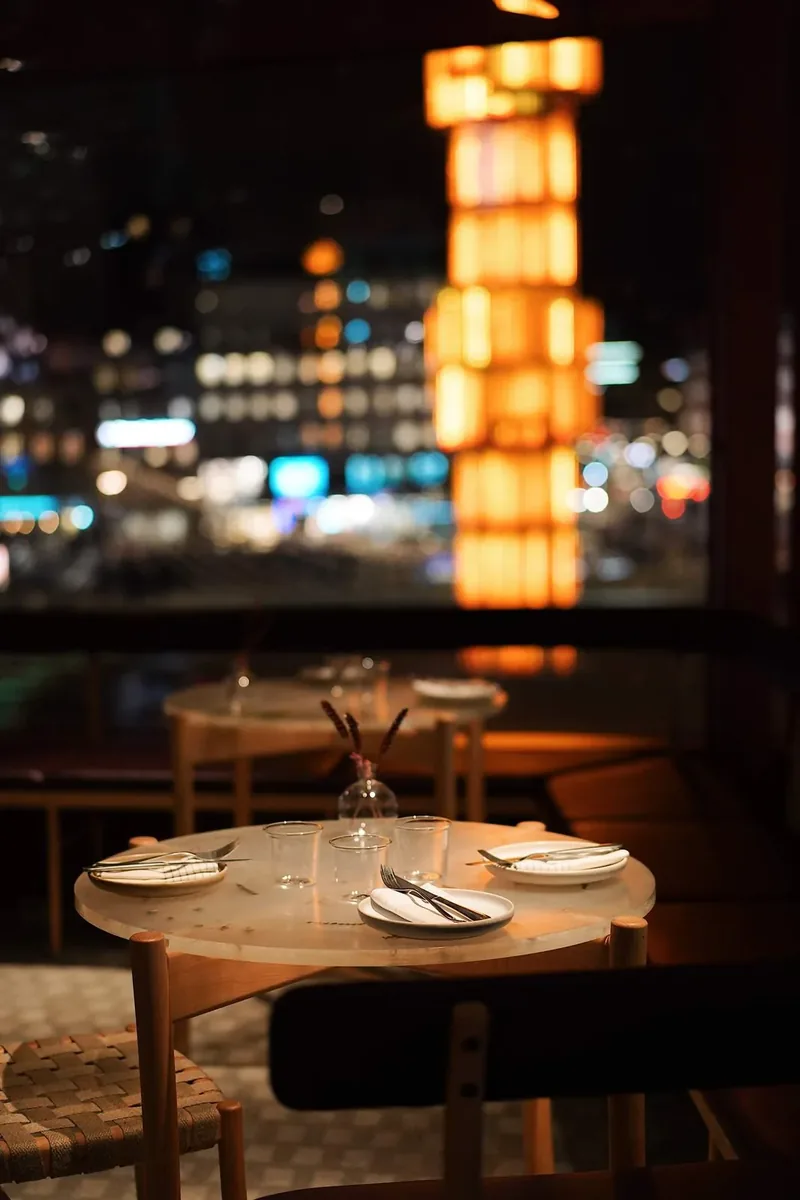
Zest
The name is a portmanteau of zero and waste, which tells you the intent was there before the bar opened rather than added later. Founded by Demie Kim, Sean Woo, Jisu Park and Noah Kwon, it reached number nine in the world in 2024 and sixteen in 2025.
Every mixer is made in house, which eliminates a substantial stream of single-use bottles and cans that most bars never think about. Honey comes from urban beehives. Ingredients are contract-farmed with Korean growers, and the spirits backbone leans on Korean micro-distilleries and craft breweries rather than imported standards. The zero-waste practice and the hyper-local sourcing are the same decision seen from two angles.
06Paris, France · Global winner 2025
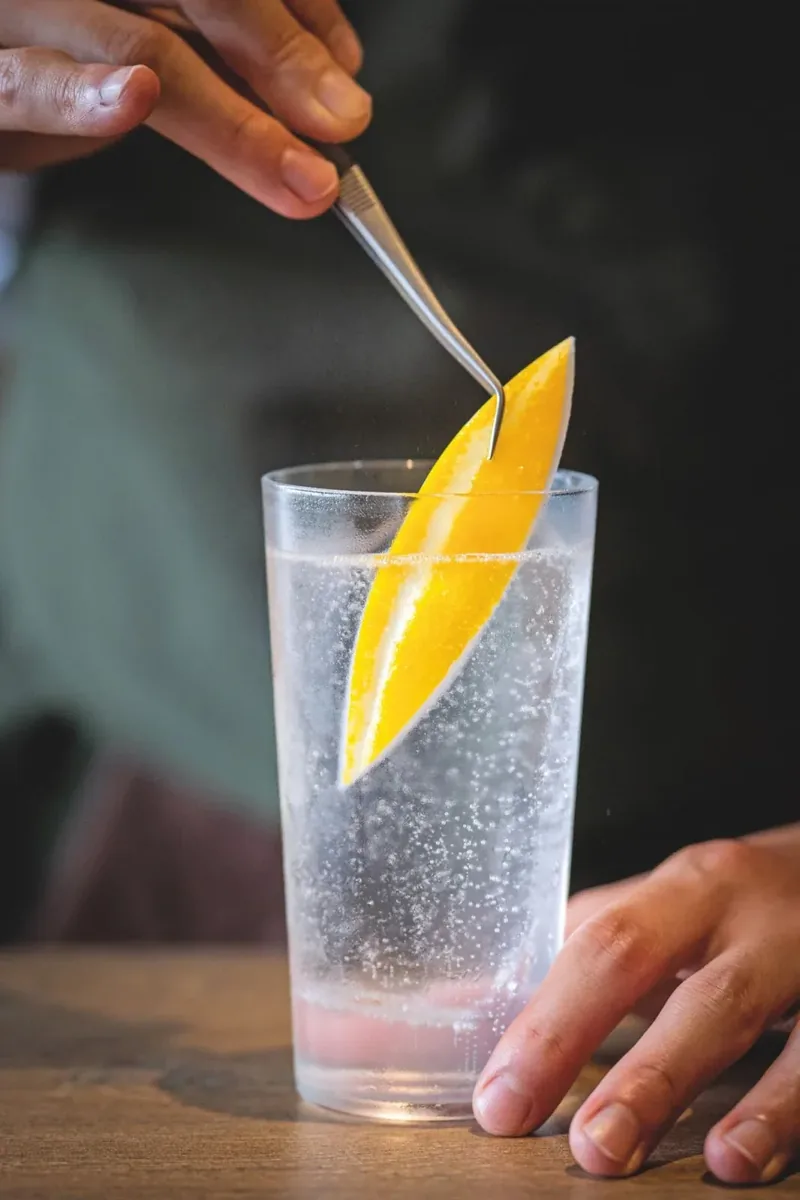
The Cambridge Public House
The current holder, and the bar that moved the definition. In 2024 it became the first cocktail bar in the world to achieve B Corp certification. That is an audit of the whole company, not its recycling.
Staff work four-day weeks with full health insurance and structured routes to progression. One percent of annual income goes to Parisian charities through the Cambridge Community Plan, which is organised around six United Nations goals. And rather than treat any of this as competitive advantage, co-founders Hugo Gallou and Hyacinthe Lescoët give it away: the Cambridge Global Series brings bars from around the world together for seminars and workshops, and Shaken Leaf is a free online platform for bartenders anywhere who want to adopt the practices.
07Los Angeles, United States · North America winner 2025
Thunderbolt
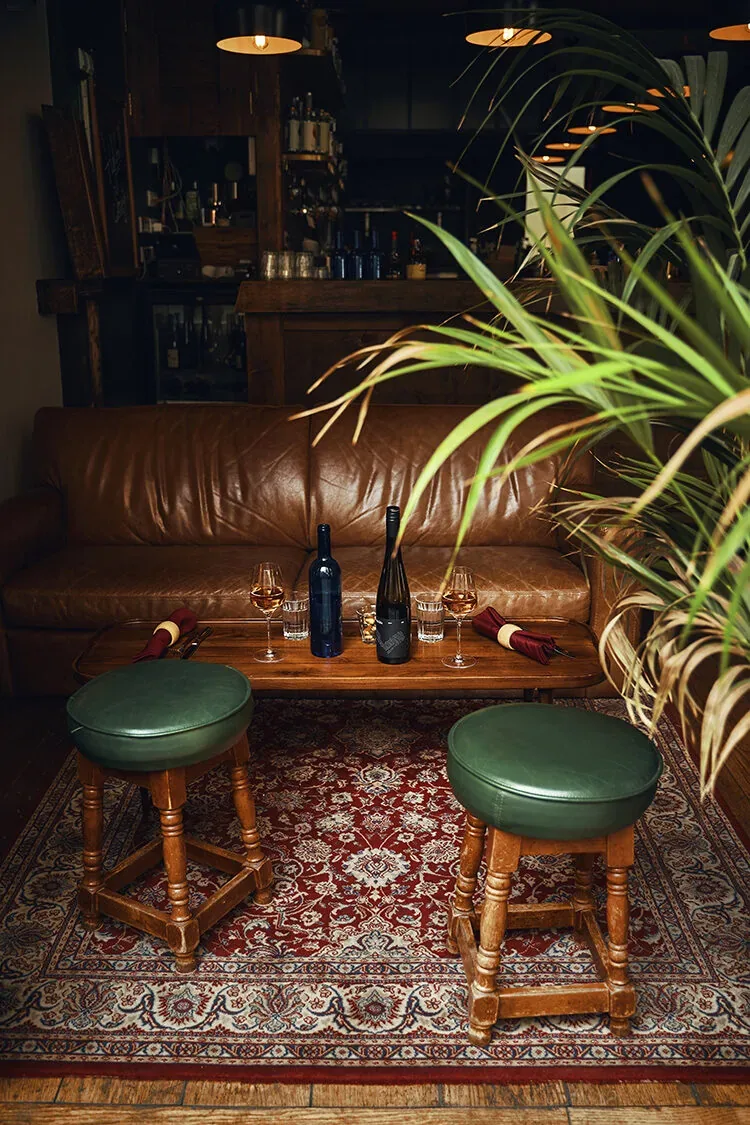
The Echo Park bar is on this list because of its back bar, and of everything we researched this is the practice closest to our own work.
Thunderbolt applies published criteria to the agave spirits it will stock. Producers must demonstrate genuine effort toward sustainable production, use ancestral methods, and pay fair wages. The tequilero or mezcalero must be explicitly named and credited rather than hidden behind a brand. And the spirits must be free of additives and free of celebrity involvement. That last pair of conditions excludes a substantial share of what the category currently sells. Beyond the bar, proceeds from the Echo Park Trash Club fund clean water and shelter initiatives in Los Angeles, and the team runs open educational sessions on sustainable sourcing for the trade.
08Toronto, Canada · North America winner 2026
Library Bar
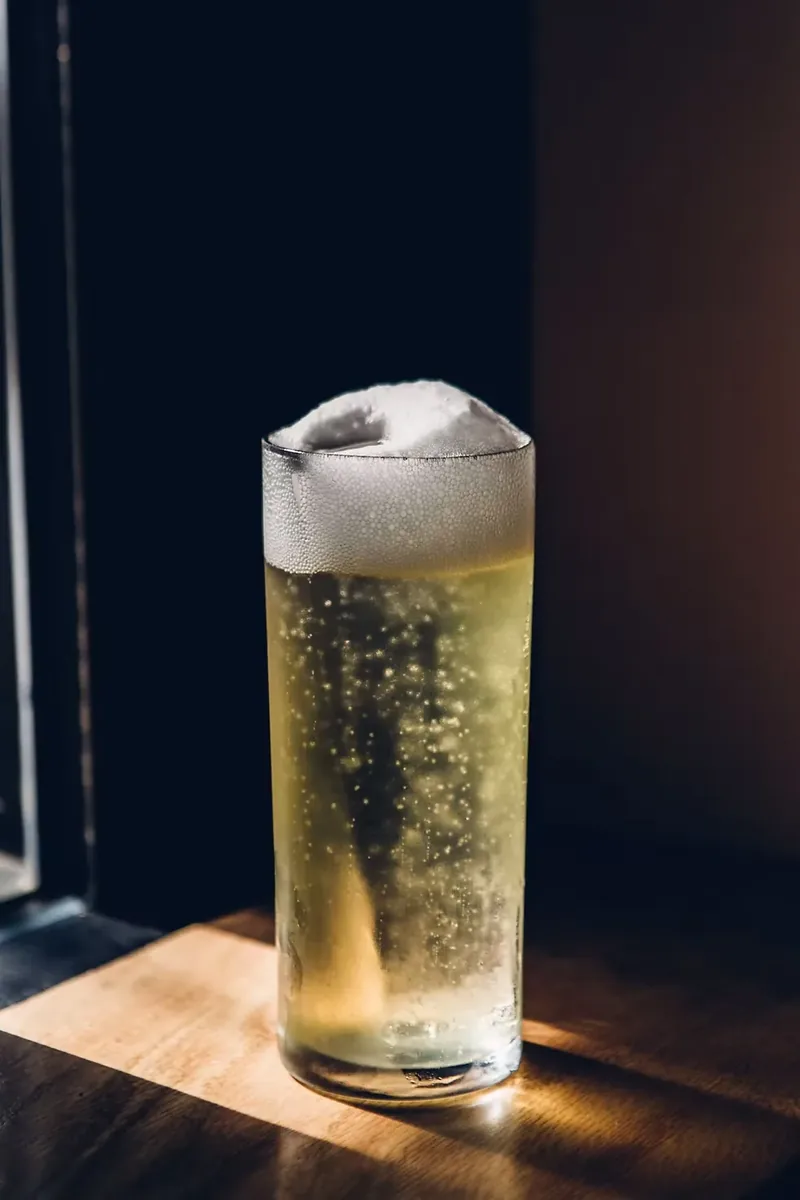
The most recent winner anywhere, and the one that demonstrates what happens when a bar sits inside an institution willing to spend at institutional scale.
Library Bar occupies the Fairmont Royal York, which replaced its centrifugal chillers with cool water drawn from deep in Lake Ontario and fully electrified its heating, cutting more than 7,000 tonnes of carbon annually and earning certification under the Zero Carbon Building Performance Standard. On the community side, partnerships with La Table des Chefs and B12Give have redistributed over 6,000kg of food, including more than 2,000 meals a month to Toronto charities.
09Singapore · Asia winner 2024
FURA
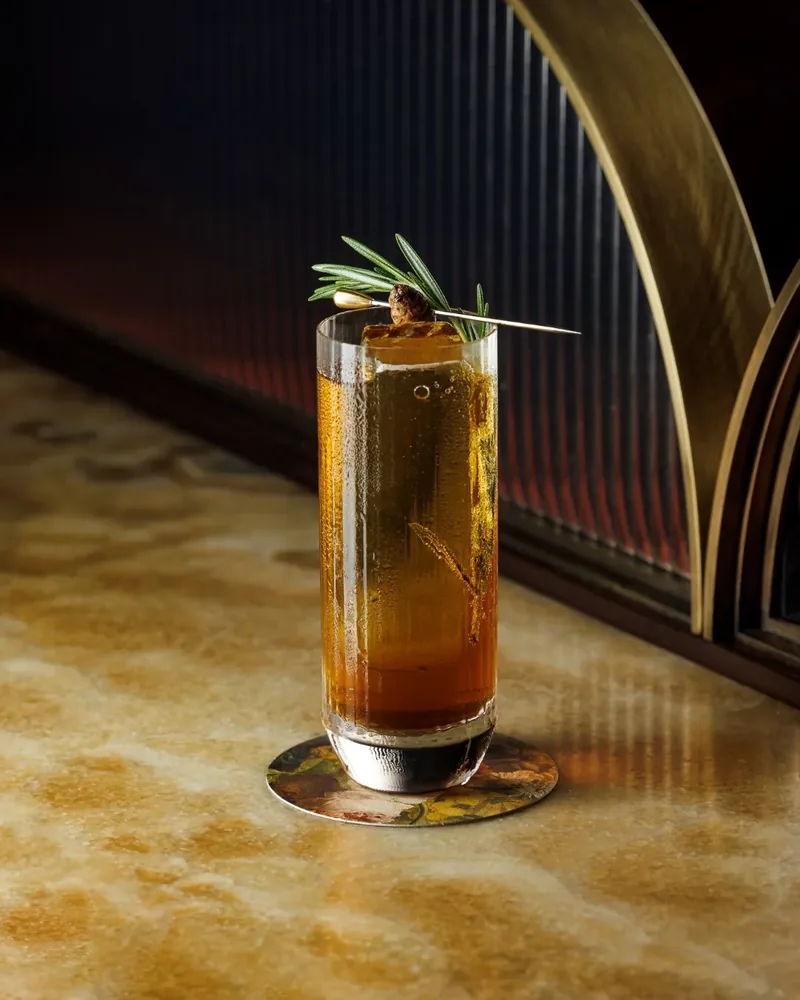
Singapore imports roughly ninety percent of its food and generates hundreds of thousands of tonnes of food waste a year. The country has set itself a target of producing thirty percent of its own food by 2030. FURA, owned by Christina Rasmussen and Sasha Wijidessa and run by a female-led team, treats that national problem as the bar’s design brief.
Local sourcing is the core of the strategy rather than a garnish on it, paired with a systematic approach to reducing, reusing and repurposing what would otherwise be discarded, and active involvement in the surrounding community. It is the clearest example on this list of a bar built in direct response to where it happens to be standing.
10Phnom Penh, Cambodia · Asia winner 2025
Sora
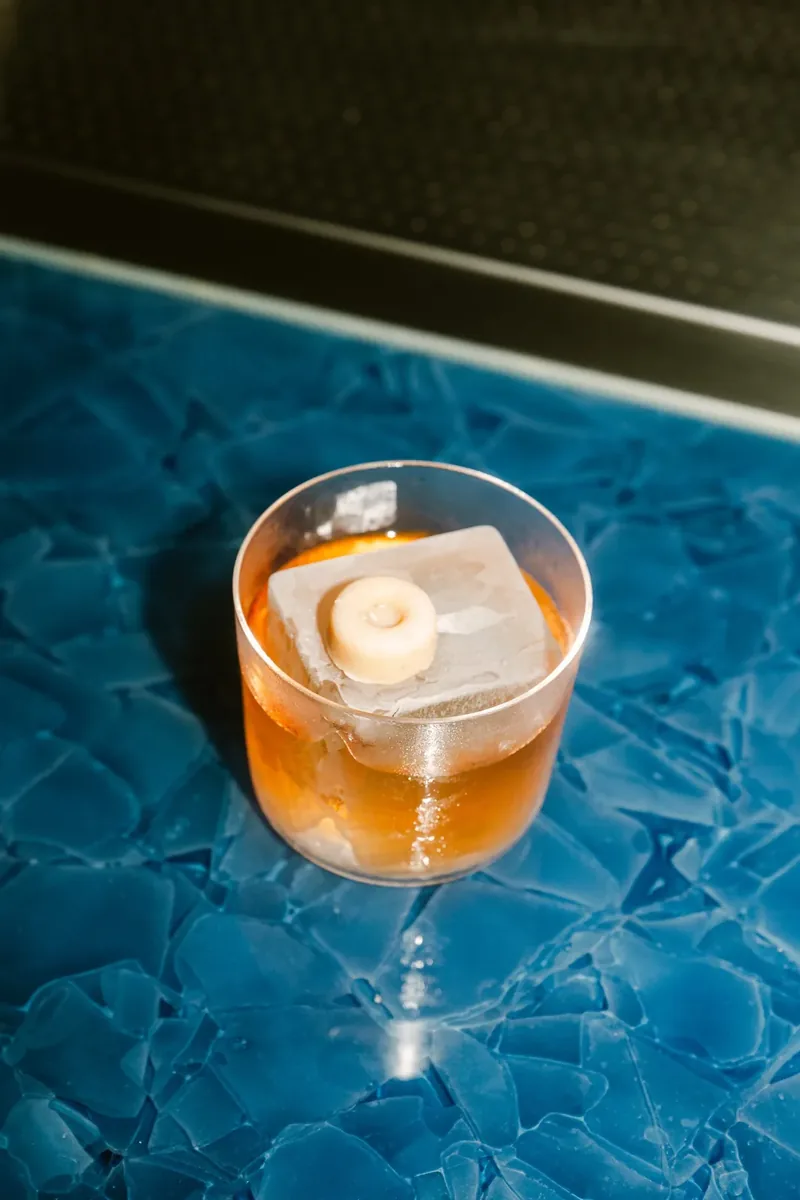
Thirty-seven floors up in the Rosewood Phnom Penh, with the largest whisky collection in Cambodia. It is precisely the profile of venue people assume is inherently wasteful.
Over seventy percent of its ingredients are sourced locally, some from the hotel’s own hydroponic garden. The Sora Martini, which the judges singled out, uses a house vermouth made from the hotel kitchens’ leftovers in collaboration with local distillers, the entire orange including peel, and native Kampot pepper. The spirits list leans on Cambodian producers like Samai Distillery and Seekers Spirits, chosen partly because they pay a living wage. Single-use plastics are gone, and the bar runs waste-reduction workshops for the wider Cambodian hospitality trade alongside an NGO partnership providing education and employment routes.
What we should say honestly
Three things are worth putting on the record.
The first is that this list skews toward capital. Himkok built a distillery. Library Bar sits inside a hotel that performed a nine-figure retrofit. Alquímico bought a farm. Applying for an independent audit costs money and management time that a two-person neighbourhood bar does not have going spare. That doesn’t make these venues undeserving, since they did the work, but the award structure inevitably favours operations that can afford to be assessed, and there are excellent small bars doing quietly serious work that will never appear on any list.
The second is attrition. There have been eight global winners in eight years and we could only confirm six as currently trading. Native in Singapore, which won in 2019, appears to have gone. Re in Sydney, the 2021 winner, closed its original site in 2024 and relocated, and we couldn’t establish its current status. A quarter of the most celebrated sustainable bars in the world have not survived the decade, which says something about how hard this is to sustain commercially and is worth sitting with before anyone treats it as a solved problem.
The third is that we have taken the Sustainable Restaurant Association’s word for the assessments. We haven’t audited these bars ourselves and wouldn’t claim to. What we can say is that the SRA is independent of both the venues and the sponsor, publishes its framework, and has been doing this since 2013, which puts it well ahead of most sustainability claims in this industry, including a great many that carry no auditor at all.
Eight winners in eight years. Two are already gone. Nobody should read this list as evidence the problem is solved.
The part you can use
Most of these bars are a flight away, and that is a slightly awkward fact for an article about food miles. So the useful thing here isn’t the itinerary.
It’s that every bar on this list arrived at the same place from a different direction. Himkok started with shipping carbon. Trinh started with the absence of a label on a Colombian shelf. Thunholm started in a Swedish kitchen. The Cambridge started with its own staff. Thunderbolt started with the agave producers nobody was naming. None of them began with a sustainability policy and worked backwards; each one noticed a specific thing that bothered them and rebuilt the operation around it.
Which suggests the question to carry into any bar, anywhere. Not whether they have a sustainability statement. Almost everyone does now, and it costs nothing to write. Ask where something came from. A bartender at a place doing real work will usually light up, because it’s the most interesting thing about their back bar and almost nobody ever asks. A bartender somewhere that isn’t will change the subject, and that’s an answer too.
Ask where it came from. The ones doing the work have been waiting for someone to ask.
Where the claims come from10
-
The World’s 50 Best Bars — Ketel One Sustainable Bar Award, with the full roll of past winners
theworlds50best.com ↗ -
Sustainable Restaurant Association — framework and past award winners
thesra.org ↗ -
North America’s 50 Best Bars — Ketel One Sustainable Bar Award (Library Bar 2026, Thunderbolt 2025)
theworlds50best.com ↗ -
Asia’s 50 Best Bars — Ketel One Sustainable Bar Award, roll of past winners (FURA, 2024)
theworlds50best.com ↗ -
50 Best — Cocktails, conservation and comradeship: meet Jean Trinh, the bartender who unites the world
theworlds50best.com ↗ -
50 Best — What does sustainability mean during a pandemic? The world’s most ecologically aware bar explains (Alquímico’s bee farm, reforestation and food programme)
theworlds50best.com ↗ -
Drinks International — Alquímico: farm to bar and beyond
drinksint.com ↗ -
Drinks World — Alex Francis on the sustainable ‘farm to glass’ model at Little Red Door
drinksworld.com ↗ -
Trivec — Being part of a full-circular system encourages employees at Himkok to stay for a long time
trivecgroup.com ↗ -
Rosewood — Sora at Rosewood Phnom Penh wins the Ketel One Sustainable Bar Award at Asia’s 50 Best Bars 2025
rosewoodhotels.com ↗