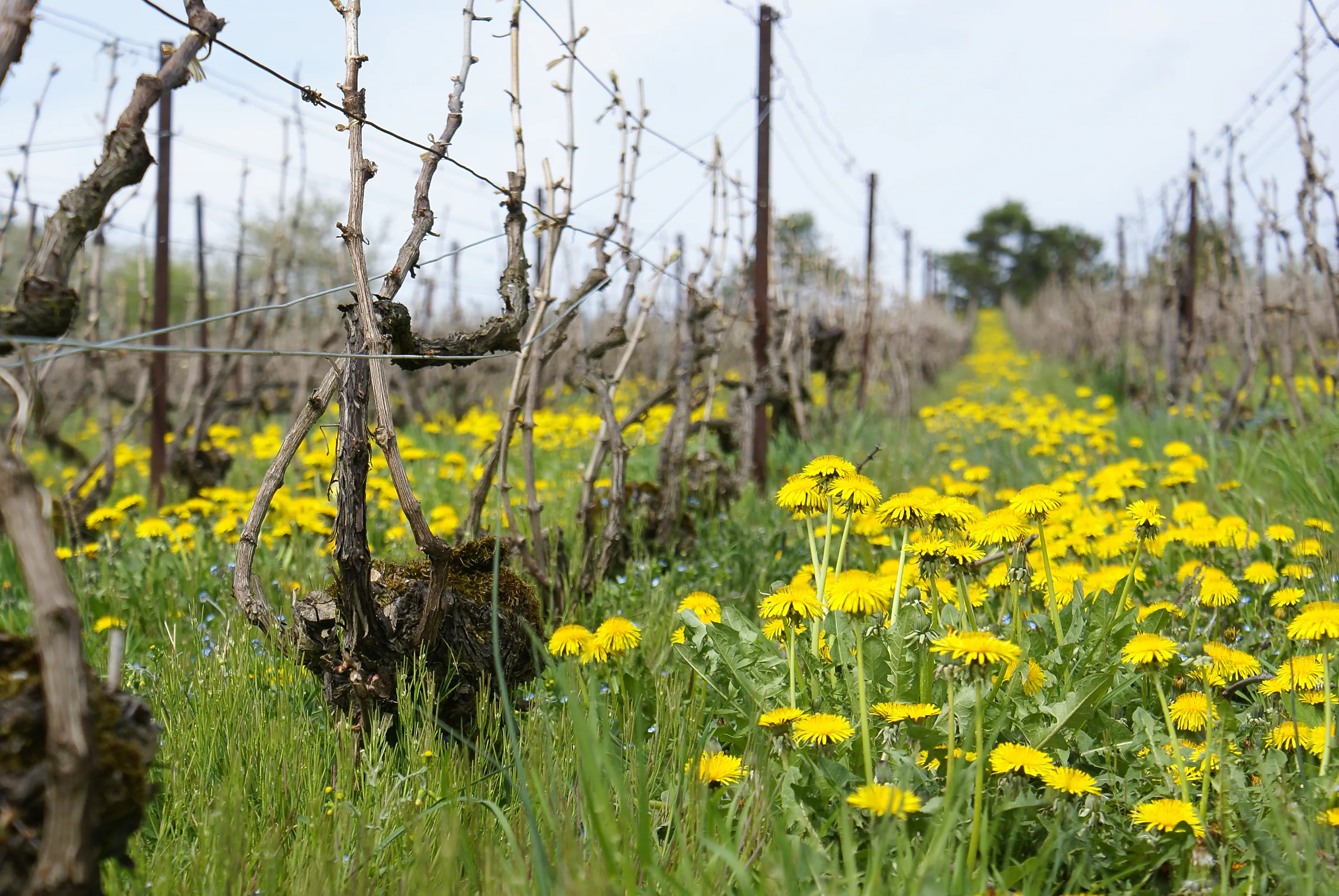
Champagne Pascal Doquet
The Free Bacchus Story
It took Pascal Doquet seven years to get from signing up for organic certification, in 2007, to selling his first Champagne made from certified grapes. Some of that wait was the rules. A vineyard has to complete a three-year conversion before its grapes may be called organic, so his 2010 harvest was the first to carry the AB organic label. The rest was Champagne, which is slow. The 2010 was blended with the 2011, bottled for its second fermentation and left to age in cellars cut into the chalk; today the house releases nothing before it has spent at least three years in bottle. Those first cuvées reached the market at the end of 2014.
He had been a vigneron since 1982, and from 1995 to 2003 he ran the family domaine, Doquet Jeanmaire, vines and cellar both. In 2001 he gave up chemical weedkillers and went back to working the soil in every parcel. Then in 2004 he bought out the shares his sisters held in the family company and went his own way. The Le Mesnil grand crus he had already made to his own taste went out under the Pascal Doquet name, and he and his wife, Laure, built a range of their own. Their son, Noé, joined them in 2017, the fourth generation of the family to make Champagne, and today mother and son run the company alongside Pascal.
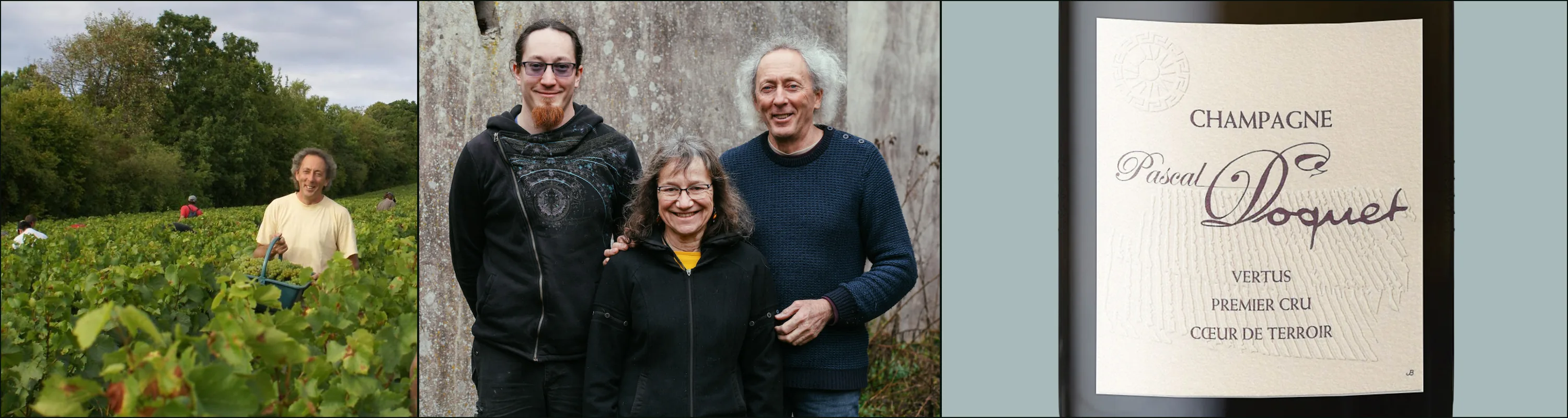
Ninety-five per cent of the vines are Chardonnay, and almost everything the house makes is Blanc de Blancs, a white Champagne made from white grapes alone. Pinot Noir gives Champagne its body and a scent of red fruit; Chardonnay, the grape of the chalk of the Côte des Blancs, brings freshness and citrus, so a Blanc de Blancs sits at the fresh, citrus end of the style. The house is at Vertus, and 60 per cent of its 8.69 hectares lie in the south of the Côte des Blancs, with parcels in the grand cru village of Le Mesnil-sur-Oger and the premier crus of Vertus and Le Mont Aimé. The other 40 per cent are on the chalk of the Coteaux Vitryats, east of the Côte des Blancs, where old vines go into Horizon, one of its three non-vintage Blancs de Blancs. A Champagne without a vintage on the label leans on reserve wine, still wine kept back from earlier harvests so the style holds from year to year. Doquet keeps his in a perpetual reserve, never emptied, only drawn from and topped up with about half of each new harvest. He started it in 2012, the first harvest whose winemaking fell under the EU’s organic rules, and it makes up about half of every blend. At the very end a little sweetness usually goes in. Doquet adds it as concentrated grape must rather than a sugar liqueur, and keeps every cuvée Extra Brut, which allows no more than six grams a litre; one version of Arpège, a Brut Nature, gets none.
Only the first two pressings go into the wines, however much the harvest gives. Each vineyard’s own yeasts ferment them, and since 2016 they have done the second fermentation too, the one in the bottle that makes the bubbles. Nothing is filtered or fined.
Nothing older than the 2010 harvest is certified organic. Ecocert’s certificate lists the 2008 and 2009 vintages as made from grapes still in conversion and names no earlier year, and some of those older bottles are still on sale. The cuvées the house makes today are on it lot by lot, among them Diapason, its grand cru Blanc de Blancs, and the rosé, Anthocyanes, which takes its Pinot Noir from Vertus and Bergères-lès-Vertus. In November 2020 Falstaff’s Peter Moser gave the Anthocyanes Rosé Premier Cru Brut 93 points and called it a balanced food wine.
“je peux approfondir sans contrainte ma volonté d’expérimentation”
Why it’s remarkable
Free Bacchus Verification
Ecocert EU organic
Certified3
- EU organic, Ecocert France (FR-BIO-01.250-0001478, to March 2027), SAS Pascal Doquet, grapes and wine, engaged September 2007
- The certificate lists the house’s cuvées lot by lot as organic, Horizon, Arpège, Diapason, Anthocyanes, Champs Libres and the Coeur de Terroir vintages among them
- The house dates its first organic harvest to 2010
Not covered2
- The 2008 and 2009 vintages, listed only as made from grapes in conversion
- Any earlier vintage
Also on record1
- Not biodynamic
If you’re buying
Cheat sheet
Save it to your phone. Everything you need to recognise this producer, and three things worth saying about it, at a glance in a shop or across a table.