Domaine Pattes Loup
The Free Bacchus Story
In 2016 Thomas Pico made nine hectolitres of wine from each hectare of his vines in Chablis, against forty the year before. Frost struck on 28 April, hail on 27 May, and then mildew, a fungus, set in after 290 millimetres of rain in May. His father, a vigneron for 45 years, had never known a year like it. Pico had by then taken over the family estate as well as his own, and had 9.5 full-time staff and nothing like enough wine to pay them. A handful of certified organic growers nearby gave up and used a systemic spray against the mildew. Pico refused. He split and delayed his releases, raised the price of his 2015 Chablis by more than 40 per cent, and bought organically certified Chardonnay from two friends in Limoux, in the south of France. Because he made it into wine at home in Courgis, the rules let him sell it only as Vin de France.
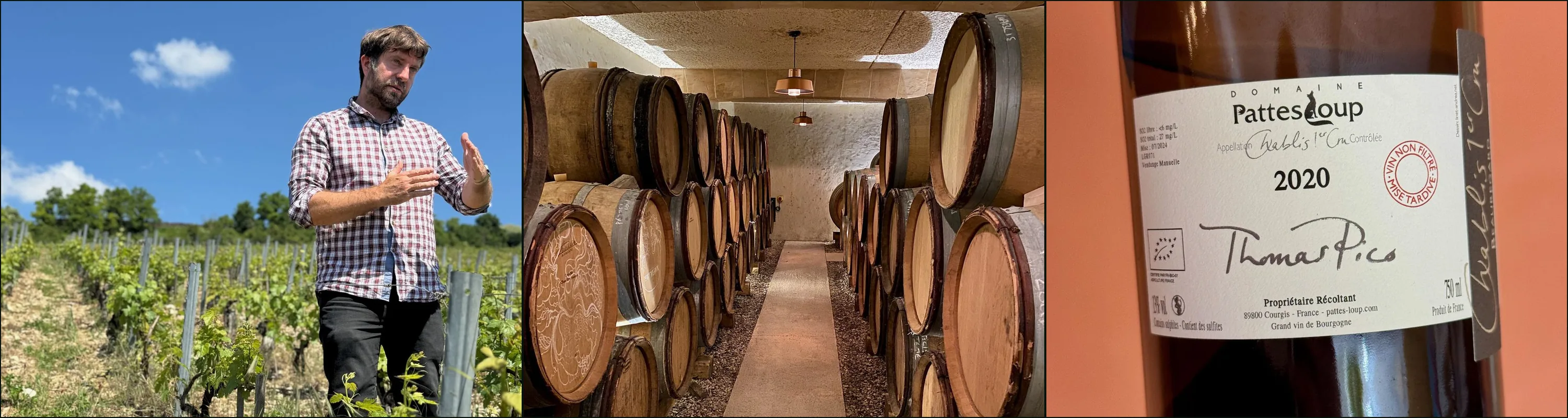
He grew up in Courgis, the son and grandson of vignerons, and studied viticulture and winemaking in Beaune. In 2004 he came home to the family estate, Domaine de Bois d’Yver, the year his grandfather died; Pico remembers him saying not to make the same mistakes he had made in the vineyard. In 2005 Pico took on part of the family’s vines as a domaine of his own, named it after Pattes Loup, wolf’s paws, a parcel his grandfather left him, and converted it to organic farming at once. He signed on with the certifier Ecocert in July 2005, bottled the first Pattes Loup in 2006 and was certified organic in 2009.
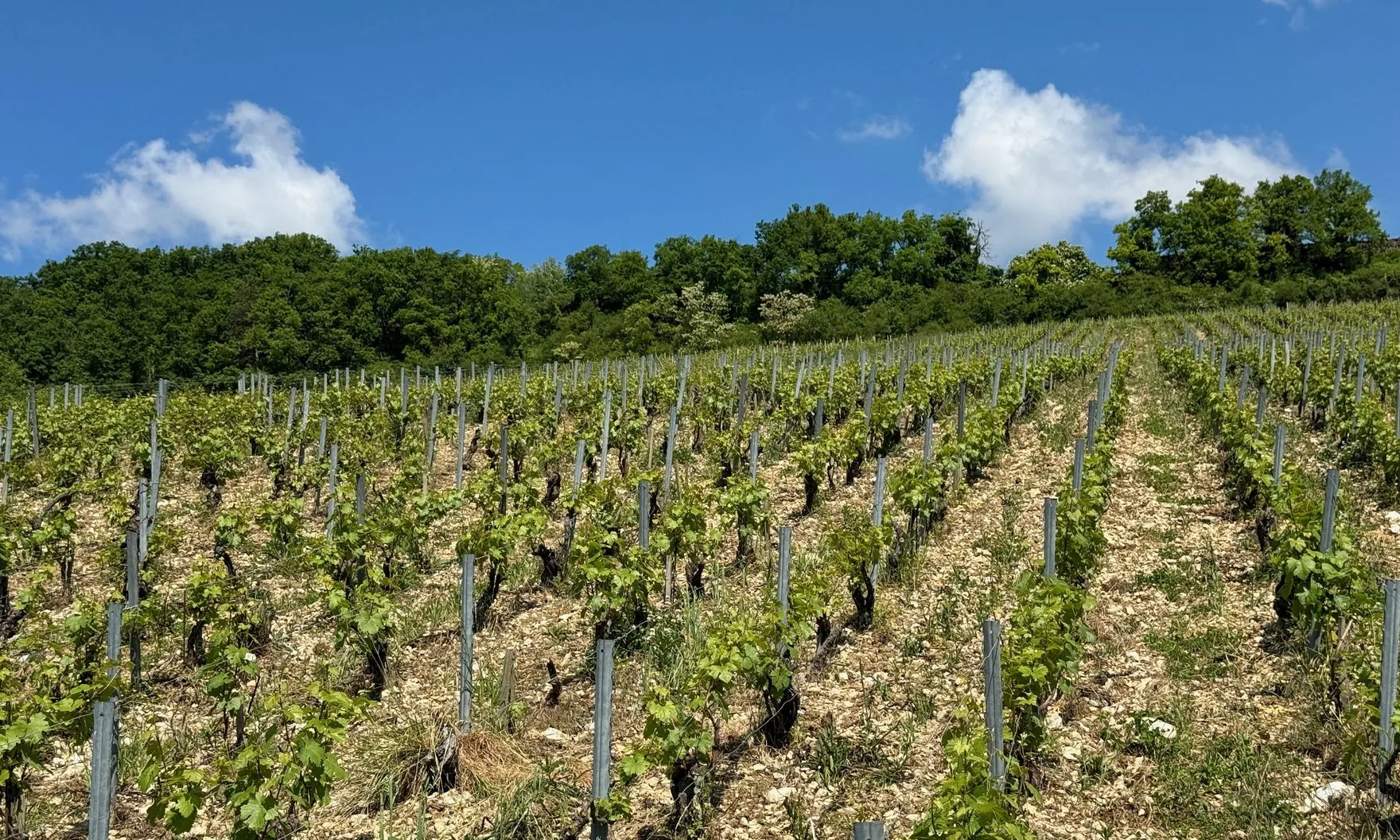
Chablis sits in the north of Burgundy, in the Yonne, and makes one thing, dry white wine from Chardonnay, in the lean, bright and stony style rather than the rich and buttery one. Its wines climb a four-step ladder, from Petit Chablis through Chablis and Chablis Premier Cru to Chablis Grand Cru. Plain Chablis, the village wine, is 65 per cent of what the region makes. Premier cru, from 40 named plots called climats, is 13 per cent, and the Chablis wine board calls it a wine for ageing, five to ten years. Courgis sits on the left bank of the Serein, the river the vineyards follow, and with Préhy it is one of the two highest villages in the appellation, with vines up to 300 metres. Vent d’Ange is Pattes Loup’s village Chablis, from 17 parcels around Courgis. Among its premier crus are Butteaux, a cool, steep site at the south-western tip of Montmains, and Beauregard, which rises to 300 metres just south of the village.
The short harvests of 2015 to 2017 changed the cellar too. Rather than compromise, Pico gave his wines the long ageing he had wanted to try for years, and since 2018 late bottling, mise tardive, has been the house signature. Vent d’Ange waits at least two years and the premier crus up to four, with the bottling date printed on the label. The rules ask far less; even a Chablis Grand Cru need only age until 15 March of the year after its harvest. Falstaff’s Ulrich Sautter tasted the 2018 Vent d’Ange in March 2022, found it needed a lot of air, and gave it 92 points.
Today Pattes Loup farms 22 hectares around Courgis and Préhy with 11 full-time staff, who plant trees among the vines and sow cover crops to mulch the soil. Ecocert certifies SARL Domaine Pattes Loup organic, and its certificate names the Chablis and the Butteaux, Montmains and Beauregard premier crus from 2015 to 2024. Demeter France certifies the domaine biodynamic, valid to June 2027, and lists its wines from the 2021 vintage. The Irancy red is sold by a second company Pico runs, SARL Les Pinots Blacks, under its own organic certificate and Demeter listing. Bought-in grapes, such as those for the Vaillons premier cru from his friend Gérard Duplessis, are certified organic, but Demeter’s list doesn’t show them.
“To arrive at transparency you have to wait.”
Why it’s remarkable
Free Bacchus Verification
Ecocert EU organic · Demeter France biodynamic
Certified3
- EU organic (Ecocert, FR-BIO-01.250-0003315): SARL Domaine Pattes Loup, engaged July 2005
- Demeter (Demeter France; BFDI FR-FR-BIO-01-61016, valid to June 2027)
- The Irancy red is sold by a second company, SARL Les Pinots Blacks, under its own organic certificate (Ecocert, FR-BIO-01.250-0091824, engaged December 2023) and Demeter listing (BFDI FR-FR-BIO-01-289319)
Also on record1
- Bought-in grapes, such as the Vaillons, are certified organic, but Demeter’s list doesn’t show them
If you’re buying
Cheat sheet
Save it to your phone. Everything you need to recognise this producer, and three things worth saying about it, at a glance in a shop or across a table.