Château Guadet
The Free Bacchus Story
Château Guadet fell off Saint-Émilion’s ranking of châteaux in 2006, six years after Guy-Petrus Lignac came back to his family’s estate. The town redraws the list roughly every ten years. It had been a Grand Cru Classé in 1996, under its old name of Guadet Saint-Julien. Guadet was one of four demoted châteaux that went straight to court, arguing that the commission had been biased because some of its members did business with the properties under review. On 1 July 2008 the administrative court in Bordeaux ruled that the blind tasting had not been carried out objectively and struck the whole classification down. The 1996 list was reinstated, and when a new classification came out in 2012, Guadet was a Grand Cru Classé again. Of the four that sued, only La Tour du Pin Figeac was left out. The 2022 list kept Guadet where it was.
Saint-Émilion is a medieval hill town on Bordeaux’s right bank, where clay and limestone suit Merlot rather than the Cabernet Sauvignon grown on the gravel of the left bank. Merlot ripens early and gives a wine colour, suppleness and a round, silky feel, with red fruit while it is young. Cabernet Franc, the town’s second grape, ripens about two weeks later and adds freshness, a little spice and a firmer grip of tannin that helps the wine age. Saint-Émilion wines are blends, Merlot first, with Cabernet Franc and sometimes Cabernet Sauvignon alongside. The ranking sets the town apart as much as the wine. The Médoc’s 1855 classification has barely changed since it was drawn up, but Saint-Émilion’s, first adopted in 1955, is meant to be redone every ten years, so a château can go down as well as up. For the 2012 edition the judges weighed each estate’s terroir, reputation and work in the vineyard and cellar, and tasted ten vintages blind; a Grand Cru Classé needed at least 14 out of 20.
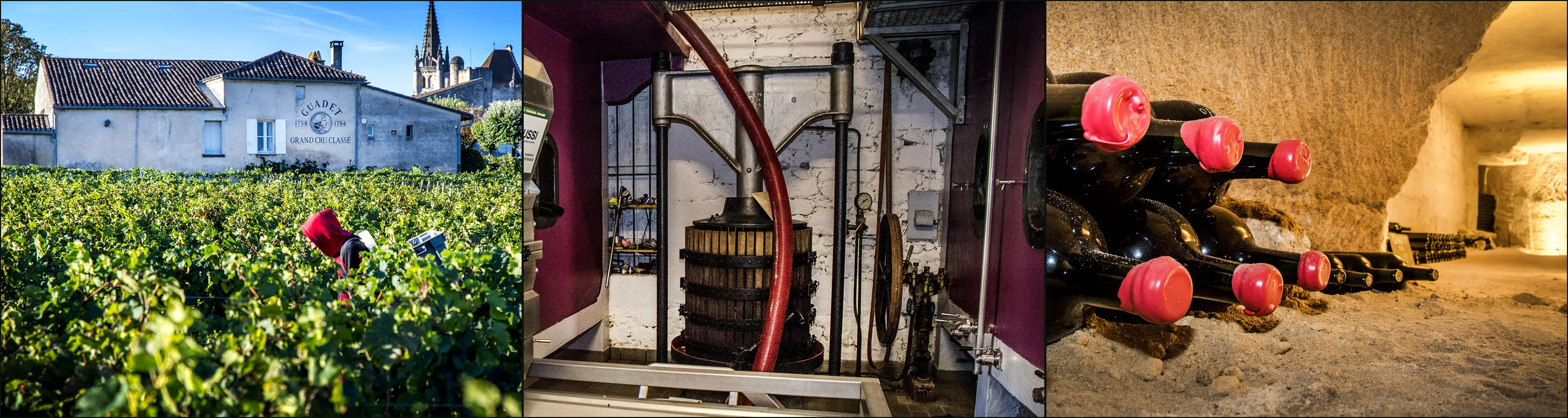
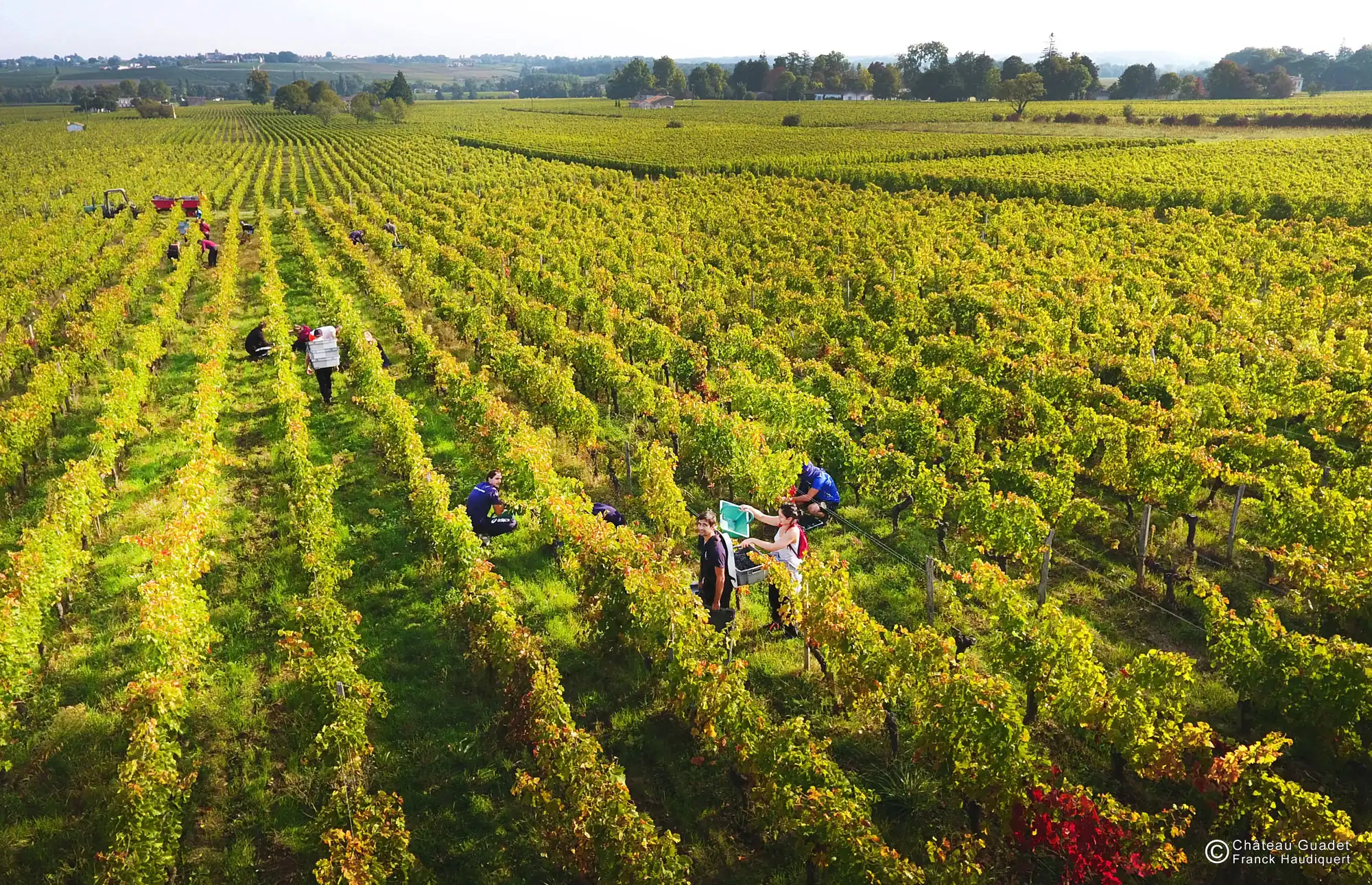
The Lignacs bought the estate from the Guadet family in 1844. It is named for Élie Guadet, a revolutionary deputy born in Saint-Émilion in 1755 and guillotined in 1794, and seven generations on, Guy-Petrus runs it with his son, Vincent. The vines, four parts Merlot to one of Cabernet Franc, lie on the limestone plateau just outside the town’s north gate. The family puts them at 5 hectares, the wine council at 4.2 and Biodyvin at 5.5. The cellars are in the middle of the town, on the rue Guadet, where visitors see a hydraulic press from 1924 before going down to a medieval cellar. Guy-Petrus’s father had always worked the vineyard the traditional way, with the plough and Bordeaux mixture, a copper spray against mildew, so when Guy-Petrus started farming organically in 2008, the family says, the path was already laid out.
Vincent spent two years in the United States, almost as long in Chile and Spain and five on Australian wine estates, and came home in 2009. The estate signed on with the certifier Ecocert in May 2010, and in 2011 Vincent decided to go further and farm it entirely biodynamically, which at Guadet means homeopathic doses of horn manure, horn silica and compost. A vineyard has to serve three years of conversion before it may use the word organic, so Ecocert’s certificate lists the 2011 as made from grapes still in conversion and the 2012 as in conversion; the 2013 is the first vintage it calls organic. In 2015 the estate joined Biodyvin, the growers’ syndicate whose biodynamic label it now carries. It is not certified by Demeter. Agence Bio, the French organic register, also flags Guadet as a mixed operation, and the certificate lists organic wine production alongside non-organic production. Neither says what the non-organic part is.
Guadet makes one red a year, about 12,000 bottles, and no second wine. That is unusual in Bordeaux, where Mark Pardoe MW, wine director at Berry Bros. & Rudd, writes that it is now rare for a top château not to make one. Reviewing the 2018 for Wine Enthusiast, Roger Voss wrote that with the arrival of the next generation the estate had begun to reach its real potential. His score for the 2020 was 94 points.
“La biodynamie est un révélateur de terroir”
Why it’s remarkable
Free Bacchus Verification
Ecocert France EU organic · Biodyvin biodynamic · grand vin from 2013
Certified2
- EU organic, Ecocert France (FR-BIO-01.250-0004989, to March 2027): engaged May 2010, organic from the 2013 vintage
- Biodynamic: Biodyvin, member since 2015 and labelled Biodyvin
This page covers
The grand vin, named organic from the 2013 vintage, and a 2017 crémant, which is named too.
Not covered2
- The 2012, which is in conversion
- The 2011, made from conversion grapes
Also on record2
- Not Demeter
- Agence Bio flags a mixed operation, and the certificate lists organic production with non-organic production without saying what the non-organic part is
If you’re buying
Cheat sheet
Save it to your phone. Everything you need to recognise this producer, and three things worth saying about it, at a glance in a shop or across a table.