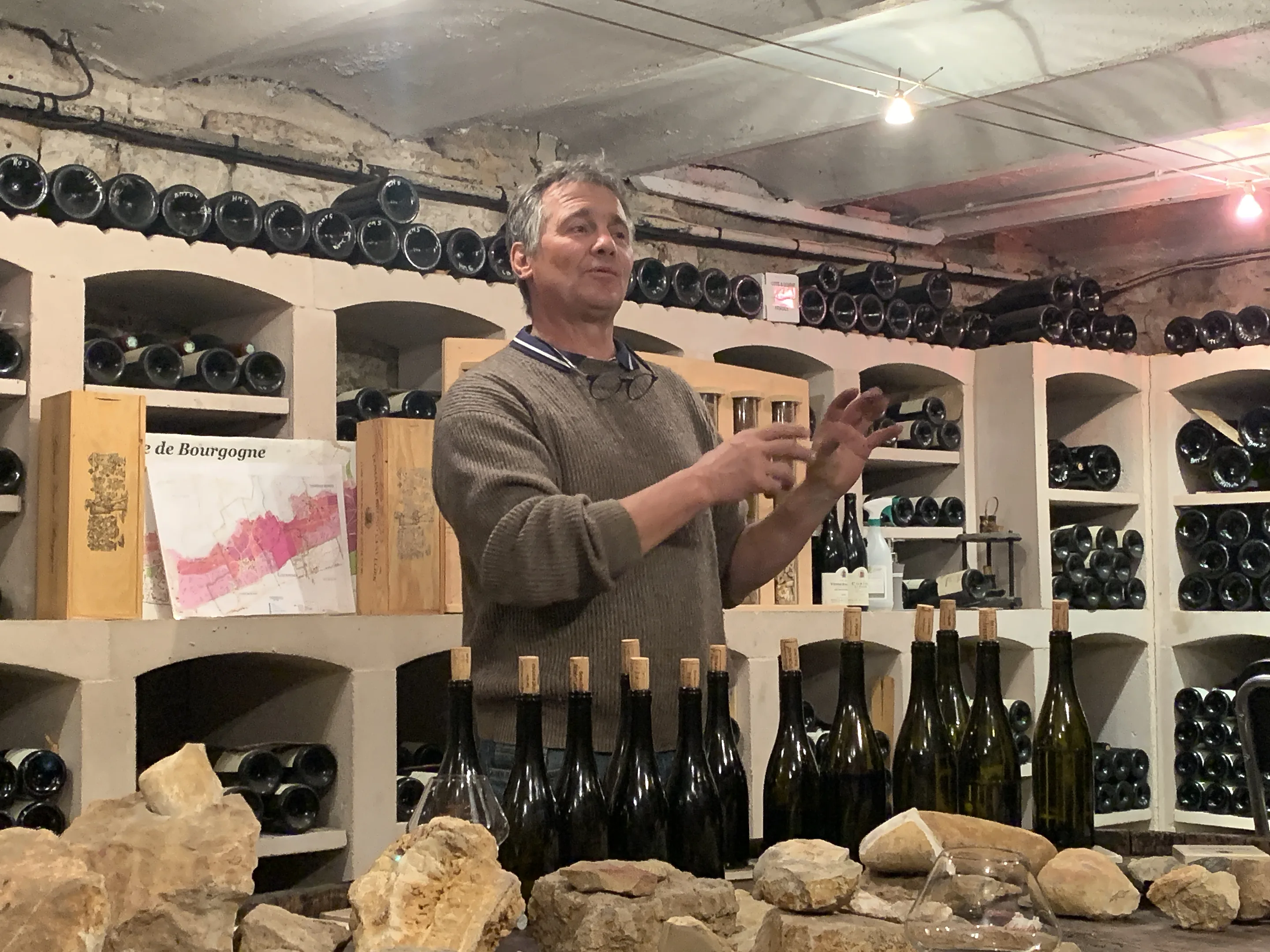
Domaine Bruno Clavelier
The Free Bacchus Story
Before he made wine, Bruno Clavelier was a scrum-half, and playing at a high level meant leaving home, for Lyon and for La Voulte in the Ardèche. When his playing days were over he went back to Nuits-Saint-Georges to coach the young players and the senior side at CS Nuiton. His grandfather Clavelier had co-founded the town’s rugby club. In 1987, after rugby and a national diploma in oenology from the university at Dijon, Bruno took over the family vines in Vosne-Romanée. The porters who carry the grapes in 20-kilo crates at harvest are often his old rugby teammates.
The family has had vines in Vosne since the late eighteenth century, but it was his mother’s father, Joseph Brosson, who really built the domaine, between 1935 and 1955, and for ten years Bruno had his grandfather’s farming experience at his side. Bruno has told his American importer that the locals called Joseph Tarzan for the hours he spent in the vines, breaking up rock with a pickaxe on Sunday mornings while everyone else was at Mass. Until Bruno took over, the wine was sold in barrel to merchant houses, notably Maison Clavelier, founded by his father’s family and sold in 1991; it still carries the name but has had nothing to do with the domaine since. From 1992 Bruno bottled the whole crop himself. The domaine runs to 6.5 hectares, and most of its vines were replanted after phylloxera in the 1930s and 1940s from massal selection, cuttings chosen by hand from the best vineyards.
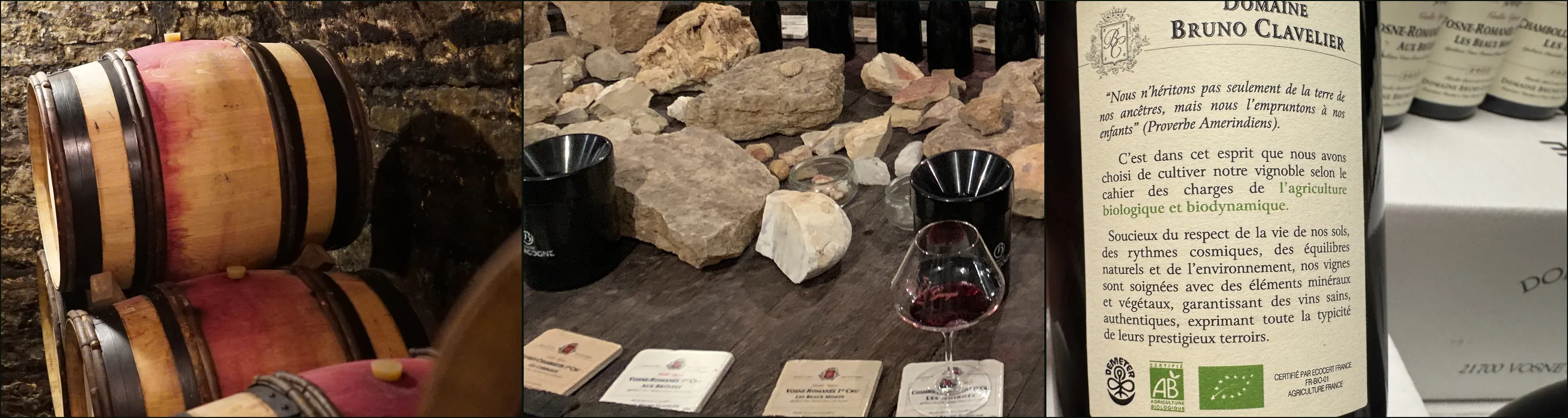
Red Burgundy is Pinot Noir, grown along the Côte d’Or, a slope about fifty kilometres long cut into named plots called climats. Vosne-Romanée and Chambolle-Musigny, the two villages at the heart of this range, are in the Côte de Nuits, and both make red wine only. By the Burgundy wine board’s description, Chambolle is bright ruby, smells of violets and raspberries and has silky tannins, while Vosne is velvety and can seem a little austere when young, needing time in bottle. The labels rank the land in four steps: regional Bourgogne, then a village name, then premier cru, a named climat within a village, and at the top the grands crus, where the village name drops off the label and the climat stands alone. Bruno is one of the few growers who bottles each of his Vosne-Romanée village climats separately, four of them, which is the Burgundian argument about parcels you could walk between in five minutes, settled in the cellar. His only grand cru is Corton “Le Rognet”, a few kilometres south in the Côte de Beaune. The bottle the domaine singles out is a Chambolle premier cru, La Combe d’Orveau, from a plot that touches the Petits-Musigny — part of the grand cru Musigny. Before phylloxera, the domaine says, it was ranked tête de cru, the top class of the day, and it would be a grand cru today had the paperwork been done at the time; some, it adds, consider it the tête de cuvée, the top wine of the cellar.
The weather takes its share. Hail at the end of August 2004, on top of heavy mildew and oidium, meant heavy sorting in the vineyard and again in the cellar, on a sorting table bought that year. Yields in 2010 were very low, by the domaine’s account, and Falstaff scored its 2010 Chambolle-Musigny Premier Cru Les Noirots, from a tiny plot Bruno took on in 2008, at 94 points. Hail in late June 2014 cost between 15 and 40 per cent of the premier cru crop, notably in La Combe d’Orveau. Then on 27 April 2016 frost struck the whole Côte and three-quarters of the domaine, some parcels completely, premiers crus included. The domaine headed its notes on that vintage Année de chagrin, a year of grief. The year before, Bruno had replanted Les Chailles, a parcel just outside the appellation that had been abandoned since the 1880s; its wine is sold as a Vin de France.
Bruno signed the domaine on with Ecocert, the organic certifier, in April 2000. Its certificate names the reds from the 2003 vintage, as made from organic grapes until 2011, the most a European wine could claim before rules for organic winemaking arrived in 2012, and as organic wine since. Demeter France certifies the domaine biodynamic as well, valid to June 2027, though no register says since when, and the domaine’s own website mentions only Ecocert. Demeter’s list of its wines runs from 2016 to 2021 and on to 2023 but skips 2022, the vintage American merchants are selling now. A second company at the same address, SAS Domaine Bruno Clavelier, run by his wife Valérie, holds its own Ecocert certificate for the wholesale trade, and the register shows it trading both organic and non-organic wine.
“Le rugbyman est au contact de la terre, du pré, comme le vigneron…”
Why it’s remarkable
Free Bacchus Verification
Ecocert France EU organic · Demeter biodynamic for 2016–2021 and 2023
Certified3
- EU organic, Ecocert France (FR-BIO-01.250-0001494, to March 2027): EARL Domaine Bruno Clavelier, engaged April 2000
- Demeter (Demeter France; BFDI FR-FR-BIO-01-8808, valid to June 2027)
- The sales company, SAS Domaine Bruno Clavelier, holds its own Ecocert certificate
This page covers
The grapes and wine: red 2003–2024 (2003–2011 as made from organic grapes), rosé 2018–2024 and white 2020–2024, with Demeter France listing the wines for 2016–2021 and 2023.
Not covered1
- The 2022 wines, which Demeter France does not list
Also on record1
- The sales company trades organic and non-organic wine
If you’re buying
Cheat sheet
Save it to your phone. Everything you need to recognise this producer, and three things worth saying about it, at a glance in a shop or across a table.