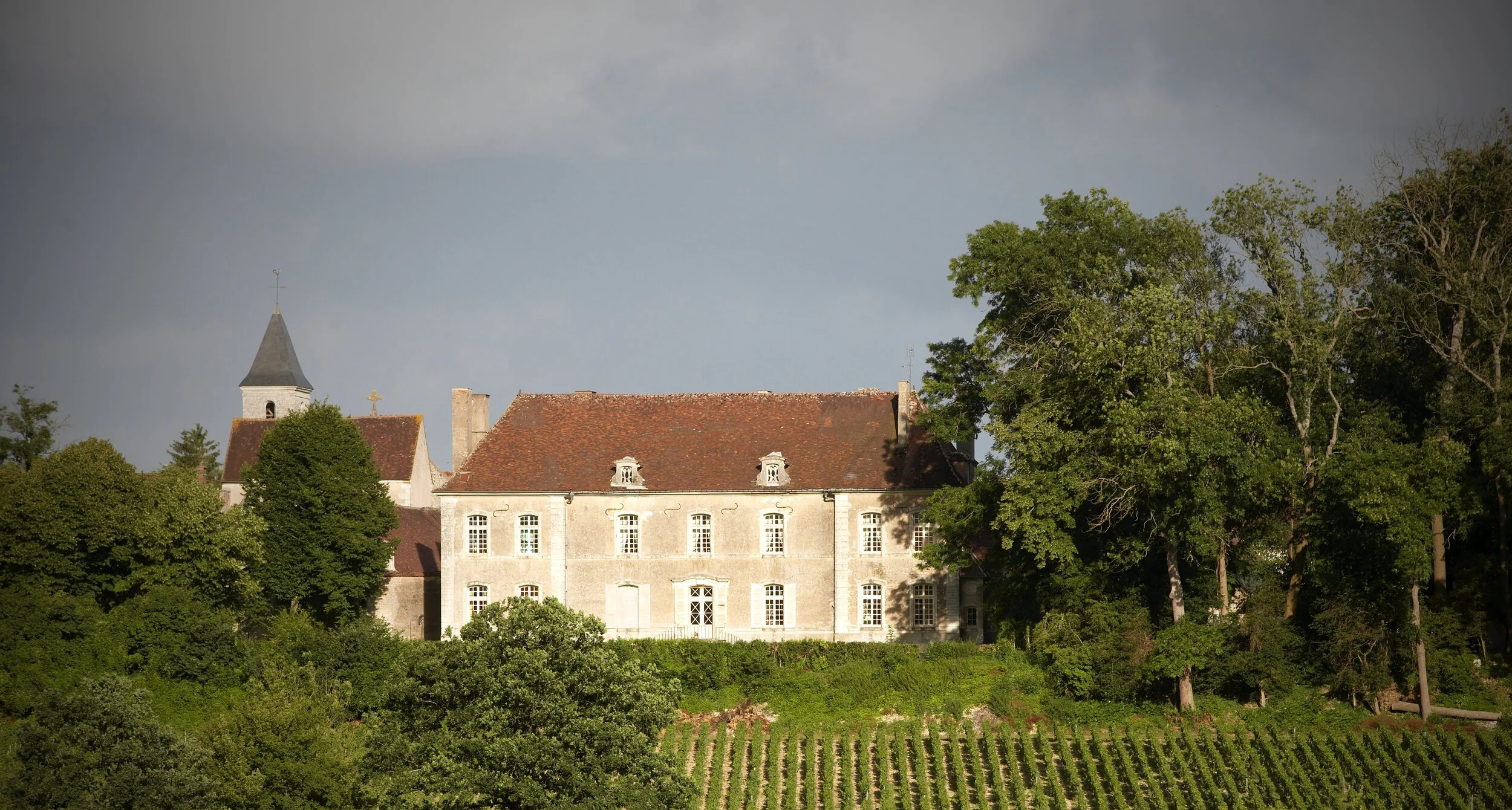
Château de Béru
The Free Bacchus Story
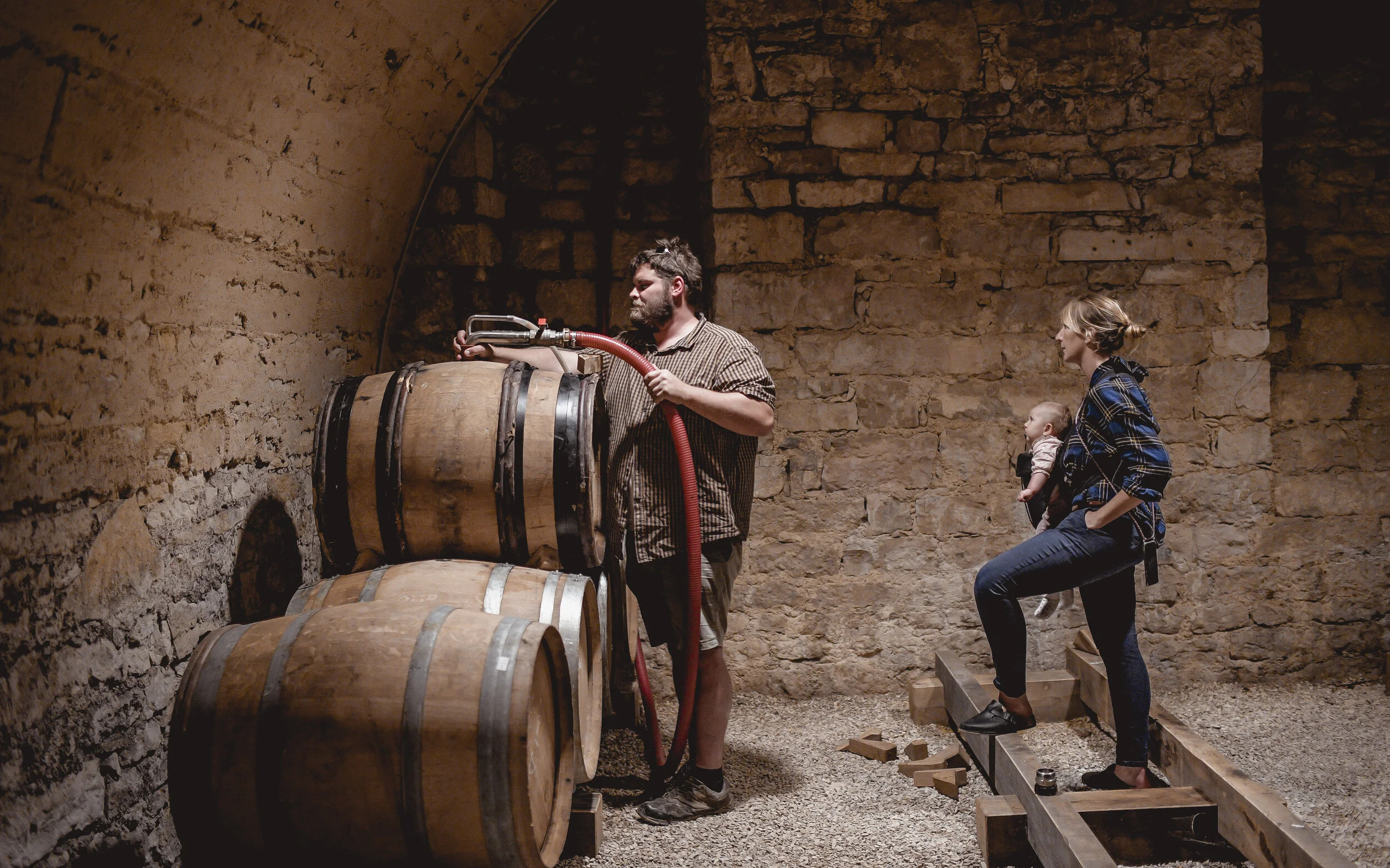
Athénaïs de Béru was working in mergers and acquisitions at a big bank when the farmer who rented her family’s vines rang to say he was retiring. Her father, Éric, had replanted 15 hectares at Béru in 1987 and 1988. Illness stopped him early. His last vintage was 1993, and he leased the vines to a farmer who sold every grape to the cooperative. Her mother did not want to start again and her brother had never been interested, so Athénaïs did it. After a year at the wine-growing school in Beaune, she left finance and Paris for Béru in 2004 and signed her first vintage there in 2005.
Organic, she told the magazine Paulette, was the condition of her taking over at all. It did not come easily. Once the weedkillers stopped, thistles and amaranth sometimes grew two metres tall, and inspectors from INAO, the national appellation authority, came more times than she could count to check her grass against the height the Chablis rules allow. Damp weather and mildew, a parasitic fungus, pushed her further. By 2009 every vine was organic and the first biodynamic trials had begun, and in 2010 the whole domaine went biodynamic.
Chablis is Burgundy’s northern outpost, in the Yonne between Paris and Beaune and a short hop from Champagne, and Béru is one of the villages inside its appellation. It makes one thing, dry white wine from Chardonnay, the same grape as the white wines of the Côte d’Or further south. The ground and the cellar are what make it different. The hillsides sit on Kimmeridgian limestone, the bed of a warm, shallow sea from more than 150 million years ago, full of fossil oysters shaped like commas. And there is no tradition of new oak. Chablis once went to Paris by boat in barrels that came back empty to be refilled, while Meursault’s never returned, so its growers always bought new ones and still do. Most Chablis sees little wood, and rarely new wood, which is why calling a Chardonnay Chablis-like means lean, bright and stony rather than rich and buttery.
The château crowns the hill a few kilometres from Chablis, with about fifteen hectares of vines planted around it, and the family has owned it for more than 400 years. Clos Béru, the cuvée they call their emblem, grows inside a centuries-old wall around the château, on an outcrop of pure Kimmeridgian limestone. It is village Chablis, not a premier cru, and it spends eighteen months in demi-muids, which are big barrels, then a year in a foudre, a larger wooden cask, and six months in bottle.
Two companies share the address on the Grande Rue, and the difference matters. EARL Château de Béru farms the estate’s vines. It signed up with Ecocert in July 2010, and after the three-year conversion a vineyard has to serve, its certificate lists the estate’s Chablis as organic from the 2013 vintage. Demeter France certifies it biodynamic, valid to June 2027, and lists its Chablis cuvée by cuvée for vintages from 2014 to 2022. SAS Athénaïs, the négoce she started in 2010, makes wine from other growers’ grapes, mostly from the Yonne. It has its own Ecocert certificate, engaged in January 2021, and the family says every Athénaïs wine is certified organic from the 2020 vintage. It is not Demeter, so the biodynamic certification covers the estate’s own Chablis, not the Athénaïs négoce wines.
“C’était la condition sine qua non à mon installation !”
Why it’s remarkable
Free Bacchus Verification
Ecocert EU organic · Demeter biodynamic · Athénaïs négoce organic only
Certified3
- EU organic, Ecocert (FR-BIO-01.250-0073957): EARL Château de Béru, engaged July 2010
- Demeter (Demeter France; BFDI FR-FR-BIO-01-112799, valid to June 2027), covering the estate’s own Chablis
- EU organic, Ecocert (FR-BIO-01.250-0009369): SAS Athénaïs, for the Athénaïs négoce wines, engaged January 2021
Not covered1
- The Athénaïs négoce wines, by Demeter: they are certified organic only
If you’re buying
Cheat sheet
Save it to your phone. Everything you need to recognise this producer, and three things worth saying about it, at a glance in a shop or across a table.