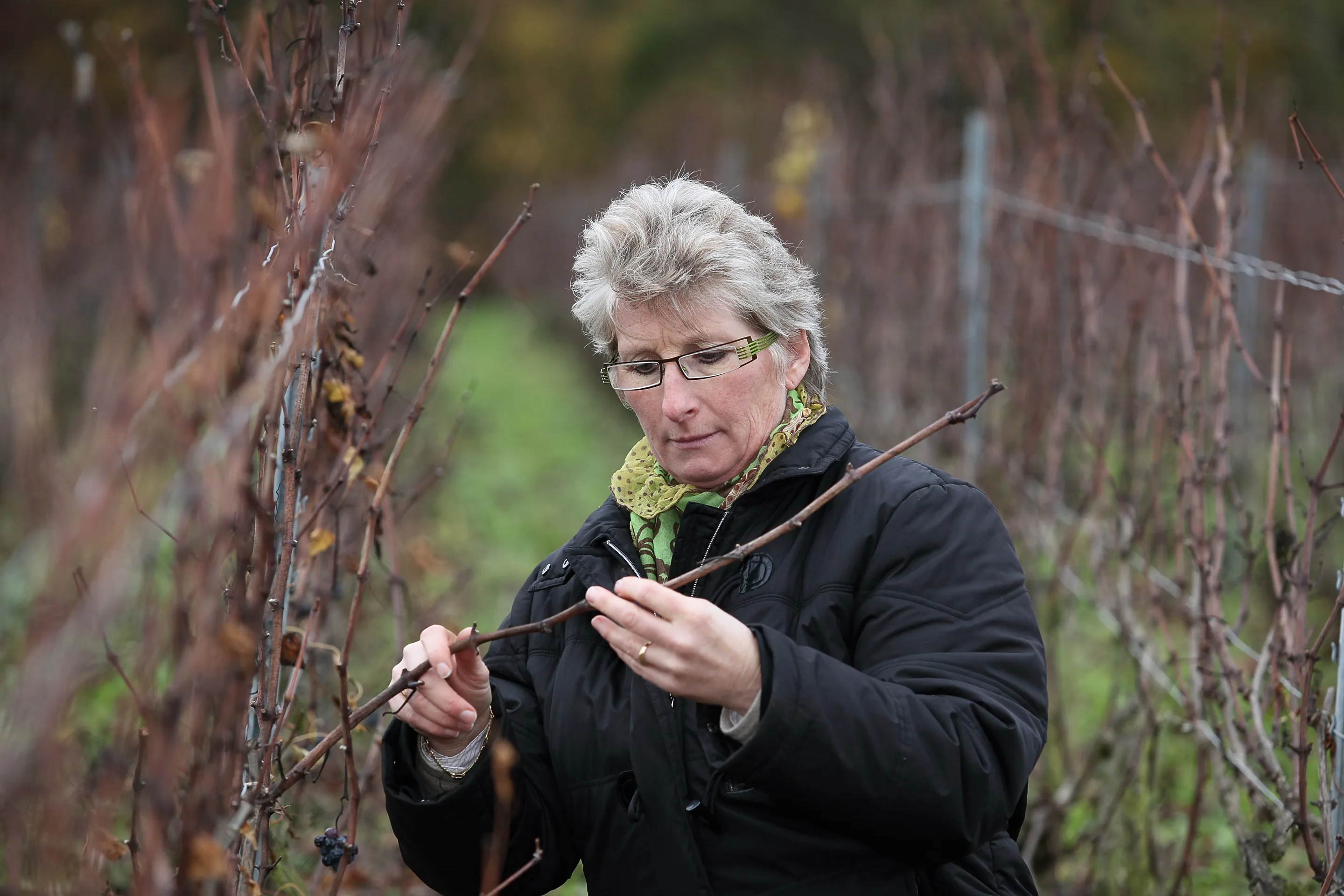
Champagne Françoise Bedel
The Free Bacchus Story
In 1982, looking for help with her young son Vincent’s health, Françoise Bedel found a couple of homeopathic doctors, and with them, she says, a new way of caring for the family, of eating and of thinking. She had come into her parents’ vineyard at Crouttes-sur-Marne in 1976, an only daughter where a son had been badly wanted, and at first the work was something she put up with more than chose; she had dreamed of art and travel. A homeopath who had treated her as a young mother, Robert Winer, became a friend, and when he died in 2004 she chose her 1996 vintage to carry his name. That bottle is still for sale, and it is the one wine in her range that the organic certificate does not cover, because its grapes were picked before the estate entered organic control in 1998.
In 1996 she went to a meeting of biodynamic growers in Alsace. She had been up since dawn and was worn out, and still she drove straight home to Champagne with what she calls an incredible energy. The next year the estate gave up weedkiller and began working its soil with a plough. In 1998 she tried biodynamics on two hectares, and that August she signed the estate up with Ecocert for organic certification; it is still certified today. In 1999 all seven hectares went into biodynamic conversion, and in 2002 the estate also joined Biodyvin, a biodynamic label run by growers, who have Ecocert audit each member.
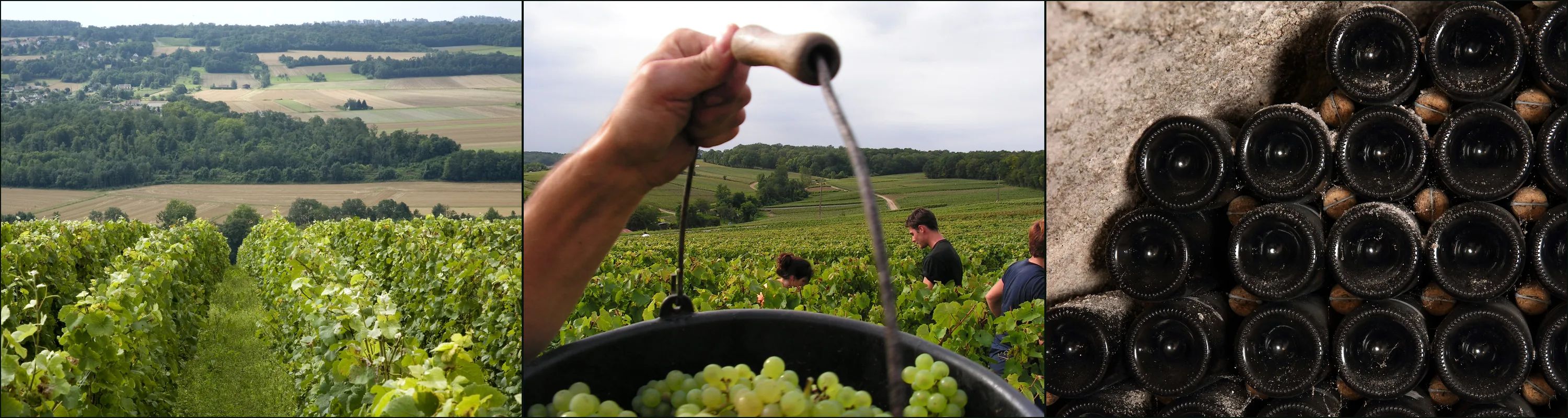
Champagne is made mainly from three grapes. Pinot Noir dominates the Montagne de Reims and Chardonnay the chalk of the Côte des Blancs. Meunier, the third, is the hardy one. It buds later, so it is less exposed to frost, it copes with soils that hold more clay, and it gives rounder, fruitier wine, with a smell of yellow fruit, that tends to age faster than the other two. Follow the Marne Valley west from Épernay towards Paris and Meunier takes over. Crouttes-sur-Marne sits at the far western edge, where Champagne runs out towards the Paris basin, and Bedel’s 8.85 hectares, on both banks of the river, are 79 per cent Meunier, on clay, marl and river silt over limestone. It is less prestigious ground than the Côte des Blancs, and she says that has spurred her on. Her Entre Ciel et Terre is an Extra Brut, the category allowed no more than six grams of added sugar a litre. The current release, from the 2018 harvest, has 3.75 and spent five years ageing in bottle.
Biodynamics nearly cost her the estate. Her costs soared and she would not pass them on, though her accountant begged her to. When at last she raised her prices, she told Vigneron magazine in 2023, she lost 99 per cent of her customers that year, and it took four years, new importers and a fresh start to get clear. The hard times kept coming round. In 2020 she parted from Vincent, who had joined her some years before, because their differences had grown too great. Then came a year with no harvest, in 2021, and a fire in 2022. She is not for sale, she says, whatever some have claimed.
Entre Ciel et Terre comes from Les Fortes Terres, 97 ares at Nanteuil-sur-Marne and the first parcel she converted. The name came to her there, on one of those Champagne days when the sky hangs so low it might fall on your head and the soaked ground puts an extra kilo on each boot. Today the estate is certified organic by Ecocert, grapes and wine, and every wine she sells is on the certificate except Robert Winer 1996; the older vintages are listed as made from organic grapes rather than as organic wine. The biodynamic label has gone. Biodyvin still listed the estate as labelled in August 2025 and had dropped it by that November, so there is no biodynamic certificate now. Françoise Bedel still describes the whole estate as farmed biodynamically, and that is her own account, not a register’s.
“J’aime mes terres non nobles. On est loin de la côte des Blancs.”
Why it’s remarkable
Free Bacchus Verification
Ecocert EU organic
Certified1
- EU organic (Ecocert France, FR-BIO-01.250-0086492, engaged August 1998, valid to March 2027): the whole estate, grapes and wine
Not covered1
- Robert Winer 1996, harvested before organic control began
Also on record1
- Older vintages are listed as made from organic grapes
If you’re buying
Cheat sheet
Save it to your phone. Everything you need to recognise this producer, and three things worth saying about it, at a glance in a shop or across a table.