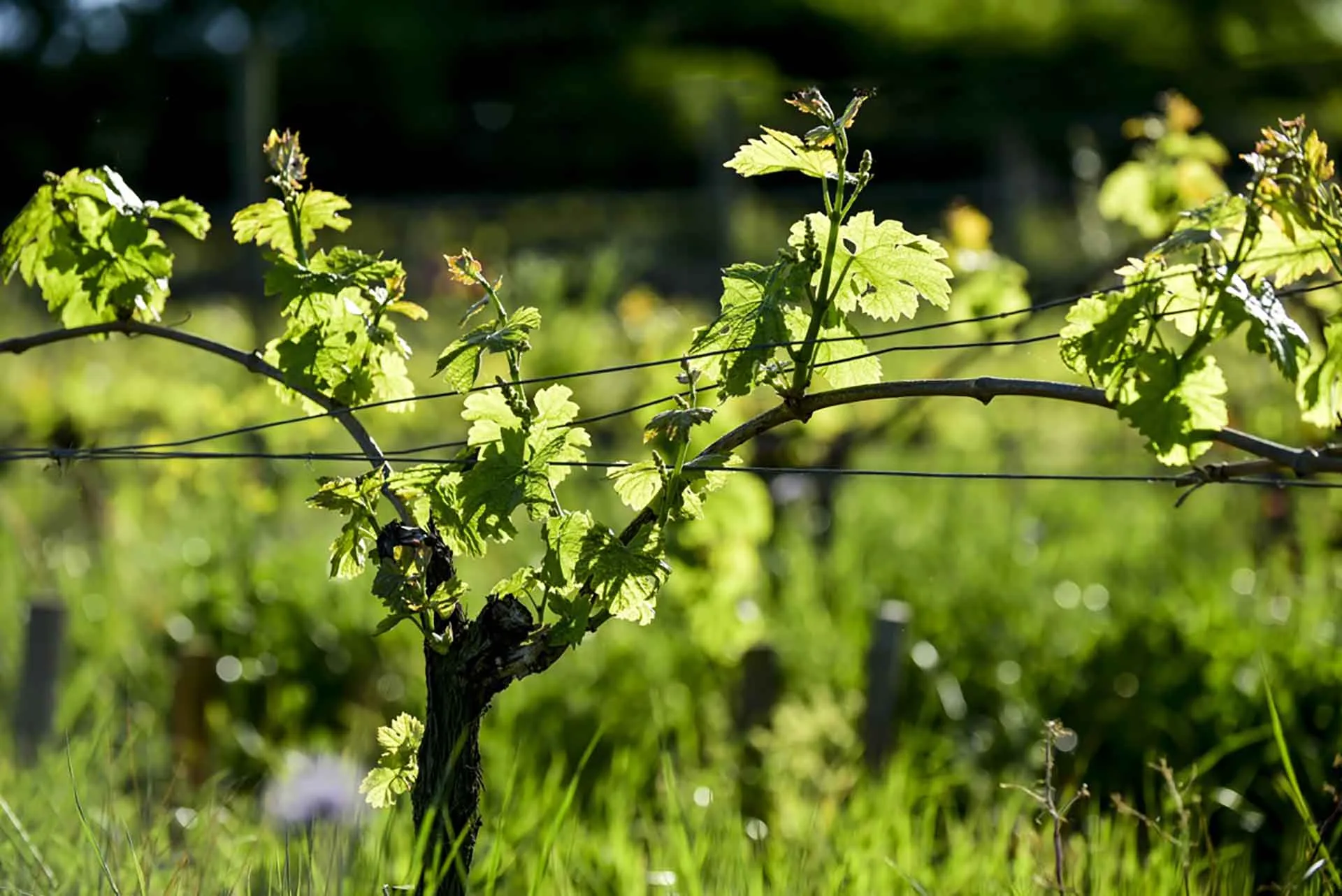
Clos Puy Arnaud
The Free Bacchus Story
Asked by the blogger Daniel Sériot what made him give up Paris for the vines, Thierry Valette pointed to a harvest at Château Pavie, in 1987 or 1988, he thinks. He was riding on the tractor’s trailer as it brought in the hand-picked grapes, looking at the sky and the setting sun, and he told himself he had to leave Paris. He was the fourth generation of Valettes in wine, and as a young man he had tried to escape it for an artist’s life. After a postgraduate degree in economics he trained in modern dance at the national contemporary dance centre in Angers, and in jazz saxophone and singing, and for seven years he ran Les Notes Bleues, a shared space for making music in the 13th arrondissement of Paris. He moved to Bordeaux in 1989 and kept up the jazz, recording two albums and performing at the Saint-Émilion jazz festival in July 2013.
His great-grandfather Alexandre built up Les Établissements Valette, a wine merchant founded in 1870 in Saint-Ouen, just outside Paris, and went on to buy estates in the Languedoc and in Bordeaux. Thierry’s branch of the family looked after Château Pavie in Saint-Émilion from 1943 until it was sold in 1998. He was a shareholder there from 1979, under his cousin Jean-Paul Valette, and co-manager alongside his grandmother, Violette. In 2000, two years after the sale, he bought Clos Puy Arnaud, just east of Saint-Émilion in Castillon.
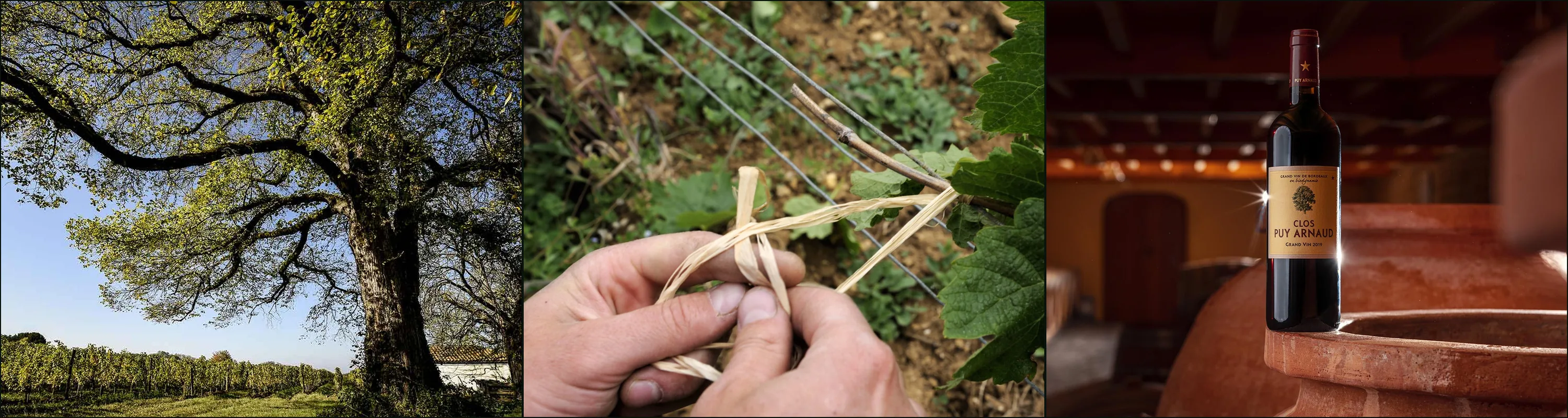
Bordeaux divides along its rivers. Gravel on the left bank grows Cabernet Sauvignon, and the clay and limestone of the right bank grow Merlot, which gives a red of plum fruit and soft tannins. Castillon, 45 kilometres east of the city and close to the Dordogne, is on the right bank, and Merlot covers three-quarters of its 2,300 hectares of vines, with Cabernet Franc and Cabernet Sauvignon making up most of the rest. Its vineyards climb from sand and gravel by the river to a limestone plateau on top. Until the early twentieth century its wines were sold as près Saint-Émilion, near Saint-Émilion, and the Féret guides of the day counted Castillon as part of the Saint-Émilion area. The 1874 edition listed Puy Arnaud as a 1er Cru, and the 1898 edition gave it a footnote for its fine vines and the care taken over them. The estate sits on a small plateau of its own, 90 to 100 metres up, where a thin skin of soil covers limestone full of fossil starfish. Its 15 hectares are split into 32 parcels, and about two-thirds of the vines are Merlot.
Valette farmed organically from 2001, at first without a certificate, and signed on with the certifier Ecocert in January 2006. His first biodynamic trials date from 2005 or 2006. He joined Biodyvin, the biodynamic growers’ syndicate, in 2007 and committed fully in 2008. The wine blog La Pipette aux quatre vins visited in July 2012, as mildew spread onto the bunches, and found him refusing to lower his guard with 2007 in mind, the year, the blog reported, that he lost 60 per cent of his crop. He told Sériot he believes that without organic farming and biodynamics he would not have wanted to keep at the job.
The wines were certified organic in 2009, by the estate’s account, and took the Biodyvin label in 2010 and Demeter certification in 2014. Today Ecocert certifies the grapes and the wine as organic, Demeter France’s certificate runs to June 2027, and the estate carries the Biodyvin label. Its own technical sheets claim the biodynamic marks only for the wines from the plateau: the Grand Vin, Les Ormeaux, Vibrato and Bossa. Bistrot, made from leased parcels farmed organically since 2012, and Silt, a white from parcels organic since 2018, are organic only. The Grand Vin, labelled simply Clos Puy Arnaud, is mostly Merlot, and in 2019 a third of it aged in barrels, a third in demi-muids, which are bigger casks, and a third in amphorae. Roger Voss of Wine Enthusiast scored the 2019 at 93 points and called it ‘one of the star wines in Castillon’.
“Biodynamic culture is above all taking care of the soil.”
Why it’s remarkable
Free Bacchus Verification
Ecocert EU organic · Demeter and Biodyvin biodynamic, plateau wines only
Certified4
- EU organic, Ecocert France (FR-BIO-01.250-0001469, to March 2027): operator EARL Thierry Valette, grapes and wine, engaged January 2006
- Biodynamic: Demeter (Demeter France; BFDI FR-FR-BIO-01-61602, valid to June 2027)
- Biodynamic: Biodyvin, member since 2007 and labelled Biodyvin
- The estate claims biodynamic certification only for its plateau wines (the Grand Vin, Les Ormeaux, Vibrato and Bossa)
Not covered1
- Bistrot, from leased parcels organic since 2012, and Silt, organic since 2018, which are organic only
If you’re buying
Cheat sheet
Save it to your phone. Everything you need to recognise this producer, and three things worth saying about it, at a glance in a shop or across a table.