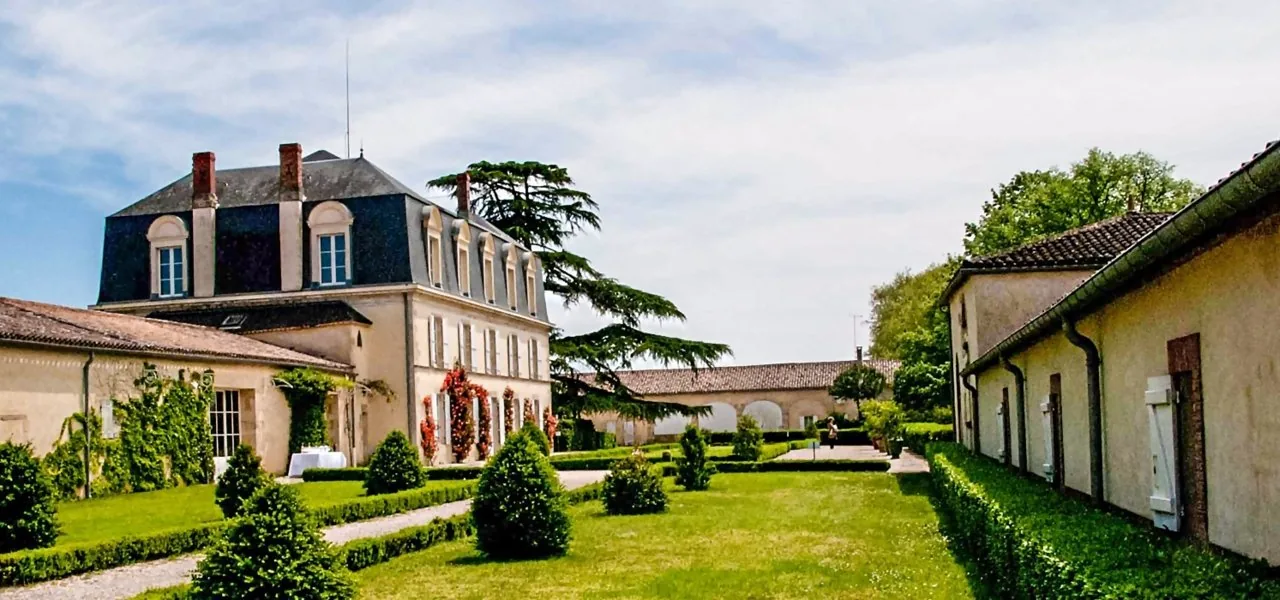
Château Guiraud
The Free Bacchus Story
Soon after Sandrine Garbay took over as general director of Château Guiraud in May 2022, she was walked round a vineyard the frost had spared. The year before, frost at minus seven or eight degrees had taken 95 per cent of the crop. Over that winter the estate put up six wind machines to warm the air, and the hard frosts of 3 and 4 April 2022 did little damage. Garbay had spent more than twenty years in the cellars of Château d’Yquem, and she counted 2018 to 2021 as four hard years for Sauternes.
Sauternes is sweet white wine and nothing else, from a pocket of Bordeaux about 40 kilometres south-east of the city that makes up 2 per cent of the region’s vineyard. The sweetness comes from a fungus. Botrytis cinerea, called noble rot, needs misty autumn mornings and sunny afternoons, and here the mist rises where the cool Ciron runs into the warmer Garonne. The fungus punctures the skins of very ripe grapes, the afternoon sun draws the water out, and the berries shrivel like raisins, leaving their sugar and flavour concentrated. If the damp never lifts, it turns to grey rot instead and can ruin the crop. Noble rot spreads unevenly, berry by berry, so pickers go through the vines by hand several times, taking only the grapes it has reached, and by the Bordeaux wine council’s reckoning one vine makes a single glass. The juice is so rich that fermentation stops long before the sugar is used up. Young Sauternes tastes of orange and grapefruit, white flowers and pear; with age it turns amber and picks up spice, nuts and candied fig. Sémillon is the main grape, with Sauvignon Blanc for freshness, and Guiraud has always had, in its own words, a predilection for Sauvignon, which makes up 35 per cent of its Premier Cru. The 1855 classification that ranked the châteaux of the Médoc also ranked Sauternes, the only white wines on it, and placed Guiraud among the Premiers Crus.
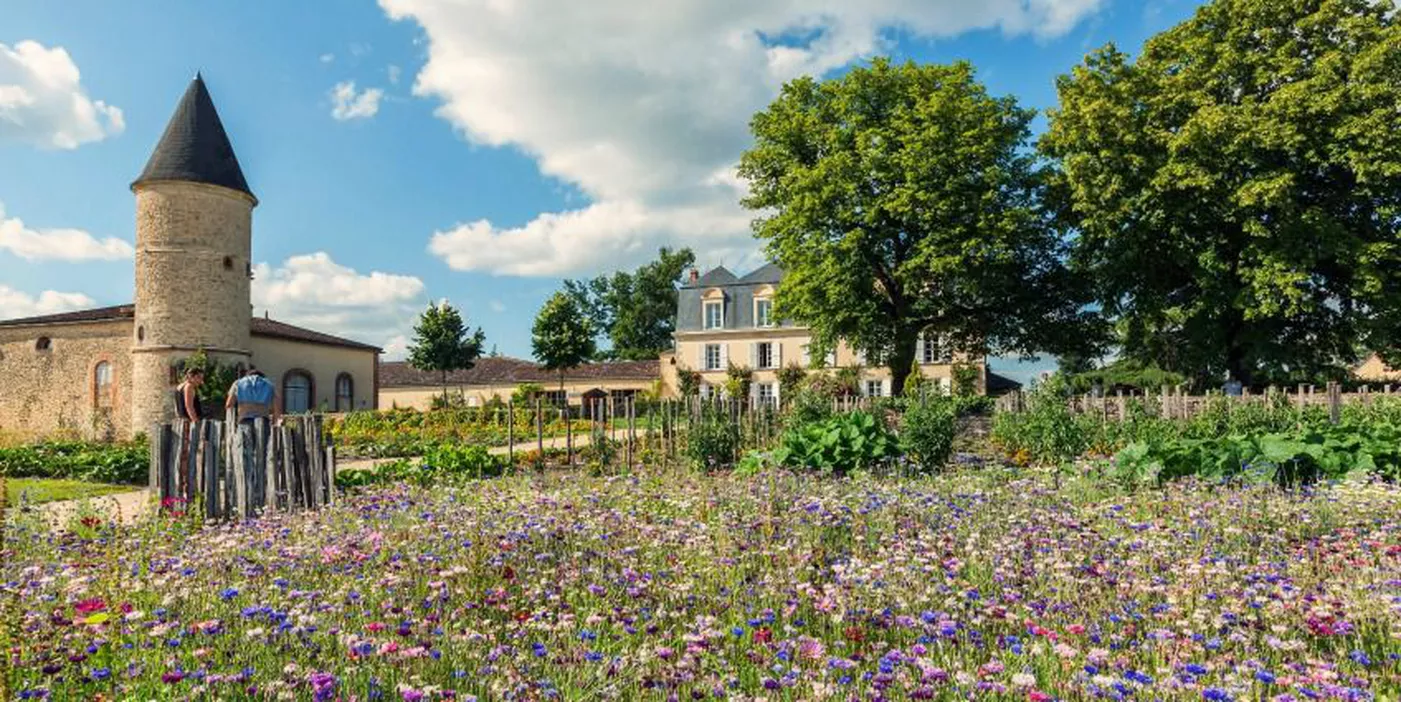
The Guiraud family, Protestant and republican merchants in a Catholic, royalist stronghold, bought the estate in 1766, and it still carries the black-and-gold label it took up in the first half of the nineteenth century. For 38 years it was managed by Xavier Planty, and the château dates its move to organic farming to the mid-1990s. In 2006 four partners bought it: Robert Peugeot, with 74.9 per cent, Olivier Bernard of Domaine de Chevalier, Stephan von Neipperg of Canon La Gaffelière, and Planty himself. On 6 March that year the estate signed on for organic inspection with the certifier Bureau Veritas. In January 2011 Decanter reported that Guiraud and Pontet-Canet had become Bordeaux’s first classed growths to be certified organic, Pontet-Canet for its 2010 vintage and Guiraud from 2011. The château had registered a name of its own for the approach, BioViticulture, the month before, because organic, Planty told Decanter, was only the starting point. Today the certificate covers the whole estate, the second Sauternes and both dry whites included.
The 2011, Guiraud’s first certified vintage, was the one that put it in the limelight. In January 2014 James Suckling finished tasting about 600 samples of 2011 Bordeaux and named the 2011 Château Guiraud his surprise wine of the vintage, at 99 points.
In October 2021 Planty sold his shares and left. The majority of Financière Guiraud, the holding company that owns the château, went to Matthieu Gufflet, an entrepreneur who builds hotels and restaurants under the Terres de Natures name and also owns Château de Callac in the Graves; Peugeot Invest still held 20 per cent at the end of 2025. In 2022 Gufflet put Garbay in charge of both his wine estates, and she has said she wants to put sweet wine back at the centre of Guiraud. The château’s own sheets list 170,000 bottles of the 2023 G, a dry white, and 50,000 of the 2022 Sauternes.
“jusqu’au dernier moment, tout peut être perdu ou au contraire tout peut être magnifié”
Why it’s remarkable
Free Bacchus Verification
Bureau Veritas EU organic
Certified2
- EU organic, Bureau Veritas (FR-BIO-10.250-0006135, to March 2027): operator SCA Château Guiraud, grapes and wine, under control since March 2006
- The whole estate: the Sauternes, Petit Guiraud and both dry whites are certified organic
Also on record1
- Not biodynamic
If you’re buying
Cheat sheet
Save it to your phone. Everything you need to recognise this producer, and three things worth saying about it, at a glance in a shop or across a table.