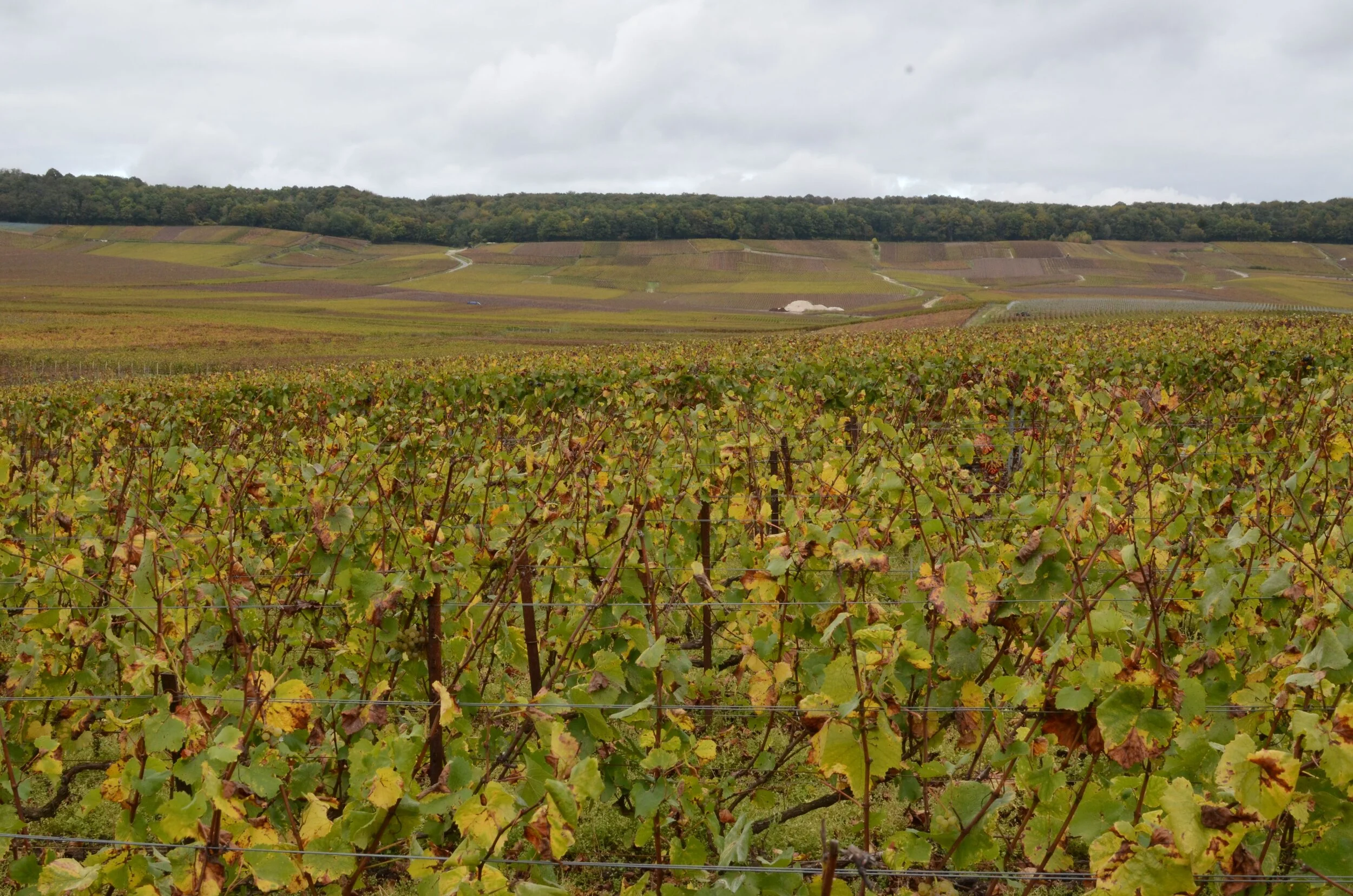
Benoît Lahaye
The Free Bacchus Story
Benoît Lahaye took over his family’s vines in Bouzy in 1993. The family had been making wine in the village since the 1930s, and in 1996 he began bottling champagne under his own name. From 1995 he let grass grow across the whole vineyard instead of clearing it with weedkiller, as is common in the region, and in 2003 he decided to take the entire estate organic.
He signed on with the certifier Ecocert at the end of October 2003. A vineyard has to serve three years of conversion before its grapes may be called organic, and Lahaye’s first certified harvest was 2007. Biodynamics followed in 2009. In 2010 he joined Biodyvin, the growers’ syndicate whose biodynamic label the estate now carries, and Tamise, an Auxois draught horse, arrived to plough much of the estate and spread compost, sparing the soil the weight of a tractor. Ecocert’s certificate now lists his champagnes one by one, each marked organic.
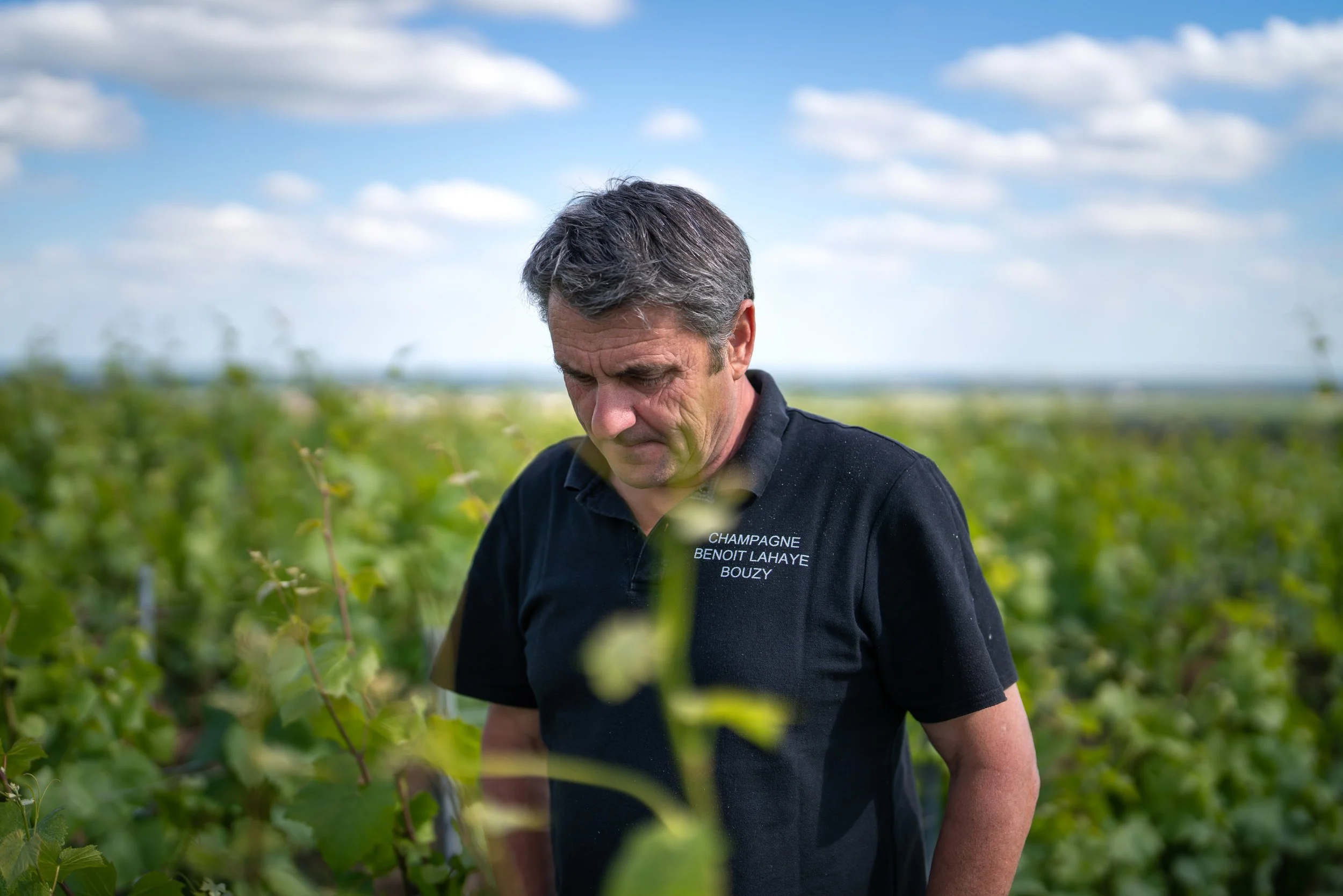
Bouzy is on the Montagne de Reims, and it is Pinot Noir country. Champagne is made twice, first as a thin, sharp still wine and then again in the bottle, which is where the bubbles come from. On Bouzy’s south-facing grand cru slopes Pinot Noir ripens well enough that the village is also known for still red wine, and its champagne has more depth than the taut, chalky Chardonnay of the Côte des Blancs. Lahaye is a grower rather than a house, which means he farms his own vines and bottles his own harvest instead of buying grapes from across the region. Most champagne gets a little sugar at the very end. Lahaye’s grapes regularly reach 11 per cent alcohol in the first fermentation, his British merchant Vine Trail reports, and most of the range now goes out with none. That style is Brut Nature, and it only works when the fruit has ripened properly, because there is nothing left to hide behind.
The estate is small. The family gives it as 4.5 hectares and its importers as 4.8, most of it in Bouzy, with about a hectare in Ambonnay, the grand cru next door, just over half a hectare in the premier cru village of Tauxières and a scrap of old Chardonnay at Voipreux, in the Côte des Blancs. Close to nine vines in ten are Pinot Noir. The wine ferments mostly in barrels, on the yeasts that come in with the grapes. No sulphur, the usual preservative, goes in at the end, when the spent yeast is cleared from the bottle, and one cuvée, Violaine, is made with none at any stage.
Then there is Le Jardin de la Grosse Pierre, a single parcel in Bouzy planted in the 1920s with a jumble of varieties in the same rows: Arbanne, Petit Meslier, Pinot Blanc and Gros Plant among them, grapes Champagne has mostly left behind. Lahaye does not know for certain what else is there. Until 2009 its wine went into the blend. That year he bottled it on its own for the first time, and a release now runs to about 140 cases.
“It was planted more or less indiscriminately in the ’20s”
Why it’s remarkable
Free Bacchus Verification
Ecocert EU organic · Biodyvin biodynamic
Certified3
- EU organic, Ecocert France (FR-BIO-01.250-0074041, to March 2027): engaged October 2003, organic from the 2007 harvest
- Biodynamic: Biodyvin, member since 2010 and labelled Biodyvin
- The whole estate, grapes and wine: the certificate names the champagnes cuvée by cuvée, and no non-organic production is declared
If you’re buying
Cheat sheet
Save it to your phone. Everything you need to recognise this producer, and three things worth saying about it, at a glance in a shop or across a table.