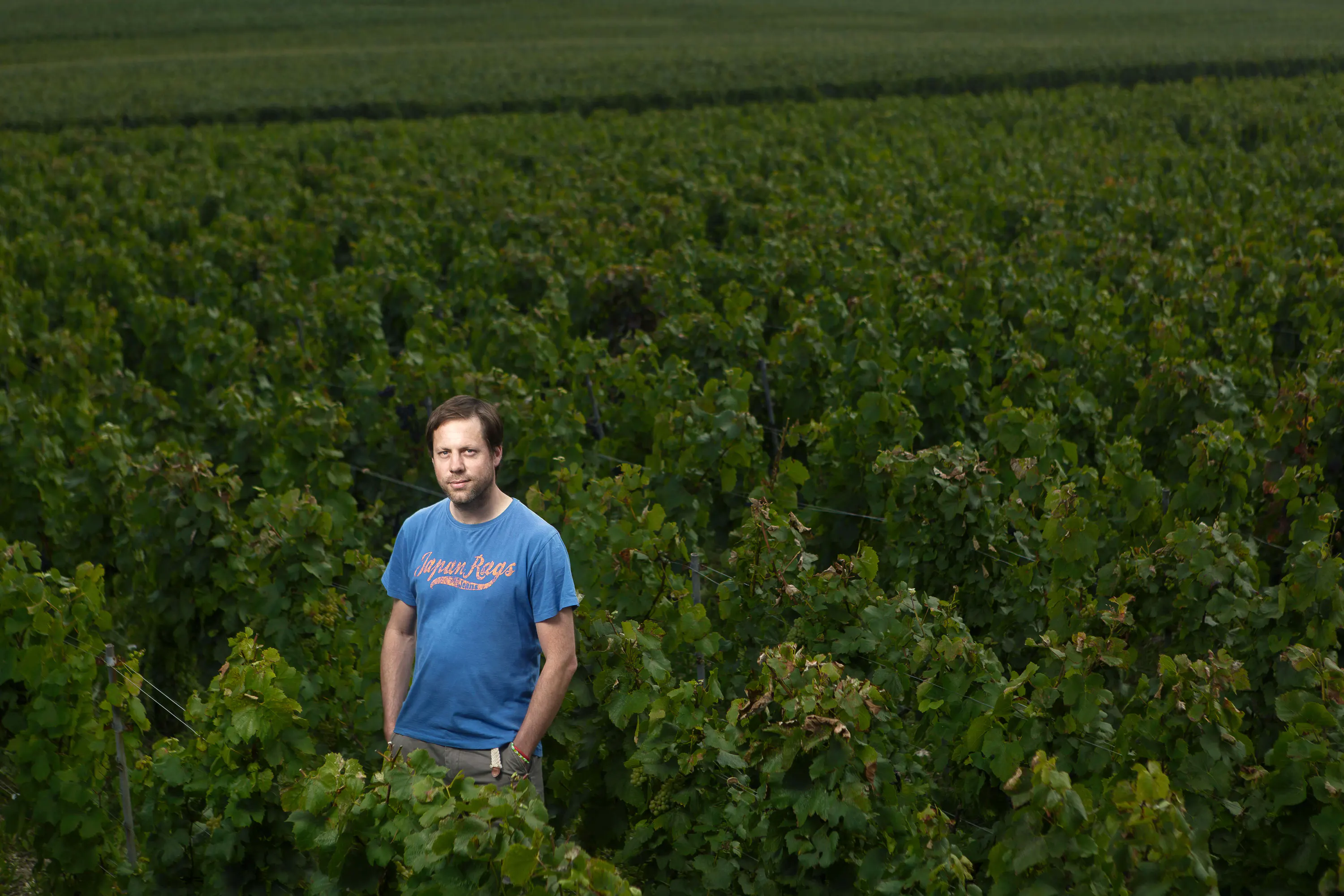
Benoît Marguet
The Free Bacchus Story
In May 2008 the Marguet website carried a page for a different business. Les Champagnes de Benoit, run from Le Mesnil-sur-Oger, chose Champagne from about 20 houses and exported it to wine merchants, retailers and airlines. Benoît Marguet had taken over his family’s domaine in Ambonnay three years earlier, at 26. That December a second company at the same Ambonnay address, S.C. du Vignoble Marguet, which grew the grapes and sold them to Benoît’s firm, signed its vines up with Ecocert for organic certification.
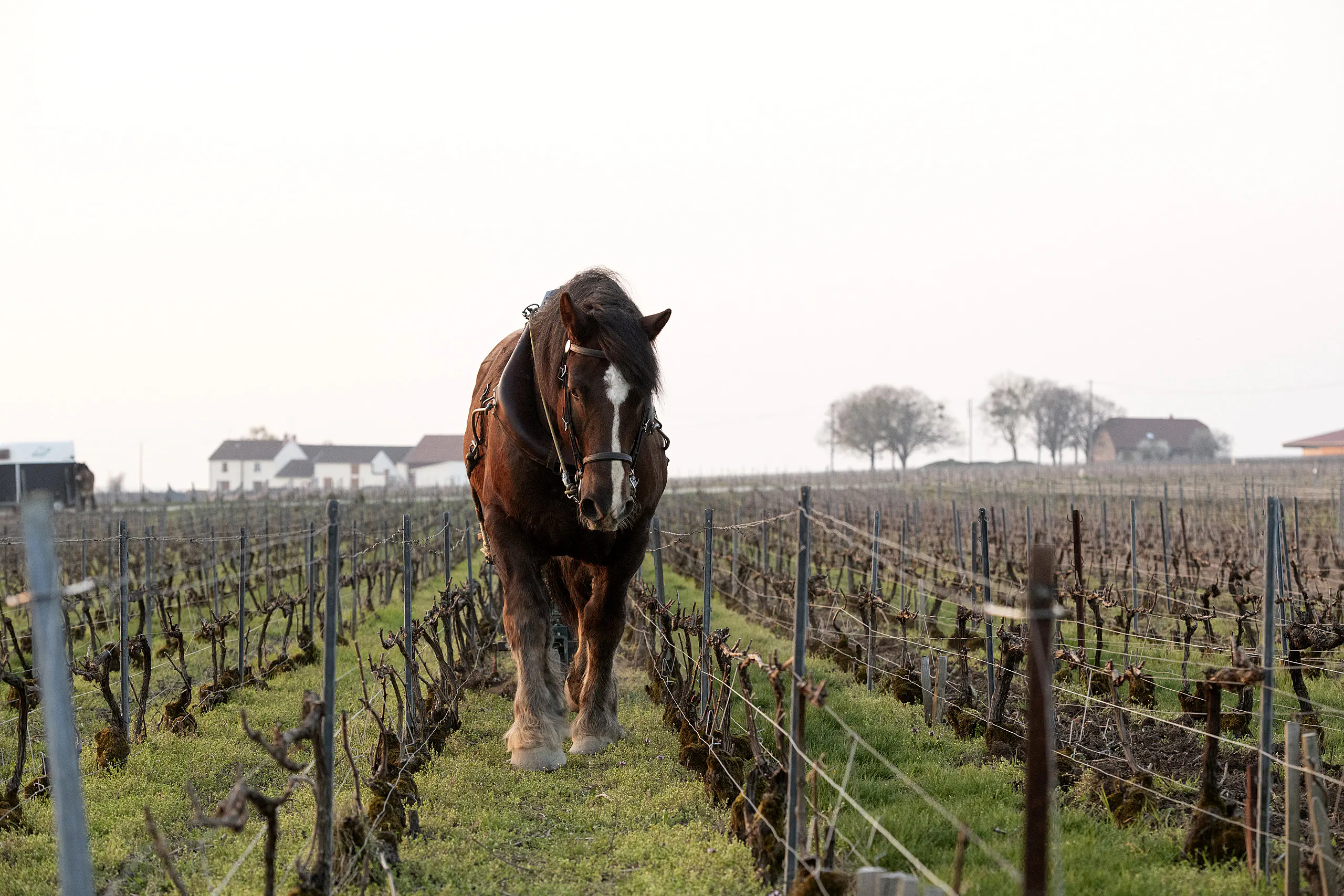
The conversion was hard going. Benoît told Britt Karlsson of BKWine in 2012 that it had been a challenge. Disease is common in Champagne’s vineyards, he said, which was why less than 1% of the region was organic, and the neighbours did not always approve. By then he was ploughing with two horses, one of them a sturdy Ardennes, and the man driving it told the visitors that ploughing with a horse is very hard work. Ecocert’s certificates list his 2011 wine as made from grapes still in conversion, and his 2012 Les Crayères, from a single Ambonnay vineyard planted in 1958 and 1974, as organic.
Champagne is made twice, once as a thin, sharp still wine and again in the bottle, which is where the bubble comes from. Ambonnay is one of the 17 villages in Champagne that still carry the grand cru title, and it sits on the Montagne de Reims, the wooded headland that curves round Reims like a half-moon. Pinot Noir is the main grape there, and it gives Champagne body and structure, so a Pinot-led bottle from Ambonnay is fuller than the Chardonnay-based wines of the Côte des Blancs, where Larmandier-Bernier farms. Shaman, the bottle to know, is 84% Pinot Noir and 16% Chardonnay from the house’s own vines in Ambonnay and Bouzy. The number on the label is the base year, so Shaman 22 is built on the 2022 harvest, with 7% reserve wine kept back from earlier years. It is also Brut Nature. Almost every Champagne gets a little sugar just before the cork goes in, to round it off; Brut Nature gets none, so the fruit has to carry the wine on its own.
Not every bottle comes from the family’s vines, and the certificates say which. Sapience, the prestige cuvée Benoît first made in 2006 with the consultant Hervé Jestin, is made partly with other biodynamic growers’ grapes, and Ecocert lists it as made from organic grapes from that first vintage, before the family’s own vineyards had even begun converting. Yuman, the entry bottle, comes from premier cru vineyards in Villers-Marmery and Villeneuve-Renneville, outside the family’s land, and the 2020 Avize and Verzenay from fruit grown by Laurent Vauversin and Hugues Godmé. Ecocert certifies all of them as organic, naming each wine and vintage, and Benoît’s own firm first signed up to the organic system in May 2007.
Demeter’s biodynamic certificate is narrower. It covers the family’s own vines and the wines Demeter France lists by name — Shaman from the 2014 harvest on, the Ambonnay and Bouzy grand crus and single vineyards, a few crus from other villages — but not Sapience or Yuman. The export firm has no page on today’s website. The horses have one of their own.
“The soil is dead in conventional farming, there is no worm activity”
Why it’s remarkable
Free Bacchus Verification
Ecocert EU organic · Demeter on the family’s own vines and listed wines
Certified2
- EU organic (Ecocert, FR-BIO-01.250-0055932, to March 2027; first engaged May 2007)
- Demeter (Demeter France, FR-FR-BIO-01-63030, to June 2027): the family’s own vines and the wines Demeter France lists, Shaman and the Ambonnay and Bouzy grand crus among them
Not covered2
- Sapience (made partly from other growers’ grapes), certified organic only
- Yuman (from villages outside the family’s vineyards), certified organic only
If you’re buying
Cheat sheet
Save it to your phone. Everything you need to recognise this producer, and three things worth saying about it, at a glance in a shop or across a table.