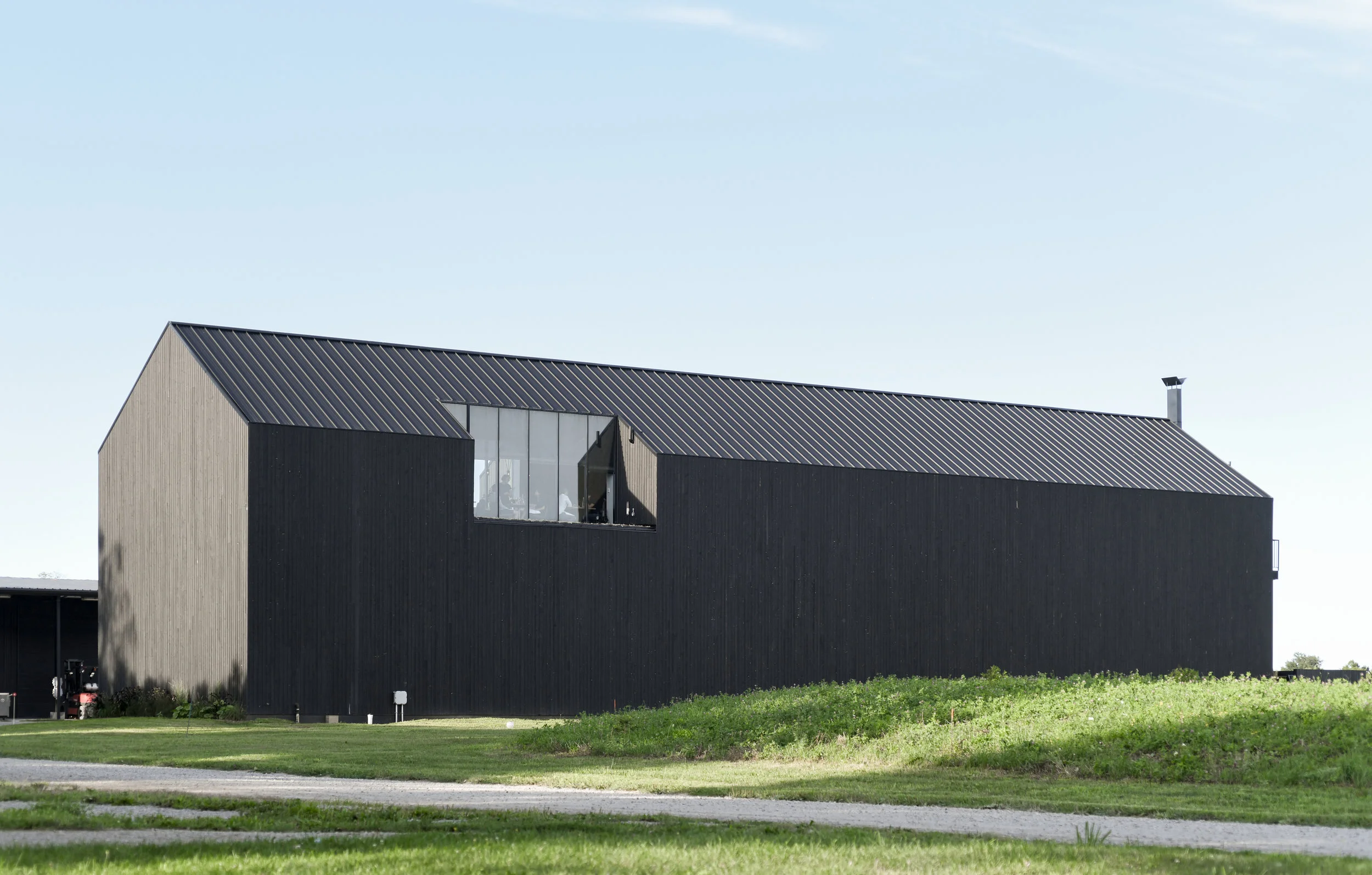
Pearl Morissette
The Free Bacchus Story
François Morissette had spent seven vintages growing wine in Burgundy, and by his own account he did not want to come to Niagara at all. The Globe and Mail reported in 2016 that he would sign “if he would be allowed to experiment and make wine exactly as he wanted, without external pressure”. Born in Lachine, Quebec, in 1962, he was a sommelier in Quebec and Ontario, and his Burgundy vintages were spent in the Côte d’Or with Mugnier, Gouges and Roulot. His partner was Mel Pearl, a Toronto developer. Their partnership began in 2007, and the winery carries both their names.
He has used that freedom. The VQA, which grants Ontario wines its label, turned down one of his Rieslings four times for lacking “varietal typicity” — for not tasting the way a Riesling is expected to. The wine took its name from the episode, Cuvée Black Ball.
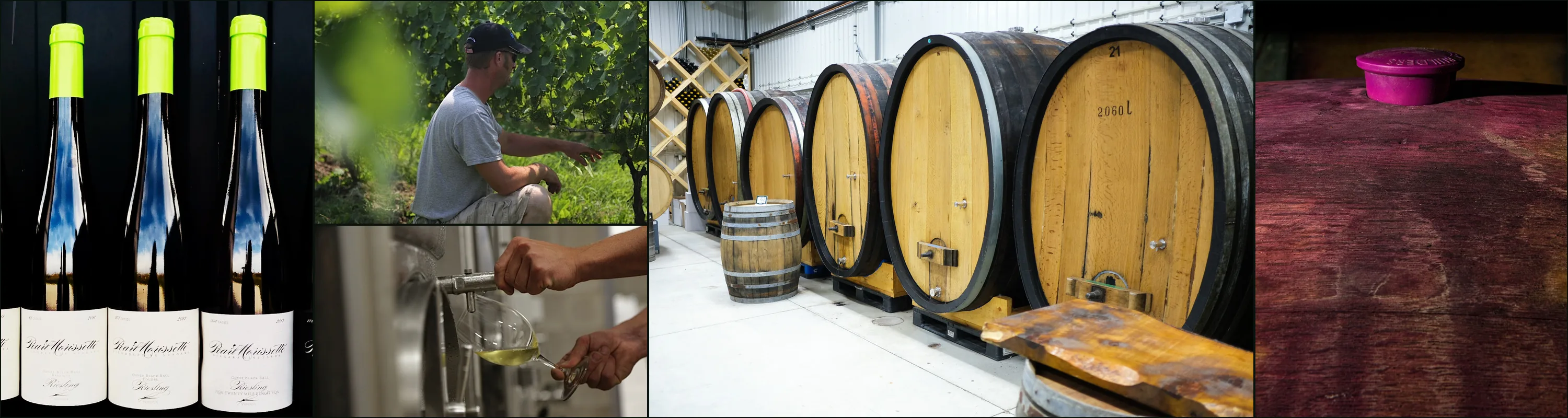
Niagara is cold country for wine. The vineyards lie on a strip of land between Lake Ontario and the Niagara Escarpment, where the lake softens the air all year, holding off frost in spring and stretching the autumn, and Chardonnay, Riesling and Cabernet Franc lead the plantings. All three hold on to their acidity in a short, cool season, so the wines come out fresher and lighter than the same grapes grown somewhere hot, nearer to white Burgundy and the reds of the Loire than to California. The winery counts two bottles among its flagships. Dix-Neuvième Chardonnay comes from the 19th Street vineyard on the Twenty Mile Bench, and the 2021 is dry, at 12 per cent alcohol. No one stirred it or moved it off its spent yeast, and sulphur, the usual preservative, went in only at bottling. Madeline is the red, built on Cabernet Franc. Selection Massale says it has “the stuffing to stand up to any of the classic wines from the Loire Valley”, and WineAlign scores the Cuvée Madeline Cabernet Franc 2014 94 out of 100.
Pearl Morissette is not certified organic and is not certified biodynamic, and it is on none of the certification registers we searched. What can be checked is what the winery and the people who sell its wine have said. Its website said in 2015, “The use of synthetic pesticides and fertilizers is carefully avoided.” Selection Massale, which carries the wine in the United States, describes the home vineyard on Jordan Road and the 19th Street vineyard as “both farmed organically, though not certified”, and Élevage Selections, its importer in Manitoba, calls the winery “primarily organic”. Morissette himself “shuns pesticides, though he will reconsider if the vineyard is in jeopardy”, the Globe reported, and he said oils, protein films and plant decoctions discourage pests instead. Not all the fruit comes from those two vineyards. Madeline 2021 takes 31 per cent Merlot from a third vineyard, Redfoot, and we found no source that says how Redfoot is farmed. The winery has not said why it does not certify, and it is on Track B provisionally, until we have asked it directly.
In 2016 there was no sign at the entrance to the vineyard, the Globe noted. Dix-Neuvième has grown from 185 cases in 2009, the first vintage in the current cellar, to 834 in 2021, and the winery’s contact page now lists a restaurant, open for dinner Thursday to Sunday, and a bakehouse at the same address as the winery and its tastings, 3953 Jordan Road.
“This earned me four rejections from the VQA”
Why it’s remarkable
Free Bacchus Verification
Provisional · synthetic pesticides and fertilizers avoided, by its own account
Verified practice3
- By the winery’s own account on its website, archived on 10 October 2015: “The use of synthetic pesticides and fertilizers is carefully avoided.”
- Selection Massale, which carries the winery in the US, and Ungrafted Selections, its Connecticut distribution partner, print one shared text: the estate’s two vineyards are “both farmed organically, though not certified”
- Élevage Selections, its Manitoba importer: “primarily organic”
Also on record9
- Pearl Morissette is not certified organic and is not certified biodynamic: absent from Ecocert Canada, Pro-Cert (which lists cancelled clients), PACS, CARTV SIPAB, Demeter Canada and Demeter’s international register, each searched with controls
- USDA’s organic register, in its full export of 1 October 2026, lists no Pearl Morissette, but it lists no Ontario winery at all, so this search is weak evidence
- No statement by the winery of why it is not certified was found; Élevage Selections’ remarks on dogma and biodynamic preparations are the importer’s own, and do not mention certification
- The Track B listing is provisional, pending outreach to the producer
- The Globe and Mail reported on 22 November 2016 that Morissette “shuns pesticides, though he will reconsider if the vineyard is in jeopardy”
- Madeline 2021 is 69% Cabernet Franc from the 19th Street vineyard and 31% Merlot from the Redfoot vineyard, which is not one of the two vineyards Selection Massale says the estate owns
- Selection Massale’s description covers the estate’s two vineyards; no source found says how Redfoot, or any grower’s vineyard, is farmed
- Earlier Roselana and Primesautier, as Selection Massale describes them, used fruit from the Redfoot, Knizat and Four Mile Creek vineyards; the producer says the 2025 releases of both come from its home and 19th Street vineyards
- Track B is capped at Gold
From the Journal
If you’re buying
Cheat sheet
Save it to your phone. Everything you need to recognise this producer, and three things worth saying about it, at a glance in a shop or across a table.