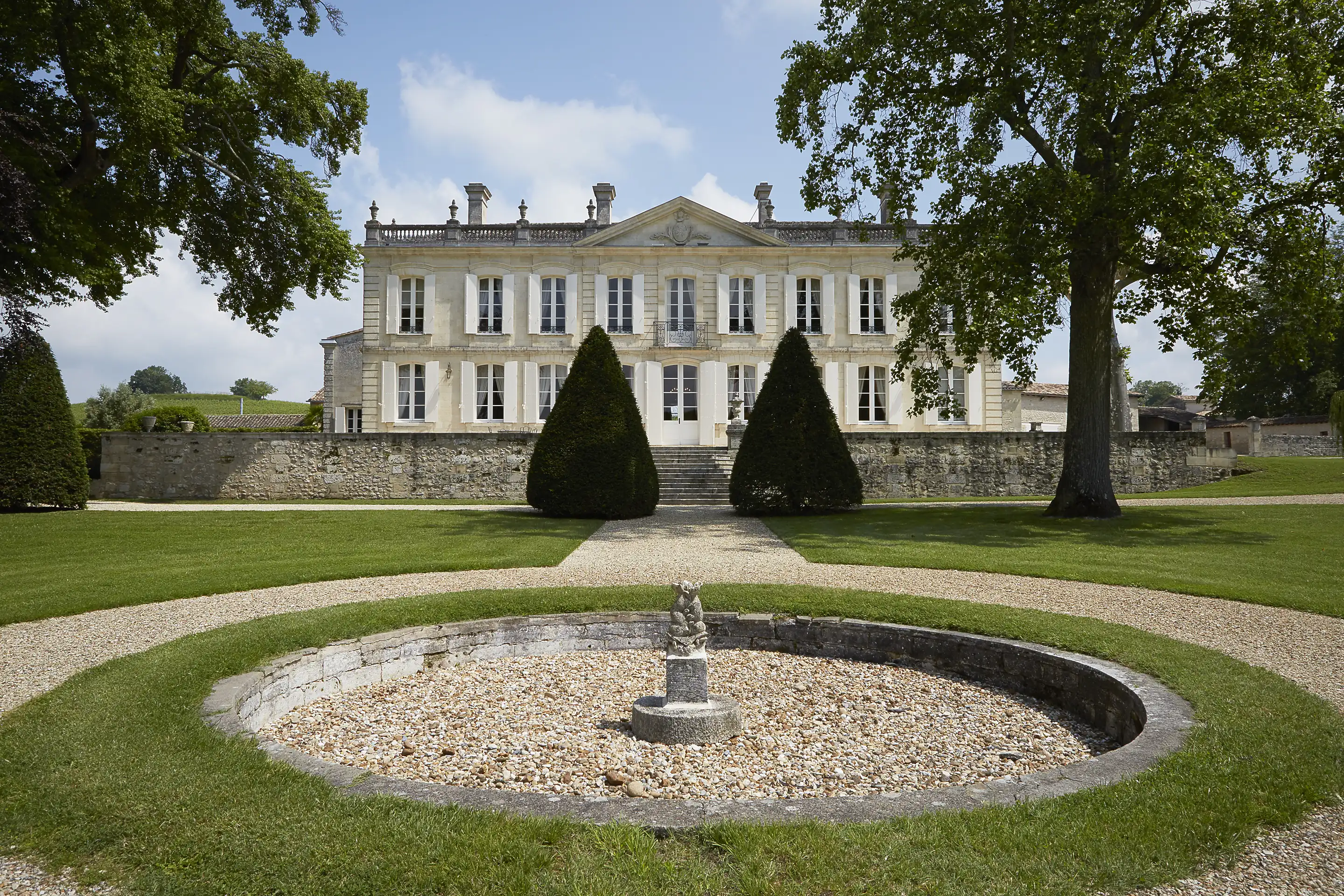
Château de La Dauphine
The Free Bacchus Story
Marie-Josèphe de Saxe, a daughter of the King of Poland, married the heir to the French throne in 1747 and became the Dauphine of France. Not long afterwards she stayed for several days at a new château in the hills of Fronsac, built between 1744 and 1750 by a lawyer, Jean-Baptiste de Richon, and the estate took her title. She never became queen, because her husband died of tuberculosis before he could inherit. Three of her sons did become kings of France, Louis XVI among them.
In her day, Neal Martin of Vinous writes, Fronsac wine sold for more than Saint-Émilion or Pomerol, which lie to the east of the town of Libourne, and in recent decades those neighbours have pushed it out of the limelight. Fronsac is on Bordeaux’s right bank, in rolling hills where the Isle runs into the Dordogne. As across the right bank, the ground is limestone and clay rather than the gravel of the left, so Merlot leads, with about 80 per cent of the vines, and Cabernet Franc adds freshness and a dash of spice. Expect red and dark berries, a full body and plenty of tannin, the drying, cheek-tugging grip you also get from a strong cup of black tea. Martin finds La Dauphine, like many Fronsac wines, quite powerful and structured, and gives it at least four or five years in the cellar to soften. Fronsac is usually far cheaper than its two neighbours, and Martin thinks La Dauphine is overlooked simply because its postcode is neither Pomerol nor Saint-Émilion.
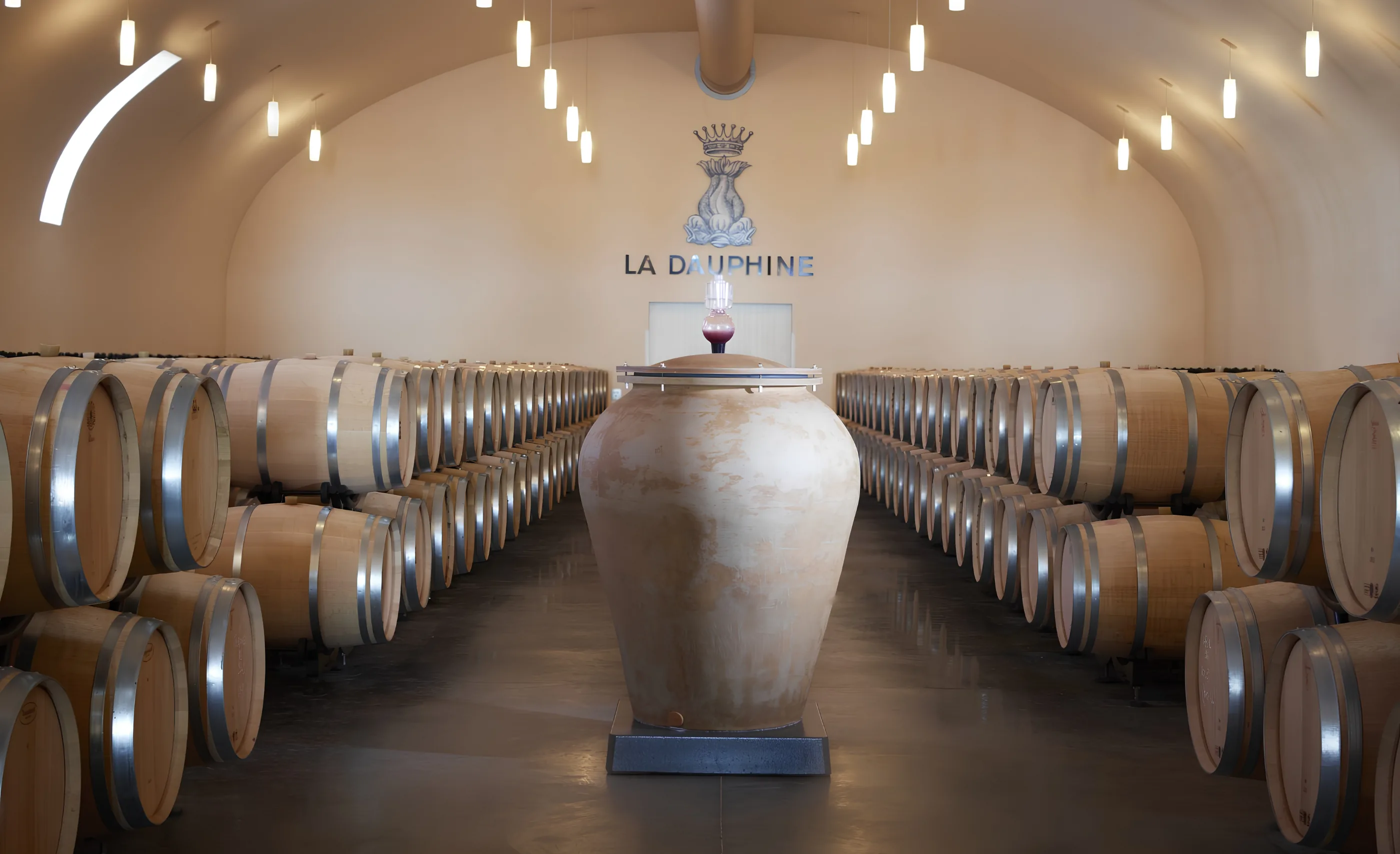
The de Brem family held the château from the eighteenth century and, by the château’s account, it passed from mother to daughter for more than 200 years. In 1985 François-Régis Marcetteau de Brem sold it to J-P Moueix, and in 2000 it went to Jean Halley, of the family that founded the Promodès supermarket group. The Halleys renovated the house from top to bottom and built a round vat room, where a rotating arm drops the grapes into the vats by gravity. Jean Halley died in 2011, and on 1 December 2015 his family sold every share to the Labrunes. Jean-Claude Labrune founded the healthcare technology company Cegedim.
The switch to organic farming began in 2012, under the Halleys. A vineyard has to be farmed organically for three years before its wine can be sold as organic, so 2015, the year the Labrunes arrived, was the first certified vintage. Two years later, by the château’s account, the estate went biodynamic as well, but it holds no biodynamic certificate, and in 2022 Neal Martin reported that it was not pursuing one. Stéphanie Barousse, who runs the estate as general director, began her career at La Dauphine and by her own account has done every job there, from the vineyard to the accounts. In 2018 rain all but drowned the pruning team over the winter, and the spring brought what the château called an epic battle against mildew, a fungus that thrives in the wet. Farming without synthetic sprays, the estate lost about 15 per cent of its harvest, and the hottest summer since 2003 ripened the rest.
The Labrunes have kept buying. Château Vrai Canon Bouché, 13 hectares in neighbouring Canon-Fronsac bought in July 2021, could feed the grand vin only once its own vines were certified organic, and the château planned to blend it in from 2022, the first Vrai Canon Bouché vintage the certificate names. Control of Canon Pécresse followed in 2023. The company’s certificate names those wines and Châteaux Bellevue and La Justice alongside La Dauphine’s own: the grand vin, Delphis, an all-Merlot everyday red, and the Blanc and Rosé de La Dauphine. Early in 2026 the estate changed certifier. Ocacia took over on 27 January from Ecocert, which had inspected it since February 2012, and Ecocert’s record closed on 7 February, so there was no gap. In 2022 Wine Enthusiast’s Roger Voss gave the 2020 grand vin 93 points and ended his note with the word Organic.
“A woman at the head of the property was pretty unusual seven years ago.”
Why it’s remarkable
Free Bacchus Verification
Ocacia EU organic, grapes and wine
Certified2
- EU organic, Ocacia (FR-BIO-20.250-0027509, to March 2028): operator SAS Château de La Dauphine, grapes and wine
- Under organic control since February 2012 (Ecocert until February 2026, Ocacia from 27 January 2026, so no gap)
This page covers
The grand vin, certified from the 2015 vintage, and Delphis and the Blanc and Rosé de La Dauphine, which are named on the certificate.
Also on record1
- Biodynamics practised, not certified
If you’re buying
Cheat sheet
Save it to your phone. Everything you need to recognise this producer, and three things worth saying about it, at a glance in a shop or across a table.