Quinta dos Murças
The Free Bacchus Story
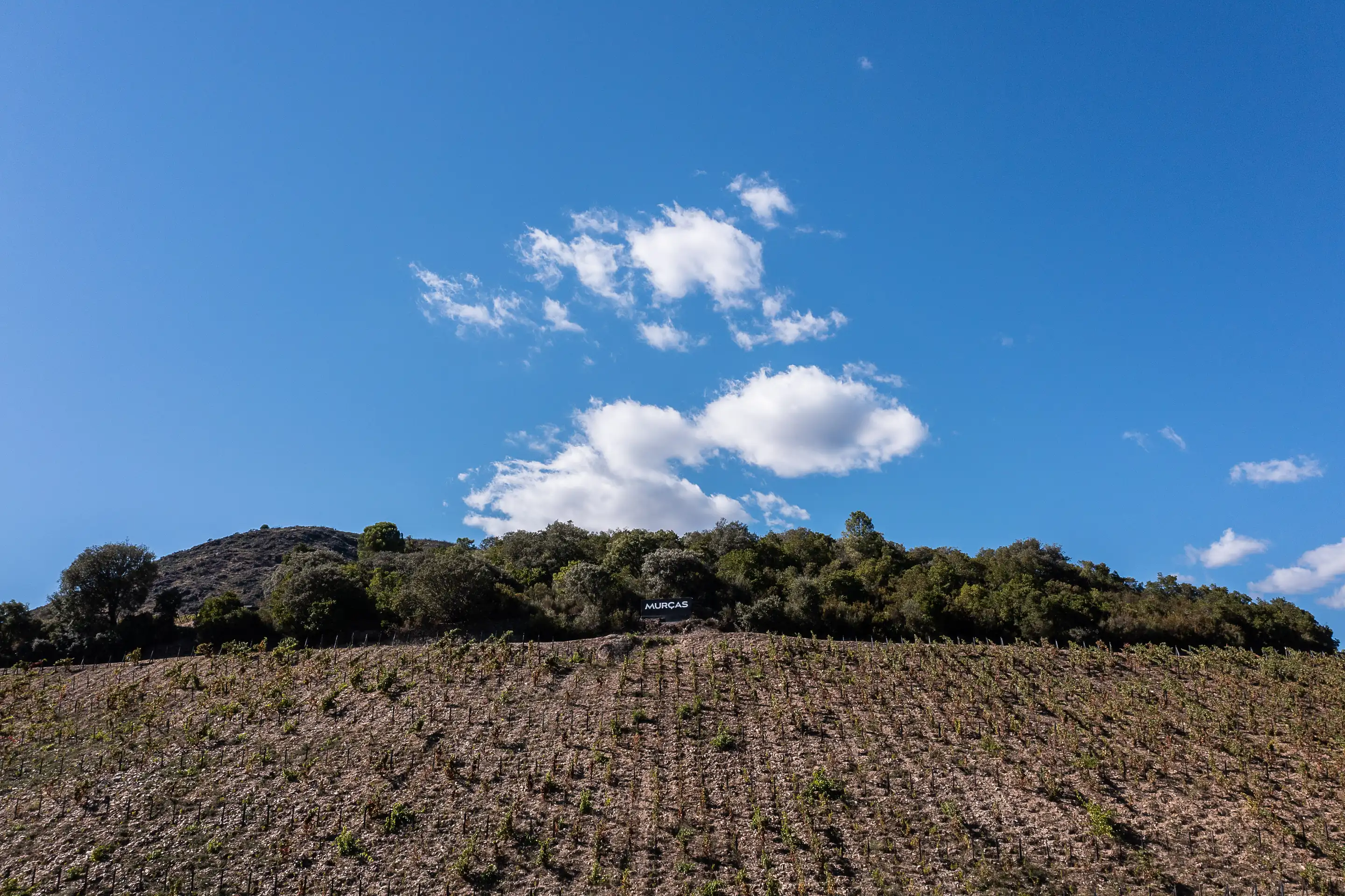
In 1947 someone at Quinta dos Murças planted a vineyard straight down the hill. Its rows run top to bottom, not along terraces, and nobody now knows why. The estate calls it the first vertical vineyard in the Douro, and the wine from it is VV47.
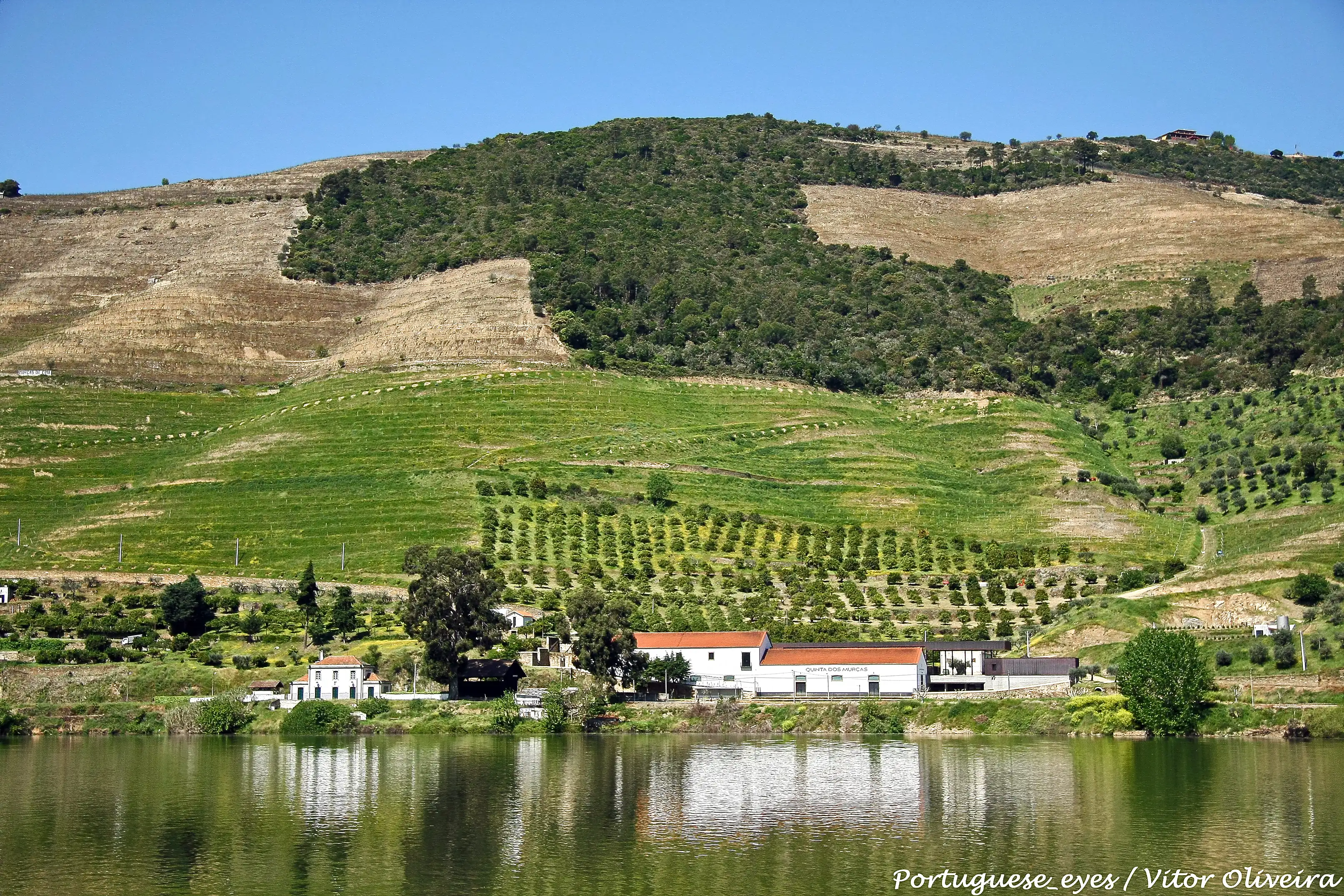
The Douro has long been famous for sweet, fortified Port, and in recent decades it has made its mark with dry reds from the same grapes. They are usually blends of native varieties, Touriga Nacional, Touriga Franca and others, grown on steep slopes of schist, a rock that splits into thin layers. The river evens out the temperatures and reflects the sun, in a place of cold winters and dry, fierce summers. Quinta dos Murças, which dates itself to 1714, has 3.2 kilometres of the right bank between Régua and Pinhão, mostly facing south, and 48 hectares of vines. The red to know is Margem, named for its vineyards, the closest to the river and among the estate’s oldest. It is Touriga Franca and Touriga Nacional, trodden by foot in the estate’s granite lagares, stone treading tanks first built in 1955, with about five people in each. Roger Voss of Wine Enthusiast found Margem 2023 dense, with blackcurrant, a smell of dark chocolate and a texture rounded by the treading, and gave it 93 points, as he had Margem 2022. Wine Enthusiast gave Margem 2021 94 points, and Falstaff 93.
The Esporão group bought the estate in 2008 and took its time. Lourenço Charters, who manages the vineyards and the winemaking, told Vinography that for the first eight years the estate made only two wines while it learned the land. The winemaker José Luís Moreira da Silva, a Porto native who studied microbiology before wine, joined in 2015. There are 8,000 vines a hectare in the vertical rows here, he told IWC Insight in 2024, against 6,000 to 7,000 on walled terraces, and 11,000 in a vineyard planted three years earlier. Crowded that close, the vines compete — ‘more competition, less production’, in his words. Charters admits that vertical rows are harder to work in.
Going organic took ten years. Esporão converted a first plot in 2011, took up the conversion of the whole vineyard again in 2016, and says it finished in 2021; it counts its organic wines from that vintage. The EU certificate is more particular. It names the wines it covers one by one, by vintage, Margem, Minas and the Reserva among them, and Esporão calls the Reserva 2021 the estate’s first Reserva with organic certification. It also records non-organic grapes and wine made alongside the organic, without saying what they are. The Assobio wines, the Ports and every wine from before the 2021 vintage are not on it — including VV47 2017, made while the 1947 vineyard was still in conversion, by Esporão’s account, and the only VV47 on the estate’s list. Murças is not certified biodynamic.
“fazer menos dá muito trabalho”
Why it’s remarkable
Free Bacchus Verification
EU organic, Kiwa Sativa · named wines, with non-organic production alongside
Certified2
- EU organic, Kiwa Sativa (PT-BIO-03), certificate PT-BIO-03.620-0005400.2026.003, held by MURÇAS, S.A. (Covelinhas), valid 30 September 2026 to 30 March 2028
- The register’s earliest version dates from 26 July 2023, and the 2021 vintage as the start of the estate’s certification is the producer’s own statement (Esporão’s release of 16 April 2021)
This page covers
The Quinta dos Murças wines the certificate names by vintage: Margem 2021, 2022, 2023 and 2024, Minas 2022, 2023 and 2024, Reserva 2021 and 2023, VV47 2022 and 2023 and the 10,5% 2024
Not covered2
- Assobio and the Ports
- Every wine from before the 2021 vintage, VV47 2017 among them
Also on record4
- The certificate records ‘Organic production with non-organic production’ for grapes and for wine without saying what the non-organic production is
- Esporão S.A.’s own certificate (PT-BIO-03.620-0000634.2026.012) also names Murças wines, with a different list of vintages
- VV47 2017 is the only VV47 on the estate’s wine list
- Murças is not certified biodynamic
From the Journal
If you’re buying
Cheat sheet
Save it to your phone. Everything you need to recognise this producer, and three things worth saying about it, at a glance in a shop or across a table.
More Verified Houses · Portugal
Photograph at the top of this page: Vinha Quinta dos Murças VV47 by EsporaoWorld (Esporão), CC BY 4.0, via Wikimedia Commons. Resized for this page.
Photograph across the middle of this page: Quinta dos Murças - Rio Douro - Portugal by Vitor Oliveira, CC BY-SA 2.0, via Wikimedia Commons. Resized for this page.

