Fitapreta
The Free Bacchus Story
In 2004 António Maçanita challenged David Booth, an English viticulturist, to make a wine. Booth refused at first, then came round, and they founded Fitapreta. The Englishman, who lived from 1965 to 2012, was also an army officer, a captain in the Green Jackets, and he worked clearing mines in Mozambique and protecting wildlife in Kenya. For the first three years the wines were made in other wineries, from surplus grapes.
In 2007 they moved to Outeiro da Esquila, where they started at 70 tonnes; ten years later they were producing 440, more than six times as much. Sandra Sárria joined in 2008 and was invited to become a business partner in 2015. She runs production now, with a permanent team of 19.
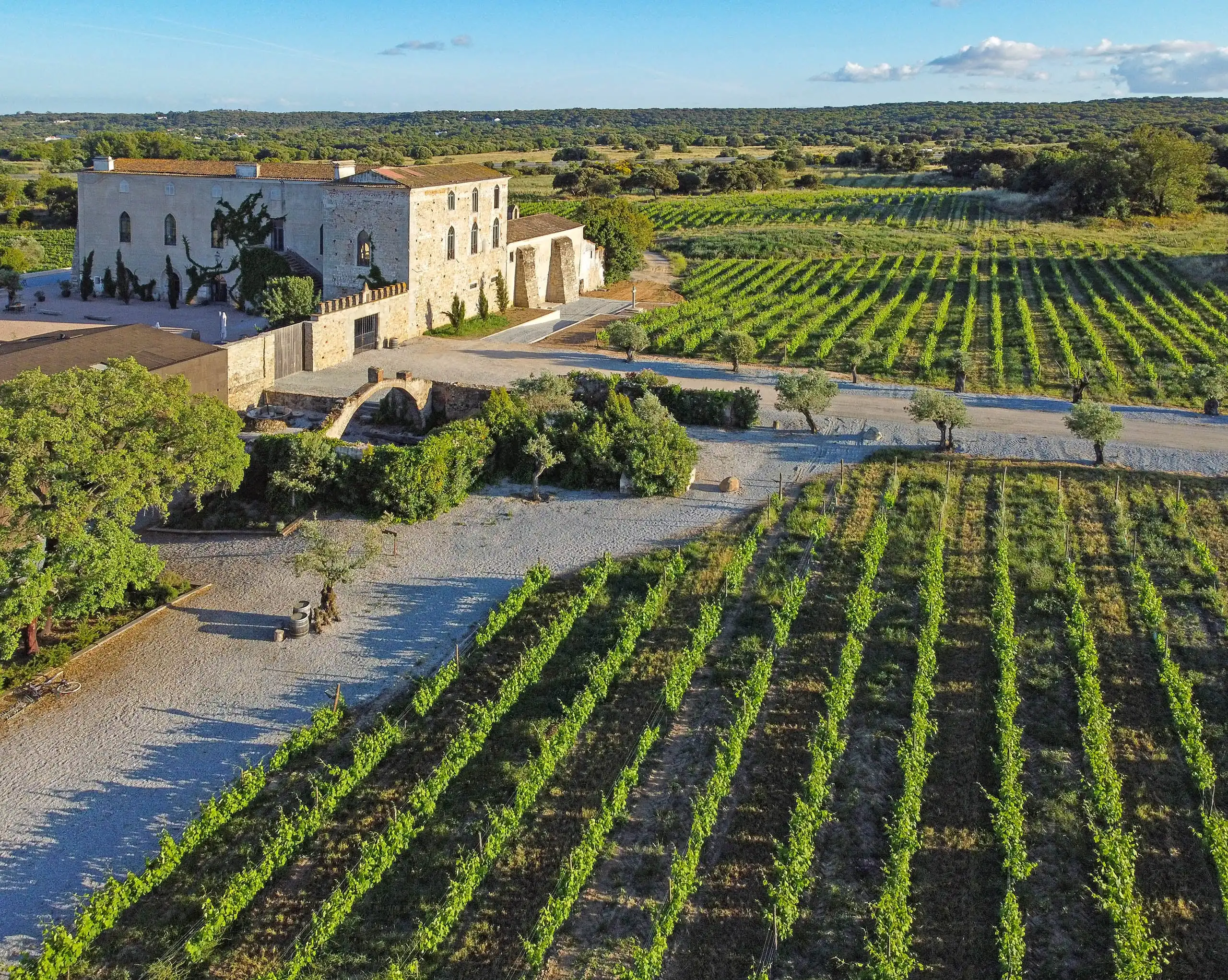
The Alentejo gets about 3,000 hours of sunshine a year and 600 millimetres of rain, and less than 15 per cent of that rain falls while the grapes are growing. The style most people associate with the region is a full-bodied, fruit-forward red, but the wine to know here is a white. Branco Ancestral is a field blend, which means several grape varieties grown side by side in one vineyard and picked together, rather than grown apart and blended later. The 2025 has five, all old Alentejo white grapes: Roupeiro, Rabo-de-Ovelha, Trincadeira-das-Pratas, Alicante-Branco and Arinto. The vines were planted in 1969 and 1970 and live on rainfall alone, no weedkiller goes on the ground, and the grapes are picked by hand at night, starting at 11pm, then fermented with their own yeasts. The other word worth knowing is talha, the Portuguese name for a large clay amphora. Fitapreta credits Maçanita with sparking talha wine in Portugal in 2010, with his Branco de Talha, and calls it the country’s first bottled amphora white. Clay on its own does not make a wine orange. When Gravner, who has his own page here, fermented his whites on their skins in Georgian amphorae, they came out amber. The 2021 sheet for the Branco de Talha describes the opposite approach — grapes pressed straight away, with no skin contact and no sulphites.
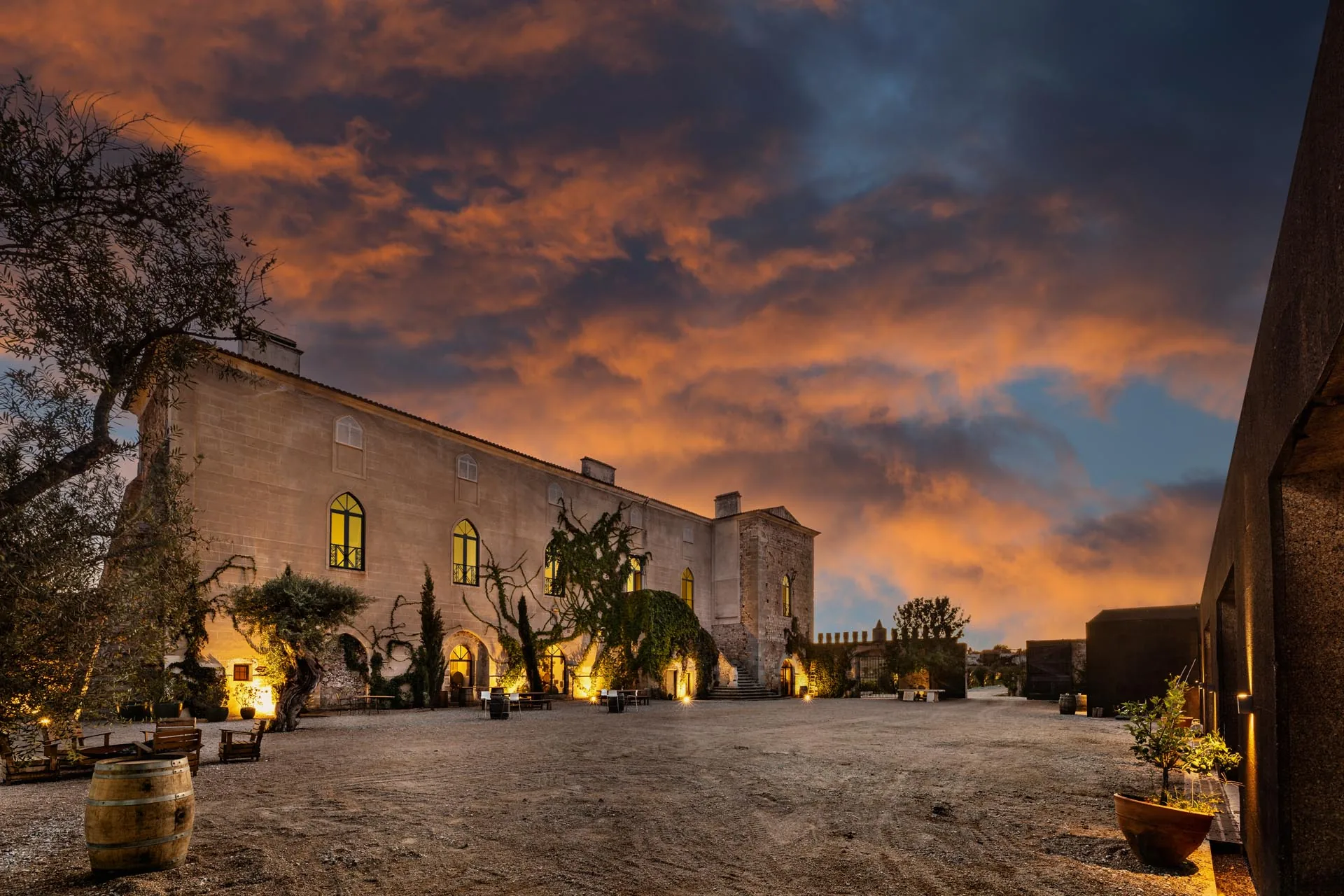
In May 2015 Maçanita knocked on the door of the Paço do Morgado de Oliveira, a manor house near Évora that the producer dates to the fourteenth century. Fitapreta bought it in 2016, and a new winery opened there with the 2017 harvest, clad in cork because, the producer says, cork is sustainable and abundant in the Alentejo. By Maçanita’s account, seven historians have worked on the house for ten years. In 2017, the year the winery opened, he also found Chão dos Eremitas, an old vineyard at the southern foot of the Serra d’Ossa, planted in 1969 and 1970 and still holding Tinta Carvalha, Alicante Branco, Moreto and Trincadeira das Pratas. Fitapreta’s history says a Papal Bull of 1397 freed the hermit monks of St Paul’s order from paying tax in these vineyards. From there comes the Tinta Carvalha 2023, a red that ran to 4,000 numbered bottles, and Fitapreta’s sheet finds bitter red fruit and pomegranate in it.
Not every Fitapreta wine is certified organic, and the certificate says which are. Codimaco’s EU organic certificate, held under the company’s old name, Fita Preta Vinhos, Lda., counts 55.01 hectares of vines, all organic, and names the wines lot by lot, from the 2023, 2024 and 2025 vintages. The Branco Ancestral and the Branco de Talha (the certificate writes Vinho Branco Talha) are on it for all three years, and so is the Tinta Carvalha 2023. Os Paulistas tinto and Palpite Tinto are not, although Fitapreta’s own fact sheets for Palpite Tinto 2023 and Os Paulistas tinto 2021 label them organic. Nor are Fitapreta Tinto, Carta da Fitapreta, O Iluminista, the Enxarrama or any vintage before 2023; the EU register has no record of the company before January 2023. Fitapreta also buys grapes from growers across the Alentejo, and does not say which vineyards go into which certified wine. Its own viticulture page, which still talks about the 2020 harvest, says the vineyards are not certified organic, while its current fact sheets say certified organic production. Fitapreta is not certified biodynamic.
“Em vez de chegarmos e caiarmos tudo de branco, fomos descascando o edifício”
Why it’s remarkable
Free Bacchus Verification
Codimaco EU organic · named wines, 2023–2025 vintages
Certified2
- EU organic, Codimaco (PT-BIO-08), certificate PT-BIO-08.620-0000091.2026.006, valid to 3 May 2027, held by Fita Preta Vinhos, Lda., now Fita Preta, Vinhos, S.A.
- 55.01 ha of vines, all organic, and 32 wine lines named lot by lot, 2023–2025 vintages, with the register’s record running from 18 January 2023
This page covers
The wines the certificate names: Fitapreta Branco Ancestral 2023 and 2024, Fita Preta Branco O Ancestral 2024 and 2025, Vinho Branco Talha 2023, 2024 and 2025, Chão dos Eremitas Trincadeira das Pratas 2023 and 2024, Alicante Branco 2023 and 2024, Paulistas Branco 2023 and 2024, Tinta Carvalha 2023, Moreto 2023 and Castelão 2023 and 2024, Morgado Oliveiras NV, Palpite Branco 2024, Palpite Reserva Branco 2025, O Arinto das Indígenas do Morgado 2024 and 2025, Tinta Grossa 2024, Pequeno Eremita Tinto 2024, Pequeno Eremita Bio 2025, Freshly Squeezed F.Preta Bio 2025, Baga a Meio Sol 2024 and Touriga Vai Nua 2025.
Not covered2
- Os Paulistas tinto, Palpite Tinto, Fitapreta Tinto, Carta da Fitapreta, O Iluminista and Enxarrama
- Every vintage before 2023
Also on record3
- Palpite Tinto 2023 and Os Paulistas tinto 2021 are labelled organic on the producer’s own fact sheets but not named on the certificate
- The producer also buys grapes, and its own viticulture page, whose text speaks of the 2020 harvest, still says the vineyards are not certified organic, while its current fact sheets say certified organic production
- Is not certified biodynamic
From the Journal
If you’re buying
Cheat sheet
Save it to your phone. Everything you need to recognise this producer, and three things worth saying about it, at a glance in a shop or across a table.