Filipa Pato & William Wouters
The Free Bacchus Story
A Belgian distributor bought half of Filipa Pato’s first wine. It sold some of the bottles to an Antwerp chef, William Wouters, and in 2008 she married him. He was a sommelier too, and owned Pazzo, a brasserie and wine bar; his family had been Antwerp restaurateurs for five generations. Hers had been making wine for as long. Later he sold his restaurant, and the couple moved to Bairrada full-time with their two sons, into a house built over the cellar in Óis do Bairro, a village of 200 people.
Filipa, a chemical engineer from Coimbra, is the daughter of Luís Pato, and her grandfather was the first grower in Bairrada to bottle wine under his own name. Even so, when she came back to Bairrada for her first harvest in 2001, she had no vineyards of her own. She rented vines, and her grandmother let her use the family’s nineteenth-century winery at Amoreira da Gândara without paying rent. She bottled that first wine in 2003.
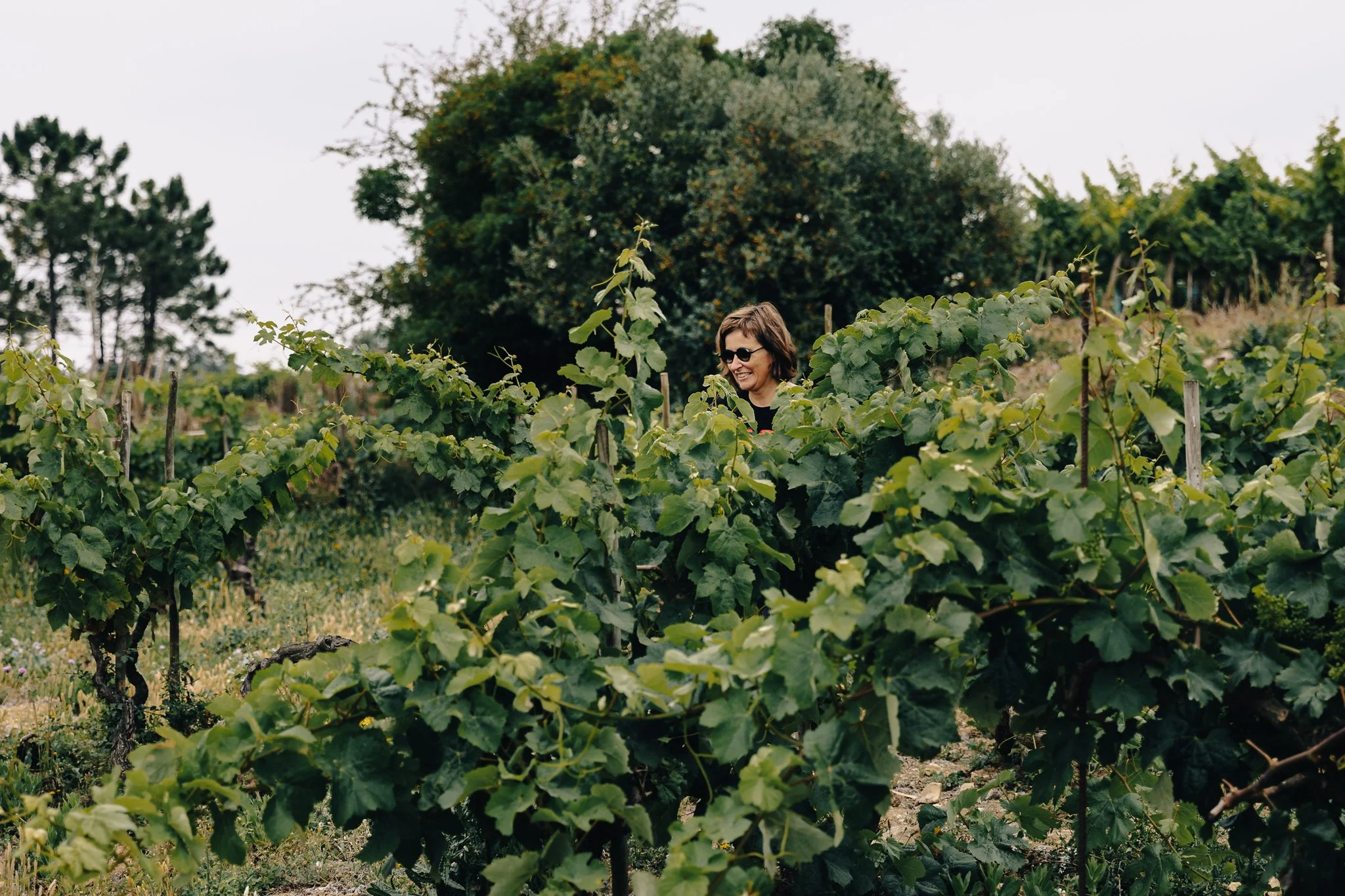
Bairrada lies close to the Atlantic, on limestone and clay, and the couple’s vineyards are 15 km from the ocean. Its red grape is Baga, a name that means ‘berry’. Baga makes reds with more acidity than most and more tannin, the drying grip you also get from strong tea. Young, they can be rigid and austere; they are wines for keeping. Bical, the white grape, is fresh. Filipa compares the whole region with Burgundy, pointing to the soils, the small parcels and a difficult red grape. Sparkling wine is a local tradition too. The couple use only native grapes, Baga, Bical, Arinto, Cercial and Maria Gomes, and set out, in their own words, to ‘create authentic wines without makeup’. Their top wine, Nossa Missão Baga Pre-Phylloxera, comes from just over half a hectare of old Baga vines. The 2023 ran to 720 bottles and 45 magnums, and the producer says it should age very well for more than 35 years.
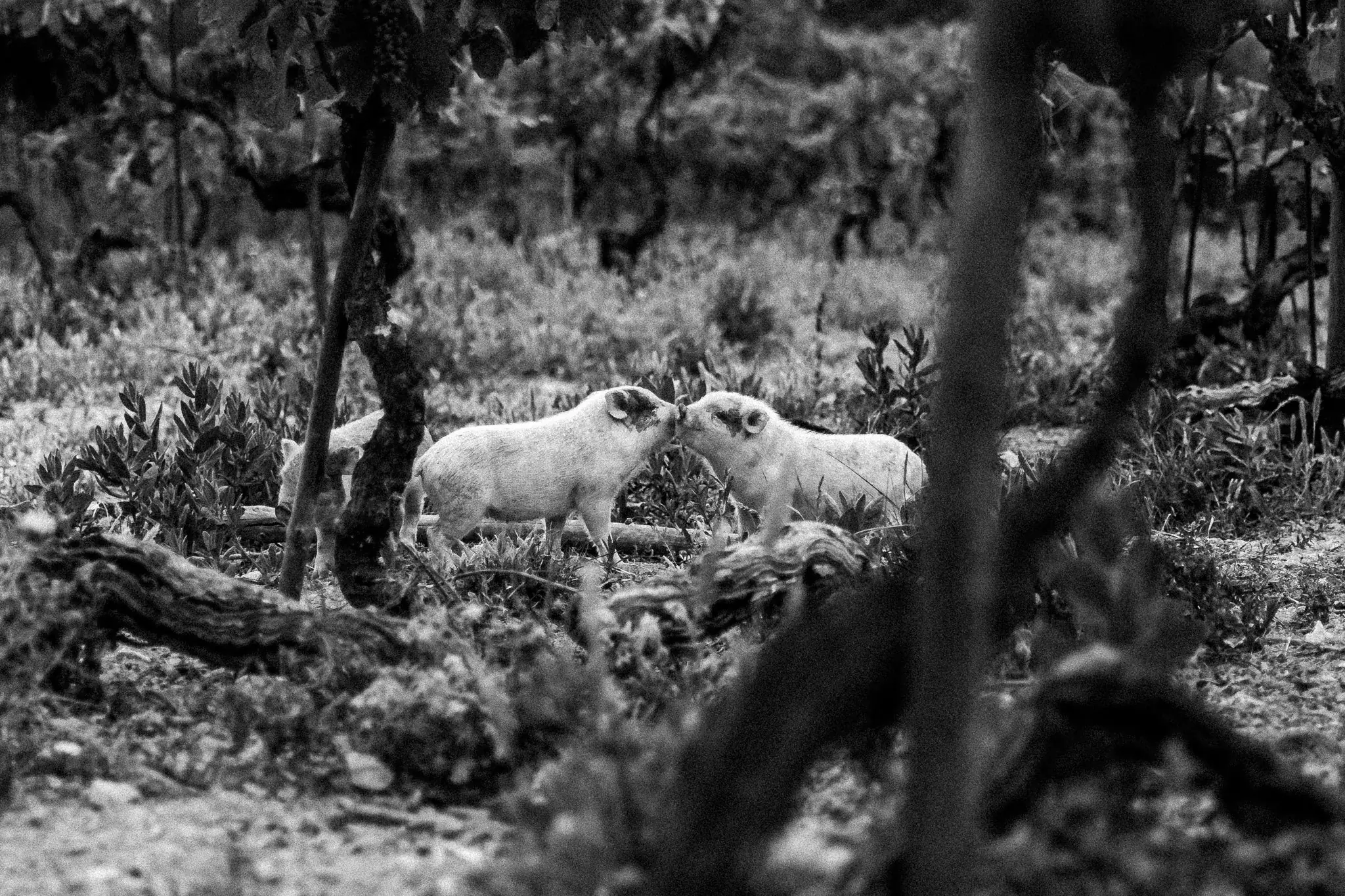
They had never used herbicides, and at the end of 2014 they began converting the vineyards to biodynamics, a stricter form of organic farming that humid Atlantic weather makes harder still. 2014 had been a wet, disastrous vintage for Baga, and Filipa remembers picking with two kilos of clay on each foot. After the switch, yields fell for three years before they recovered. The rows are too narrow for a horse and plough, and everything has to be done by hand, which, Filipa says, is why the animals came in: sheep, pigs and chickens, with a mule to keep the sheep moving. The pigs are the couple’s own cross of Bísaro with small Vietnamese pigs, and they eat a lot of grapes — the couple don’t mind. Fennel and fava beans were planted to draw the snails off the vines.
The estate is certified organic, though not every bottle is. The EU certificate names no wine, so which wines count as organic comes from the producer’s own labelling. Six of the wines, Nossa Missão and both Nossa Calcário wines among them, are marked “Certified Bio”. Seven more, including the solera-aged sparkling wine built on Filipa’s first harvest, are still marked as in conversion, and the certificate allows non-organic wine to be made alongside the organic without saying how much. Demeter, the biodynamic association, lists the estate but names no wine. The couple sell by allocation, the United States is their main export market, and every January they run out.
“One vineyard is alive, the other is dead”
Why it’s remarkable
Free Bacchus Verification
EU organic, Certiplanet · Demeter operator · cuvées by producer labelling
Certified3
- EU organic, Certiplanet (PT-BIO-04): F. Pato Vinhos Unipessoal, Lda, certificate PT-BIO-04.620-0003101.2026.001, valid 21 September 2026 to 21 December 2027
- The EU register lists the operator from 11 May 2023 under Ecocert Portugal, then Kiwa Sativa from 17 June 2024, then Certiplanet from 24 March 2025
- Demeter, BFDI operator DI-29101: F. Pato Vinhos Unipessoal, Lda., listed as processor and producer, valid to 31 March 2027
This page covers
The cuvées the producer’s own labelling marks “Certified Bio”, at the vintage on each sheet: Nossa Missão Baga Pre-Phylloxera 2023 and 2024, Nossa Calcário Baga 2023 and 2024, Nossa Calcário Bical 2025, Post-Quercus Baga 2025, Nossa Tola Bical 2023 and Flos Castanea 2024
Not covered3
- D.N.M.C. Baga and D.N.M.C. Bical & Arinto, marked “Under conversion” on the producer’s sheets
- 3B Blanc de Blancs and 3B Rosé, also marked “Under conversion” on its sheets
- Roleta Russa Ancestral, Nossa S.l.ra since 2001 and Espírito de Baga, also marked “Under conversion” on its sheets
Also on record4
- The certificate names no wine: its product list reads “VINHOS Organic”, so which cuvées are organic comes from the producer’s own labelling, not the register
- The wine line also carries “Organic production with non-organic production”, and the certificate does not say how much wine is non-organic
- Of the 16.20 ha of vines on the certificate, 14.61 ha are organic and 1.59 ha are in conversion
- The Demeter record has no product list and no start date, so it does not say which bottles are Demeter
From the Journal
If you’re buying
Cheat sheet
Save it to your phone. Everything you need to recognise this producer, and three things worth saying about it, at a glance in a shop or across a table.