Long Meadow Ranch
The Free Bacchus Story
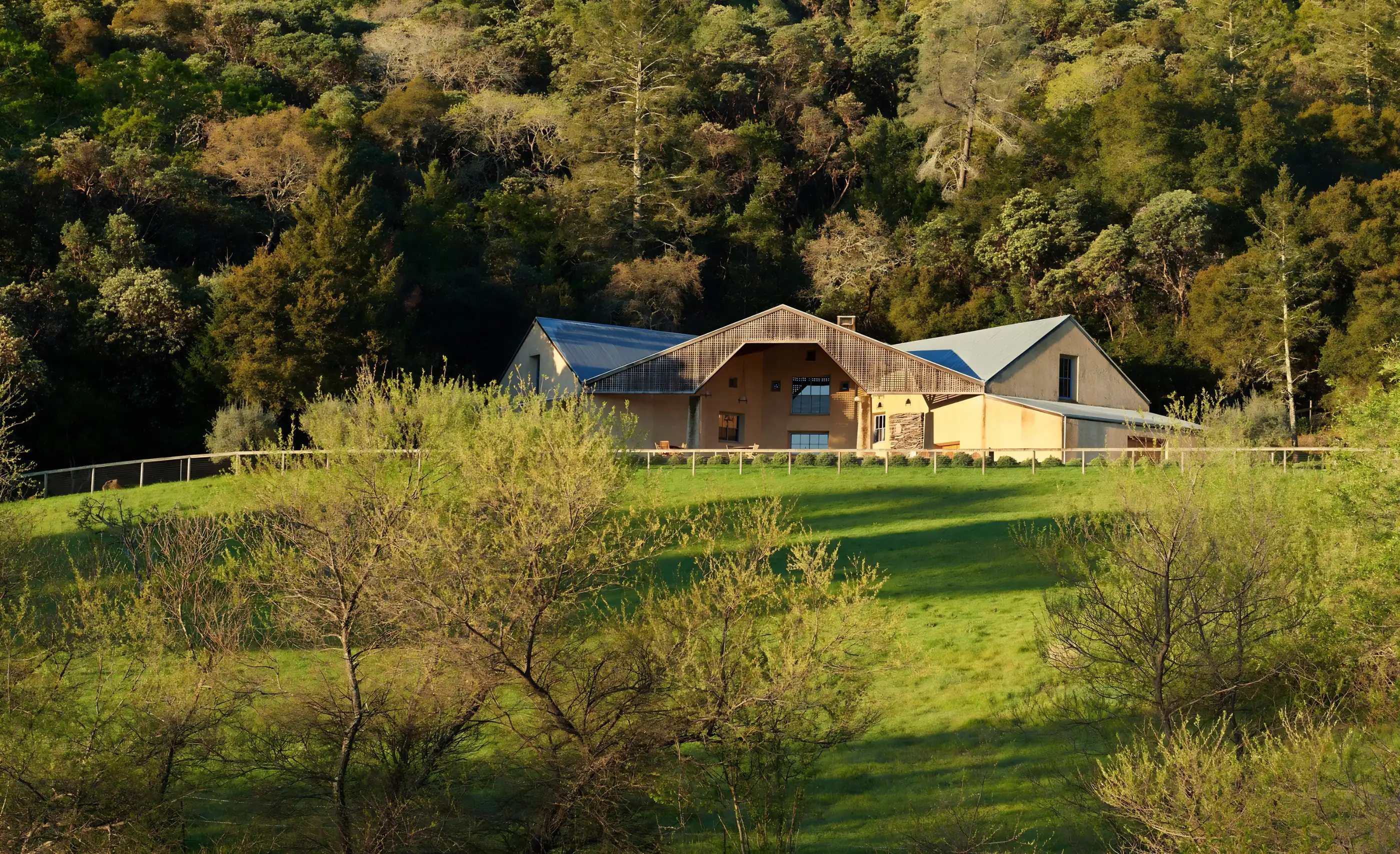
In 1989 Ted and Laddie Hall bought a ranch in the Mayacamas Mountains above St. Helena that nobody had farmed since Prohibition. In the late 1800s it had vineyards, apple orchards, olive groves and a goat dairy, until the farming stopped and the forest moved in. Riding the land on horseback, Ted and his son Chris found olive trees hidden under Douglas fir and pine. The trees have since been dated to about 1870, and they are among the oldest olive groves in Napa Valley.
Ted Hall first made wine on the side as a graduate student at Stanford, and he came to farming with an engineer’s habits: he studied electrical engineering at Princeton and describes the ranch as a system full of feedback loops. It was never only about wine. The Halls wanted a whole farm, with vegetables, fruit, chickens, bees and Highland cattle alongside the vines, and compost from the ranch’s own waste going back onto the fields. They call it full-circle farming. Chris, who planted his first organic vegetable garden on the ranch at 12, grew up to help run it.
That is rare in Napa Valley. Civil Eats reported in 2018 that Cabernet Sauvignon made up half the grapes grown there, and vegetables, field crops and livestock together less than one per cent of the county’s farm value. Long Meadow Ranch grows Cabernet, Merlot and other grapes on two Napa estates, 16 acres of vines on the mountain and 30 on the Rutherford bench below it. Its third estate is in the Anderson Valley in Mendocino County, a cool valley close to the Pacific where the marine layer rolls in over the Navarro River. The 69 acres there grow Pinot Noir, Chardonnay and Pinot Gris, the Burgundy grapes that want a cooler place than Napa.
The farming is careful with water, which matters in a valley prone to drought. In 2018 the winemaker Stéphane Vivier told Civil Eats that dry farming and deficit irrigation kept the vines to roughly 25 to 30 gallons of water each a year, against 100 to 120 for an average winegrower.
The certificate is precise about what it covers. The USDA organic register lists LMR Wine Estates, LLC under CCOF, certified for crops since June 2004: grapes, olives, apples, lemons and limes. Its handling certificate, the part that covers turning a crop into a finished product, lists only the olive oils. The vineyards are certified organic. The winery is not, and so the wine is not sold as organic wine.
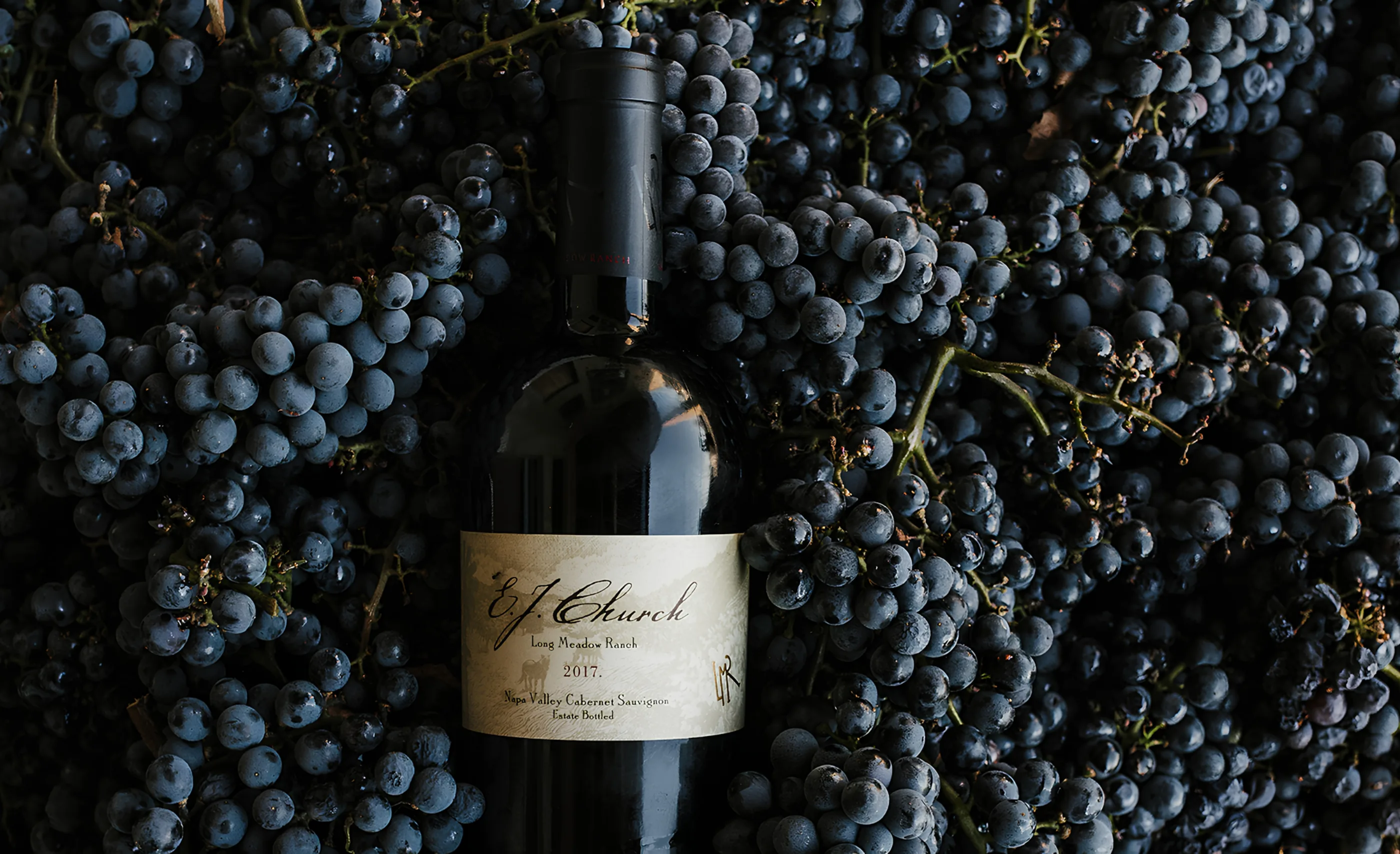
E.J. Church Cabernet Sauvignon Reserve is the flagship, barrel-selected from the best lots of the mountain estate and it carries the name of E.J. Church, the Civil War veteran whose land grant became the ranch. At the other end of the list, the Napa Valley Sauvignon Blanc is the easy way in.
“We farm organically because it results in higher quality at lower cost.”
Why it’s remarkable
Free Bacchus Verification
CCOF Organic · crops, grapes among them, not the winery
Certified2
- CCOF Organic (NOP 5561001272), listed as LMR Wine Estates, LLC
- Crops, grapes among them, certified since 8 June 2004
Not covered1
- The winery: the handling certificate covers olive oil only
Also on record1
- The wine is not sold as organic
If you’re buying
Cheat sheet
Save it to your phone. Everything you need to recognise this producer, and three things worth saying about it, at a glance in a shop or across a table.