
Greystone Wines
The Free Bacchus Story
In 2013 Dom Maxwell was driving through the vineyard with Nick Gill shortly before harvest and decided to try fermenting the fruit where it grew. The first trial was 700 kilograms. It is now the wine Greystone is known for.
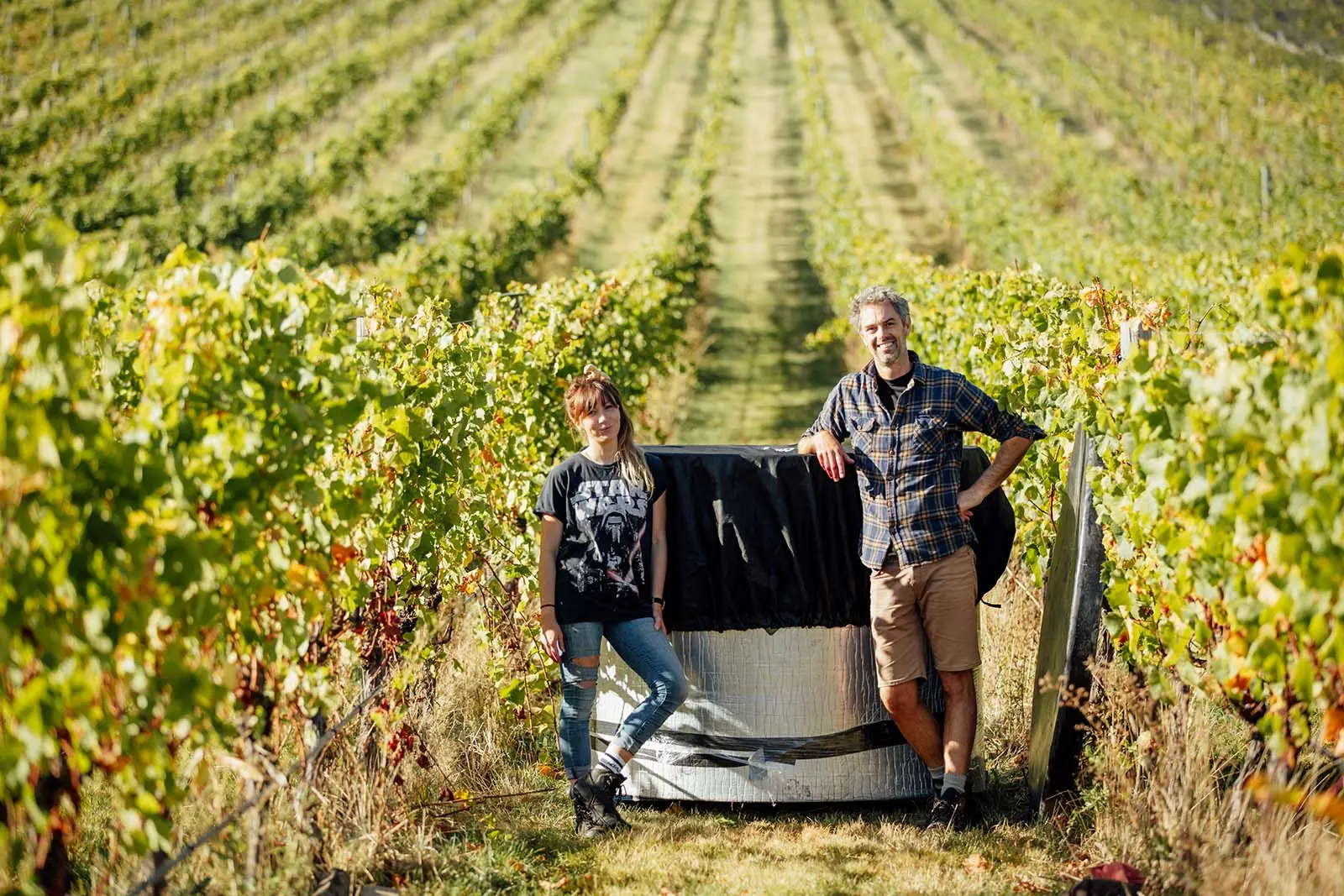
The method is deliberately crude. Fruit goes into buckets, a quad bike with a destemmer mounted on it does the processing, and the must ferments in open vessels among the rows for around twelve days, exposed to whatever the weather does. Fermentation speed becomes unpredictable — fruit picked at twenty degrees can be going by the next morning, which inside a winery would be treated as a problem rather than a result.
The site came first. The Thomas family found limestone ground in the Omihi Hills in 2000 and planted thirteen blocks across the slopes in 2004; Nick Gill was Penfolds's viticulturist when they approached him to establish it. Thirty-three hectares, and a name taken straight from the bedrock.
Organic certification is held with BioGro, and Toitū carbonzero certification sits on top of it — a second, harder audit that few wineries anywhere carry. In 2023 the estate took the Champion Organic Trophy at the International Wine Competition, judged against organic wines internationally rather than within New Zealand.
The part that separates this from other signature techniques is that Maxwell is running a three-year study of the microbial populations in vineyard and winery ferments. He is trying to establish whether his own trademark practice does anything, which is not the usual direction of travel.
“wine is the canary in the mine for climate change”
Why it’s remarkable
Free Bacchus Verification
BioGro NZ Certified Organic
Certified1
- BioGro NZ Certified Organic
Also on record1
- Toitū carbonzero certified
If you’re buying
Cheat sheet
Save it to your phone. Everything you need to recognise this producer, and three things worth saying about it, at a glance in a shop or across a table.