Journeyman Distillery
The Free Bacchus Story
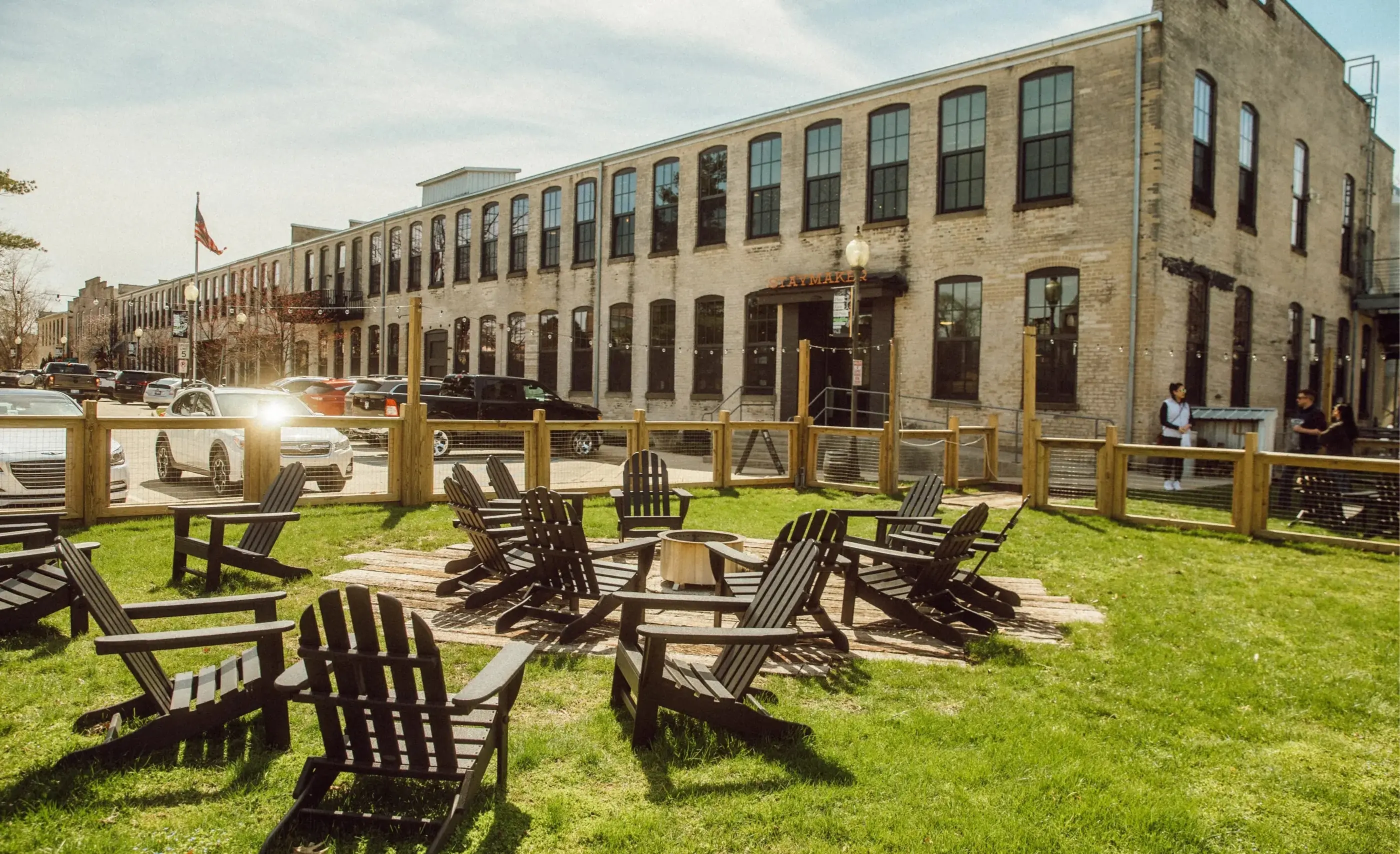
In 2000 Bill Welter went to St Andrews for the golf and came home with a taste for Scotch and a friend, Greg Ramsay, who later turned an old grain mill in Tasmania into a distillery. In 2010 Welter went back to Tasmania to learn, then distilled his first batch of rye in Chicago under Robert Birnecker, whose own distillery, KOVAL, is also in the cellar. That year he and his father, Chuck, bought part of the old Featherbone Factory in Three Oaks, Michigan, and Journeyman opened there in 2011 with his wife, Johanna, as co-founder.
Bourbon, the best-known American whiskey, must by law be at least 51% corn, and reads sweet and round. Rye whiskey puts rye in the lead instead, and tastes spicier and drier; wheat whiskey, rarer again, is soft and bready. Journeyman makes all three from organic grain bought from farmers in Indiana and Michigan, with water from an aquifer under the village.
The factory was built by E.K. Warren, who changed the corset trade by replacing whalebone with featherbone, and who was a staunch prohibitionist. MOSA certifies Journeyman organic and lists its whiskeys, gins, vodkas and rum one by one on the USDA register. The seven limited Freedom Series whiskeys released for America's 250th anniversary are not on that list.
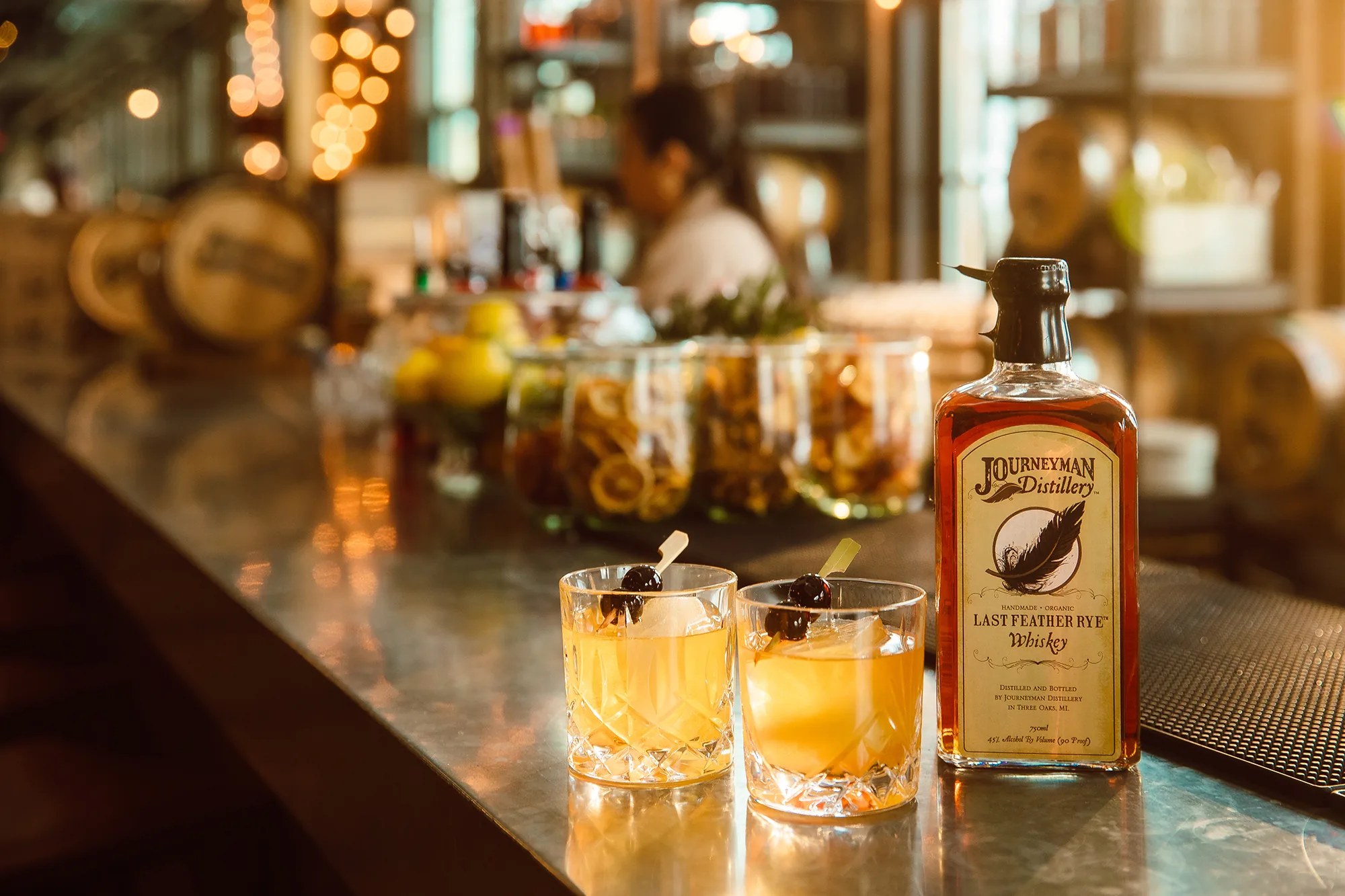
Last Feather Rye is the whiskey Journeyman calls its flagship: 60% organic rye and 40% organic wheat, distilled once and bottled at 45%. It had to be renamed after a cease and desist, and every bottle still carries a small RR as a tip of the cap to the name it lost.
“Is this going to last 100 years?”
Why it’s remarkable
Free Bacchus Verification
USDA organic (Midwest Organic Services Association) · handling scope
Certified1
- USDA organic, certified by the Midwest Organic Services Association (NOP 9950004298) — handling scope, with the spirits listed individually in the USDA organic register
Not covered1
- The 2026 Freedom Series whiskeys, not on that list in the USDA organic register
Also on record1
- The grain is bought from organic farms in Indiana and Michigan, not grown here
If you’re buying
Cheat sheet
Save it to your phone. Everything you need to recognise this producer, and three things worth saying about it, at a glance in a shop or across a table.